

This guide to 27 Best Replies to “I Don’t Care”: Witty and Smart Responses helps you answer dismissive comments with confidence and clarity.
When you tell something to someone and they respond with “I don’t care,” their reaction can come as a shock. You might feel hurt or wonder if there’s something wrong with you. However, understanding people’s motivations can help you handle such situations better. There are different reasons why people speak so flippantly. For some, honesty is the best policy.
They don’t want to keep nodding their head or pretending to be interested in a particular topic. Instead, they choose to share the brutal truth and stop talking about something that doesn’t interest them. Although their words may sound brutal or shocking, they aren’t always intended to be rude. Sometimes, showing respect for different opinions and topics can make conversations much easier.
Personal feelings can also explain why someone responds this way. For instance, a person who has lost a child might find talking about yours extremely painful. Similarly, after a break-up, you may feel upset and consider it a big deal. However, the rest of the world continues dealing with its own problems.
Someone might dismiss your concerns as pointless information even though your feelings are genuinely important. It’s easier said than done to understand every reaction, but this rough guide can help you think before you say something in response. This article explores 27 things you can say to handle uncomfortable conversations with a practical guide to choosing your words wisely.
Quick Answer
The best replies to “I don’t care” depend on the person’s attitude and your relationship with them. Here are some quick responses you can use:
| Situation | Best reply |
| Funny response | “Your enthusiasm is overwhelming.” |
| Savage comeback | “Nobody asked you to.” |
| Witty response | “And yet you felt the need to announce it.” |
| Confident reply | “I wasn’t looking for validation.” |
| Calm response | “Fair enough. Let’s move on.” |
| Sarcastic comeback | “I’ll try to recover from that devastating news.” |
| Short response | “Okay, noted.” |
| Classy response | “You don’t have to agree with me.” |
| Unbothered reply | “That’s fine. I’m comfortable with my decision.” |
| Playful response | “Good thing I wasn’t asking for permission.” |
These responses work best when you consider the conversation before speaking. A funny comeback might suit a friend, but a calm answer usually works better during a serious disagreement.
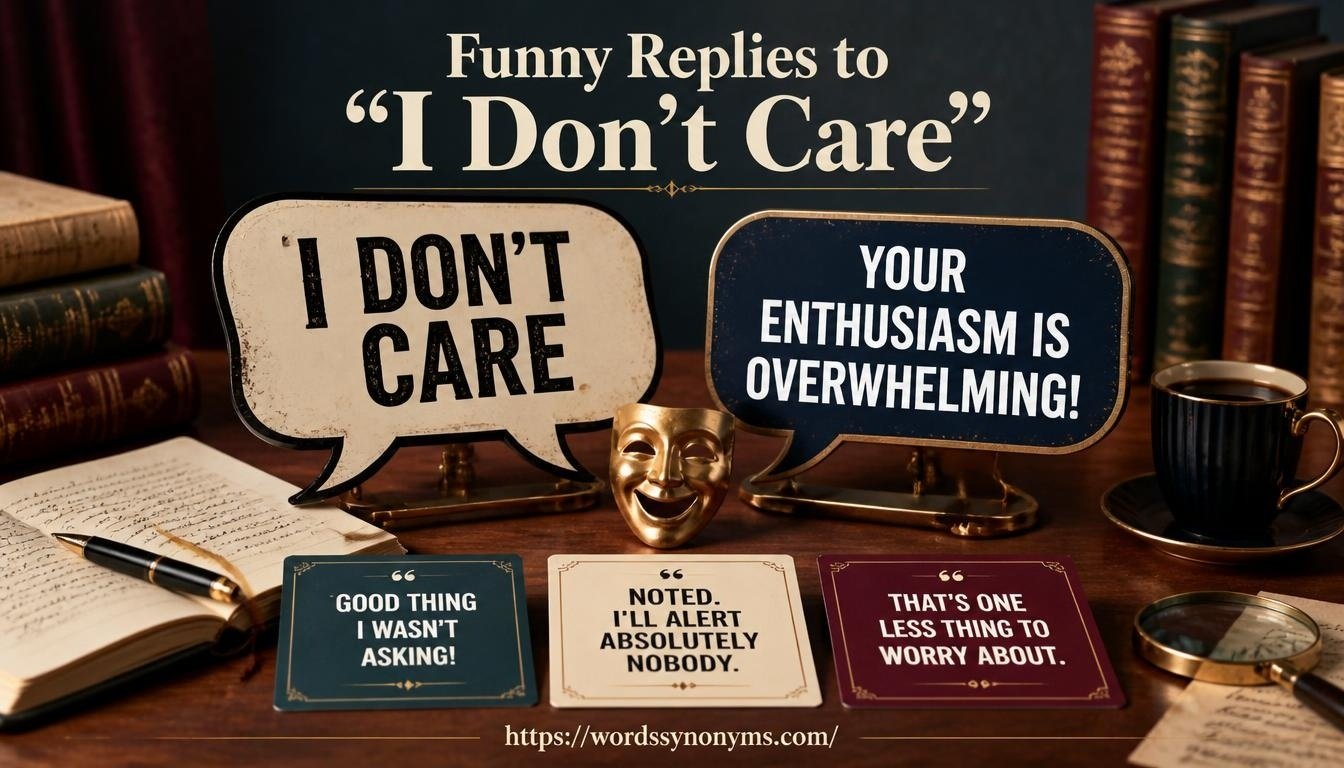
Funny Replies to “I Don’t Care”
Humor can turn an awkward moment into something much lighter. When someone says “I don’t care” with a dramatic attitude, a funny response can take the sting out of their words. You don’t always need a sharp comeback to make your point.
These replies work particularly well with friends, siblings, and people who enjoy playful conversations.
“Good Thing I Wasn’t Asking for Permission.”
This response works when someone acts as though their approval should determine your decisions. It reminds them that sharing information doesn’t mean asking for permission.
For example, imagine telling a friend that you’ve decided to change your hairstyle. They respond, “I don’t care.” You can simply smile and say, “Good thing I wasn’t asking for permission.”
It’s playful but confident. You aren’t arguing or defending your choice. You’re making it clear that your decisions don’t require everyone’s approval.
Best used when: Someone acts unnecessarily dismissive about your personal choices.
“That’s One Less Thing for Me to Worry About.”
Sometimes, the easiest way to handle indifference is to turn it into a joke. This response suggests that the other person’s lack of interest doesn’t create a problem for you.
Imagine discussing your weekend plans with someone who responds, “I don’t care.” Instead of explaining yourself further, you can say, “That’s one less thing for me to worry about.”
The humor comes from treating their indifference like a small convenience. It keeps the conversation light while showing that you aren’t desperate for their attention.
Best used when: Someone casually dismisses something that doesn’t require their involvement.
“Your Enthusiasm Is Overwhelming.”
This comeback uses exaggerated praise to highlight the opposite of what someone actually demonstrated. It’s a classic form of sarcasm that can make an otherwise awkward exchange amusing.
Suppose you excitedly tell a friend about something interesting that happened. They barely look up and respond, “I don’t care.” You can reply, “Your enthusiasm is overwhelming.”
The contrast makes the remark funny. However, your tone matters. Say it with a smile if you want playful teasing rather than an argument.
Best used when: A friend responds with exaggerated boredom or obvious disinterest.
“I’ll Try to Recover From That Devastating News.”
Want something dramatic enough to make people laugh? This response treats a casual expression of indifference like a heartbreaking announcement.
For instance, someone says, “I don’t care about your new shoes.” You can respond, “I’ll try to recover from that devastating news.”
The humor comes from deliberately exaggerating how much their opinion supposedly affects you. In reality, you’re showing the opposite. Their indifference hasn’t ruined your day.
Best used when: Someone makes an unnecessarily dismissive comment during a casual conversation.
“Noted. I’ll Alert Absolutely Nobody.”
This is a playful way to show that someone’s announcement doesn’t need a major reaction. It works because the response is intentionally more dramatic than the original statement.
Imagine someone interrupting a conversation to announce that they don’t care about a particular topic. You can say, “Noted. I’ll alert absolutely nobody.”
It’s short, memorable, and slightly sarcastic. Still, use it carefully around people who might mistake humor for hostility.
Best used when: Someone makes a big announcement about their lack of interest.
Savage Comebacks to “I Don’t Care”
Sometimes, a person uses “I don’t care” to shut you down rather than express genuine disinterest. If their tone feels intentionally disrespectful, a sharper response may help you stand your ground.
Savage comebacks work best when you deliver them confidently without turning the exchange into a personal attack. The goal is to communicate self-respect, not create unnecessary drama.
“Nobody Asked You To.”
This short response works when someone offers an unnecessary opinion and then dismisses the conversation. It makes your position clear without requiring a lengthy explanation.
For example, you’re discussing a decision with a friend when another person suddenly says, “I don’t care.” You can respond, “Nobody asked you to.”
The comeback reminds them that their involvement wasn’t necessary. However, it can sound confrontational, so consider the relationship before using it.
Best used when: Someone unnecessarily inserts themselves into a conversation.
“And Yet You Felt the Need to Announce It.”
This is a clever comeback because it highlights the contradiction in someone’s behavior. If they genuinely don’t care, why do they feel compelled to announce it?
Imagine someone repeatedly interrupting your conversation to say they aren’t interested. You can respond, “And yet you felt the need to announce it.”
It shifts attention toward their behavior rather than the original disagreement. The remark can also make someone reconsider whether their comment was necessary.
Best used when: Someone repeatedly announces their indifference to get a reaction.
“Your Opinion Wasn’t Part of the Discussion.”
Not every conversation needs everyone’s approval. This response works when someone dismisses your point despite having no real involvement in the discussion.
For example, you’re explaining a personal decision to someone who genuinely needs the information. Another person interrupts with, “I don’t care.” You can calmly respond, “Your opinion wasn’t part of the discussion.”
Unlike an insult, this comeback focuses on the boundaries of the conversation. It makes your point without attacking their personality.
Best used when: Someone interrupts or dismisses a discussion that doesn’t concern them.
“Don’t Worry. Your Approval Wasn’t Required.”
This response is particularly useful when someone behaves as though their approval should influence your decisions.
Imagine sharing exciting news about a personal achievement. Someone responds, “I don’t care,” hoping to make you feel discouraged. You can simply say, “Don’t worry. Your approval wasn’t required.”
The statement reinforces an important idea: your happiness doesn’t depend on everyone’s reaction. You can appreciate encouragement without making it a requirement.
Best used when: Someone dismisses your achievements or personal decisions.
“That’s Fine. The Feeling Is Mutual.”
Sometimes, a conversation becomes unnecessarily competitive. If someone openly expresses disinterest in you or your opinion, this response can communicate that you aren’t interested in chasing their attention either.
For example, someone says, “I don’t care what you think.” You can reply, “That’s fine. The feeling is mutual.”
It’s short and direct. However, this comeback can deepen an existing disagreement, especially when both people already feel frustrated.
Best used when: Someone deliberately makes a personal or dismissive remark.
Read more: 27 Best Replies to “Did I Ask You?”
Witty and Clever Responses to “I Don’t Care”
A clever response doesn’t always need to sound harsh. Sometimes, a little wordplay or thoughtful sarcasm can make your point more effectively than an aggressive comeback.
These replies are useful when you want to sound intelligent, composed, and slightly humorous.
“That’s a Fascinating Contribution to the Conversation.”
This response uses polite language to point out that someone’s comment hasn’t added anything meaningful. Its humor comes from the contrast between the formal wording and the dismissive situation.
Imagine you’re discussing an important subject and someone responds, “I don’t care.” You can say, “That’s a fascinating contribution to the conversation.”
It works because you don’t directly insult them. Instead, you highlight how little their response contributes.
Best used when: Someone dismisses a meaningful conversation without offering anything constructive.
“Well, That’s Certainly an Interesting Position.”
This comeback sounds neutral at first but carries a subtle hint of sarcasm. It acknowledges someone’s statement without agreeing with their attitude.
For example, you’re explaining why a particular decision matters. Someone interrupts with, “I don’t care.” You respond, “Well, that’s certainly an interesting position.”
The beauty of this reply lies in its flexibility. You can deliver it sincerely or with a slightly amused tone.
Best used when: You want to acknowledge someone’s response without encouraging an argument.
“I’ll Give Your Indifference the Attention It Deserves.”
This response turns someone’s lack of interest into a humorous observation. It suggests that their indifference doesn’t deserve any additional attention.
Imagine someone repeatedly saying they don’t care about your plans. You can respond, “I’ll give your indifference the attention it deserves.”
Then move on with your day. The comeback works even better when you don’t continue arguing afterward.
Best used when: Someone keeps repeating the same dismissive statement.
“Good to Know Where Your Priorities Stand.”
This response is useful when someone’s lack of interest reveals something important about their priorities.
For instance, you’re trying to discuss an issue that affects both you and your partner. They respond, “I don’t care.” You can say, “Good to know where your priorities stand.”
However, consider the context before using this line. If someone is simply tired or distracted, their response might not reflect their actual priorities.
Best used when: Someone dismisses a subject that genuinely matters to you.
“And That’s Your Final Answer?”
This playful response borrows the dramatic feel of a game-show question. It makes someone’s blunt statement sound like an official decision.
For example, you’re trying to choose a restaurant with a friend. They respond, “I don’t care.” You can ask, “And that’s your final answer?”
The line can make them laugh or encourage them to give a more useful response. It’s particularly effective when the conversation doesn’t involve serious emotions.
Best used when: Someone gives an unhelpful answer during casual decision-making.
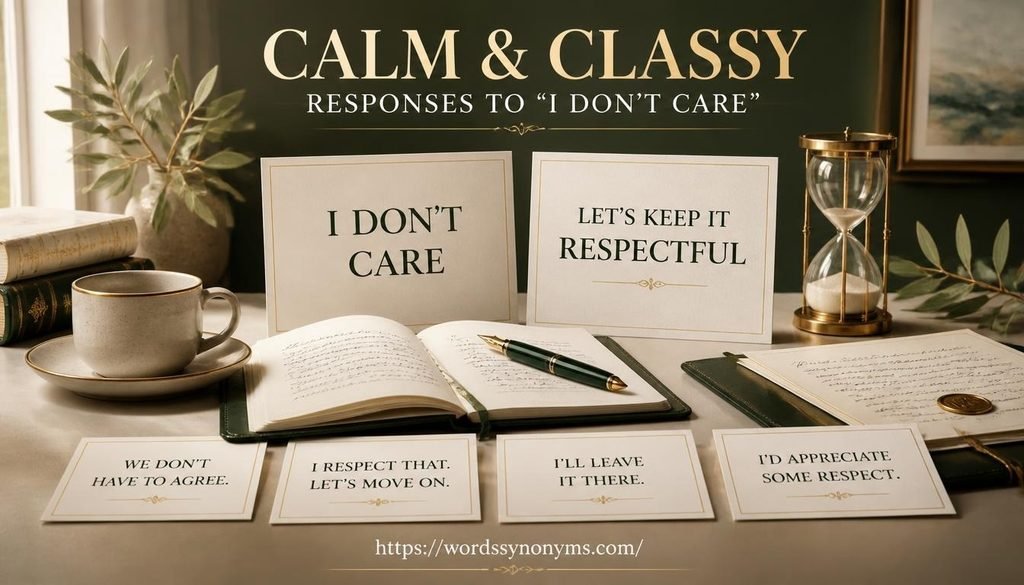
Calm and Classy Responses to “I Don’t Care”
Not every dismissive comment deserves a sarcastic comeback. Sometimes, the strongest response is the one that protects your peace and keeps the conversation respectful.
Calm replies are particularly helpful when dealing with family members, partners, colleagues, or people you see regularly. They communicate confidence without making the situation worse.
“That’s Okay. We Don’t Have to Agree.”
This response shows that you can accept different opinions without treating disagreement like a personal attack.
Suppose you’re discussing a movie, lifestyle choice, or personal belief. Someone says, “I don’t care.” You can respond, “That’s okay. We don’t have to agree.”
It removes unnecessary pressure from the conversation. You aren’t trying to force someone to share your interests or opinions.
Best used when: Someone disagrees with you or genuinely doesn’t share your interest.
“I Respect That. Let’s Move On.”
Sometimes, a conversation has reached its natural ending. Continuing to explain yourself might only frustrate both people.
This response acknowledges the other person’s position and redirects the discussion toward something more productive.
For example, you’re discussing weekend plans with a friend who clearly doesn’t want to participate. You can say, “I respect that. Let’s move on.”
It’s mature, simple, and respectful. You don’t need to turn every difference into a debate.
Best used when: Someone wants to end a conversation or change the subject.
“I Understand. I Just Wanted to Share My Perspective.”
This is a thoughtful response when you aren’t looking for agreement. You simply want someone to understand your point of view.
Imagine explaining why a particular decision matters to you. The other person responds, “I don’t care.” You can calmly say, “I understand. I just wanted to share my perspective.”
This approach keeps the conversation open without demanding an emotional reaction. It also makes your intentions clear.
Best used when: You want to express yourself without forcing someone to agree.
“Fair Enough. I’ll Leave It There.”
This response is ideal when you recognize that further discussion won’t accomplish anything. It communicates that you’re willing to respect someone’s boundaries.
For example, you’re discussing a topic that matters to you. The other person becomes uninterested and says, “I don’t care.” You can respond, “Fair enough. I’ll leave it there.”
There’s no need to repeat yourself or seek an explanation. Sometimes, knowing when to stop is a sign of emotional maturity.
Best used when: The conversation isn’t productive and both people need space.
“You Don’t Have to Care, but I’d Appreciate Some Respect.”
This is a particularly useful response when someone’s words or tone feel disrespectful.
There’s an important difference between having no interest in a subject and treating another person poorly. You can respect someone’s right to disagree while expecting basic courtesy in return.
For example, a coworker dismisses your suggestion during a meeting. You can say, “You don’t have to care, but I’d appreciate some respect.”
The statement sets a clear boundary without using personal insults.
Best used when: Someone repeatedly dismisses you or speaks disrespectfully.
Confident and Unbothered Responses to “I Don’t Care”
Confidence doesn’t mean pretending that nothing bothers you. It means understanding your worth without depending on another person’s approval.
These responses are useful when someone expects their indifference to make you defensive or insecure.
“That’s Perfectly Fine. I’m Comfortable With My Decision.”
This reply shows that you’ve already considered your choices and don’t need someone else to approve them.
Imagine telling a friend about a decision to pursue a new hobby. They respond, “I don’t care.” You can confidently say, “That’s perfectly fine. I’m comfortable with my decision.”
It keeps the focus on your own judgment rather than their reaction. You aren’t demanding support or trying to change their mind.
Best used when: Someone dismisses a decision you’ve already made.
“Your Indifference Doesn’t Change Anything.”
This response communicates that someone’s lack of interest won’t influence your plans.
For example, you’ve worked hard on a personal project and decide to share your progress. Someone responds, “I don’t care.” You can say, “Your indifference doesn’t change anything.”
The message is simple: their reaction doesn’t erase your effort or change your goals.
Best used when: Someone tries to discourage you by acting uninterested.
“I Wasn’t Looking for Validation.”
This is a strong response when someone assumes you shared something because you wanted their approval.
Suppose you tell someone about a recent achievement. Instead of congratulating you, they say, “I don’t care.” You can reply, “I wasn’t looking for validation.”
It makes your intentions clear. You were sharing something meaningful to you rather than asking them to judge its value.
Best used when: Someone dismisses your accomplishments or personal choices.
“You Can Feel However You Want. I’m Moving Forward.”
This response combines emotional maturity with personal confidence. It acknowledges that everyone has the right to their own feelings while making it clear that your life doesn’t need to stop.
For instance, someone criticizes your plans and says they don’t care whether you succeed. You can respond, “You can feel however you want. I’m moving forward.”
It avoids unnecessary conflict and keeps your attention on what matters.
Best used when: Someone’s negativity doesn’t deserve additional attention.
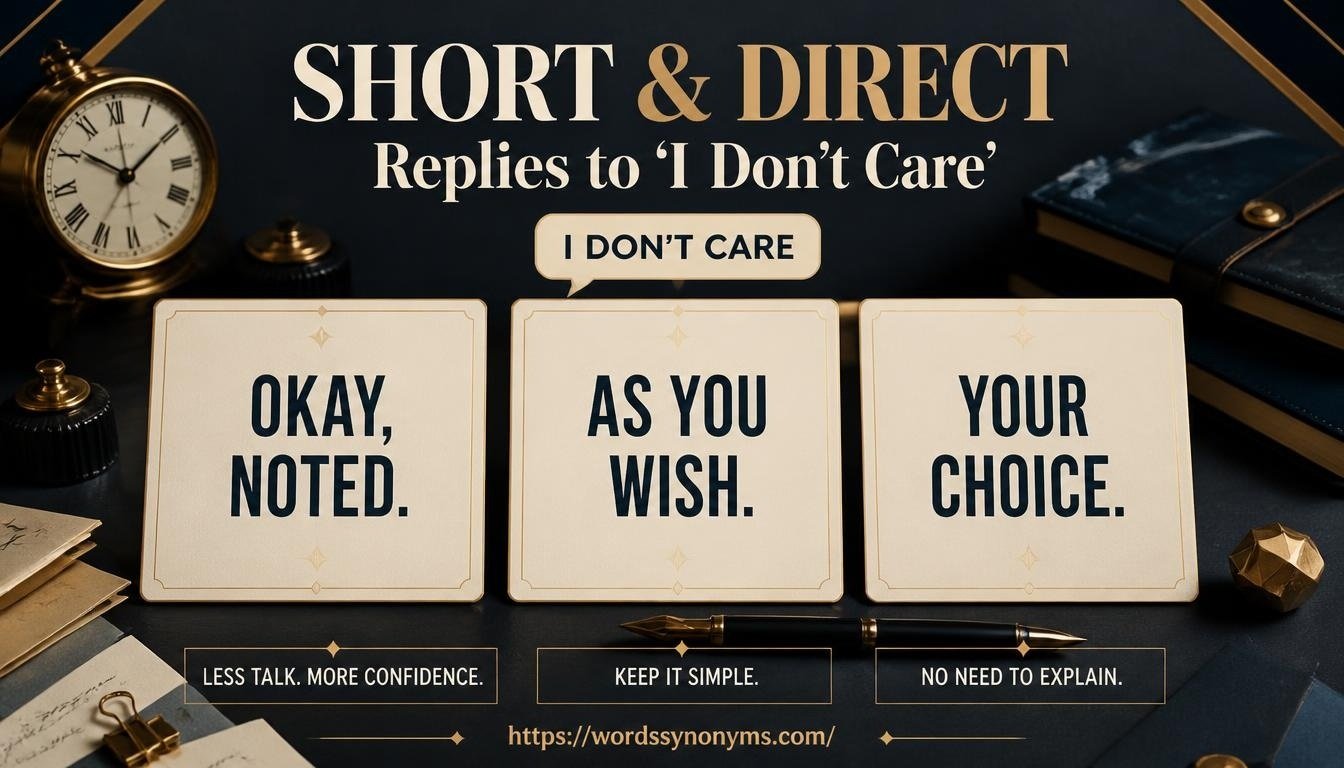
Short and Direct Replies to “I Don’t Care”
Sometimes, the best comeback is only two or three words. Long explanations can give unnecessary attention to a conversation that has already ended.
Short responses are particularly useful when you’re busy, uninterested in arguing, or dealing with someone who repeatedly makes dismissive comments.
“Okay, Noted.”
This is one of the simplest ways to acknowledge someone’s statement without creating another argument.
For example, you’re discussing plans with a friend who says, “I don’t care.” You can respond, “Okay, noted.”
It doesn’t express anger or excitement. Instead, it communicates that you’ve heard them and are ready to move forward.
Best used when: You want to acknowledge someone’s response without extending the conversation.
“As You Wish.”
This classic expression communicates acceptance without requiring further explanation.
Imagine asking someone whether they’d like to join an activity. They respond, “I don’t care.” You can say, “As you wish.”
Depending on your tone, it can sound polite, slightly sarcastic, or completely neutral. That’s what makes it useful in different situations.
Best used when: Someone refuses to express a preference or gives you complete freedom to decide.
“Your Choice.”
This response places responsibility back where it belongs. If someone doesn’t care about a decision that involves them, you can let them choose whether to participate.
For example, you’re trying to decide where to eat. Your friend repeatedly says, “I don’t care.” You can respond, “Your choice.”
It prevents you from wasting time trying to get an opinion from someone who doesn’t want to give one.
Best used when: Someone refuses to participate in a simple decision.
How to Choose the Best Reply to “I Don’t Care”
Choosing a comeback isn’t just about finding the funniest sentence. The right response depends on the person’s attitude, your relationship, and what you want to achieve.
A sarcastic reply might entertain your friends but create tension during a serious discussion. Likewise, a calm response might work beautifully with a coworker but sound unnecessarily formal among close friends.
Here are some practical ways to choose your response.
- Read the person’s tone: Someone might say “I don’t care” jokingly, while another person uses it to dismiss you. Listen to how they speak before responding.
- Consider your relationship: Close friends usually understand playful teasing. Professional relationships often require more careful language.
- Think about your goal: Decide whether you want to make someone laugh, set a boundary, express disagreement, or end the conversation.
- Avoid unnecessary arguments: If someone clearly doesn’t want to listen, repeating your point rarely helps.
- Protect your confidence: Don’t make your self-worth depend on whether someone appreciates your opinion.
- Use humor carefully: Sarcasm can be entertaining, but the wrong timing can make a small disagreement worse.
Match Your Response to the Situation
| Person or situation | Recommended response |
| A playful friend | “Your enthusiasm is overwhelming.” |
| Someone being rude | “I’d appreciate some respect.” |
| A sarcastic classmate | “And yet you felt the need to announce it.” |
| An uninterested coworker | “Fair enough. Let’s move on.” |
| A dismissive partner | “I just wanted to share my perspective.” |
| Someone criticizing your choices | “I wasn’t looking for validation.” |
| A person avoiding decisions | “Your choice.” |
| Someone who keeps arguing | “Okay, noted.” |
The important thing is to respond with intention. You don’t need to match someone’s attitude just because they choose to be dismissive.
What to Say When Someone Says “I Don’t Care” in Different Situations
The same phrase can mean different things depending on who says it. A friend might be joking, while a partner might be expressing frustration. Understanding the relationship helps you choose words that actually fit.
When a Friend Says “I Don’t Care”
Friends often use blunt expressions without intending to hurt each other. Sometimes, they’re joking. Other times, they’re simply not interested in the topic.
If a friend says “I don’t care” while you’re discussing something casual, try a playful response such as:
- “Good thing I wasn’t asking for permission.”
- “Your enthusiasm is overwhelming.”
- “That’s one less thing for me to worry about.”
- “And that’s your final answer?”
However, if your friend repeatedly dismisses something important to you, consider addressing it directly.
You might say, “I know this topic isn’t interesting to you, but it matters to me.” That sentence communicates your feelings without accusing your friend of being a bad person.
When Your Crush Says “I Don’t Care”
Getting a dismissive response from someone you like can feel uncomfortable. You might wonder whether they’re teasing you, avoiding the conversation, or genuinely uninterested.
The best approach is to stay confident and avoid chasing their attention.
You can try:
- “Good thing I wasn’t asking for permission.”
- “No worries. I was just sharing.”
- “Fair enough. Anyway, how’s your day going?”
- “That’s okay. Everyone has different interests.”
For example, imagine telling your crush about a new hobby. They respond, “I don’t care.” Rather than trying harder to impress them, you can simply say, “No worries. I was just sharing.”
If their dismissive behavior continues, pay attention to the pattern. A healthy connection involves mutual interest and basic respect. You shouldn’t have to work constantly for someone’s attention.
When Your Partner Says “I Don’t Care”
Hearing “I don’t care” from a partner can feel more painful than hearing it from an acquaintance. That’s because relationships often involve shared responsibilities, emotions, and decisions.
However, the phrase doesn’t always mean your partner has stopped caring about you. They might feel frustrated, overwhelmed, tired, or unsure how to express themselves.
Instead of immediately responding with sarcasm, try asking a clear question.
For example:
- “Are you upset about something?”
- “Can we talk about what’s bothering you?”
- “I want to understand what you’re feeling.”
- “You don’t have to agree, but I’d like us to communicate respectfully.”
Consider this situation: You’re discussing an important decision about your weekend plans. Your partner responds, “I don’t care.” Rather than choosing everything yourself and becoming resentful, ask whether they genuinely have no preference or simply don’t want to discuss it.
If dismissive communication becomes a repeated pattern, explain how it affects you. A relationship needs more than occasional agreement. It also needs consideration and honest communication.
When a Coworker Says “I Don’t Care”
Workplace conversations require a different approach. You might disagree with someone’s priorities, but personal insults and sarcastic comebacks rarely improve professional relationships.
Suppose you’re discussing a shared project and a coworker says, “I don’t care about that.” Your response should focus on the work rather than their attitude.
Consider these options:
- “That’s fine. We still need to address the task.”
- “Let’s focus on what needs to be completed.”
- “Your input would help us make this decision.”
- “I understand. I’ll proceed with the agreed plan.”
If the issue affects your responsibilities, clarify expectations. For example, you could say, “This part of the project affects our deadline. Can we agree on who will handle it?”
That approach keeps the discussion practical. It also creates a clearer record of responsibilities and decisions.
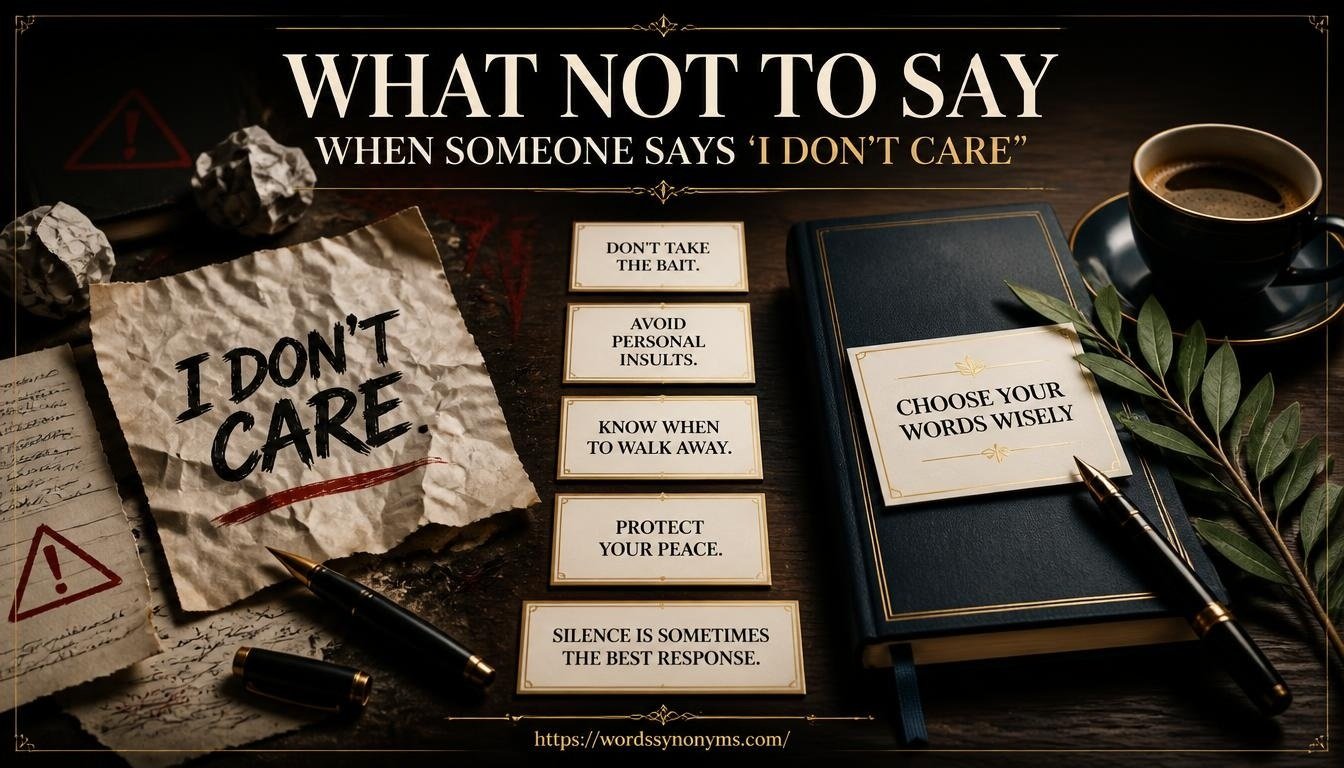
What Not to Say When Someone Says “I Don’t Care”
A clever comeback can feel satisfying, especially when someone has been rude. However, not every sharp response improves the situation.
Sometimes, an angry reaction gives the other person exactly what they wanted. Instead of making your point, you end up arguing about something completely unrelated.
Here are a few mistakes worth avoiding.
- Don’t use personal insults: Attacking someone’s appearance, intelligence, or personal life turns a simple disagreement into a personal conflict.
- Don’t beg for attention: Repeatedly asking someone to care can make an already uncomfortable conversation worse.
- Don’t overexplain yourself: If someone isn’t interested in listening, a longer explanation probably won’t change their attitude.
- Don’t assume their intentions: A person might be distracted, tired, or dealing with something unrelated to your conversation.
- Don’t respond aggressively at work: Professional disagreements need practical solutions rather than personal attacks.
- Don’t confuse disagreement with disrespect: Someone can dislike your opinion without necessarily disrespecting you.
When Walking Away Is Better Than Responding
Not every comment needs a comeback. In some situations, silence communicates more than another sarcastic sentence.
For example, imagine someone repeatedly dismisses your ideas during a casual argument. You’ve already explained your position and answered their questions. Yet they continue responding with “I don’t care.”
At this point, another comeback probably won’t accomplish anything.
You can simply say:
- “I’ve said what I needed to say.”
- “Let’s leave it here.”
- “There’s no point arguing about this.”
- “We can talk when we’re both ready.”
Walking away doesn’t mean you’ve lost the argument. It means you’ve decided that continuing isn’t worth your time.
Read more: “Be It” Meaning: Definition, Grammar, Usage and Examples
FAQs
1. What should you say when someone tells you “I don’t care”?
You can respond calmly with something like, “That’s fine, but I thought you should know.” This shows confidence without turning the conversation into an argument.
2. How do you respond to “I don’t care” in a savage way?
Try saying, “Good thing I wasn’t asking for your approval.” It’s short, witty, and gets your point across without sounding desperate.
3. Why do people say “I don’t care” during conversations?
People may say it because they’re uninterested, frustrated, distracted, or uncomfortable with a subject. Sometimes, they simply don’t know how to express their feelings politely.
4. How can you reply to “I don’t care” without being rude?
Keep your response simple and respectful. You could say, “No problem. We can talk about something else.” This avoids unnecessary tension while respecting their feelings.
5. What is a funny response to “I don’t care”?
You could say, “Don’t worry, I wasn’t expecting a standing ovation.” A little humor can make an awkward moment feel less serious.
6. Should you ignore someone who repeatedly says “I don’t care”?
If someone keeps dismissing your thoughts, stepping away may be better than arguing. You deserve conversations where both people listen and show basic respect.
7. How do you respond when your friend says “I don’t care”?
First, consider their mood and the situation. You might say, “Is something bothering you, or are you just not interested in this topic?” This gives them room to explain.
8. Is saying “I don’t care” disrespectful?
It depends on the tone and situation. Someone might use it to express a genuine lack of interest. However, saying it harshly or repeatedly can make others feel ignored and unimportant.
9. What should you do when someone doesn’t care about your feelings?
Express how their behavior affects you without attacking them. If they continue dismissing your feelings, consider setting boundaries and giving yourself some distance.
10. How can you stay confident when someone says “I don’t care”?
Remember that another person’s reaction doesn’t determine your worth. Stay calm, avoid seeking their approval, and respond in a way that reflects your self-respect.
Conclusion
Hearing someone say “I don’t care” can sting, especially when you’re sharing something that matters to you. However, their reaction doesn’t have to ruin your mood or turn a simple conversation into an argument. Sometimes, the smartest response is a witty comeback. Other times, a calm answer or a little humor works much better. The key is to understand the situation before choosing your words. You don’t always need to prove a point or get the last word.
These 27 replies give you different ways to handle dismissive comments without losing your confidence. Whether you prefer a savage comeback, a funny response, or a polite reply, choose words that match the moment. Remember, you can’t control how someone reacts, but you can control how you respond. Keep your self-respect intact and never let another person’s lack of interest make you question your worth.

Ethan Parker writes about English grammar, sentence structure, punctuation, and everyday language rules. Through WordsSynonyms.com, he aims to make grammar easier to understand with simple explanations, practical examples, and helpful learning resources.

[…] Read more: 27 Best Replies to “I Don’t Care”: Witty and Smart Responses […]