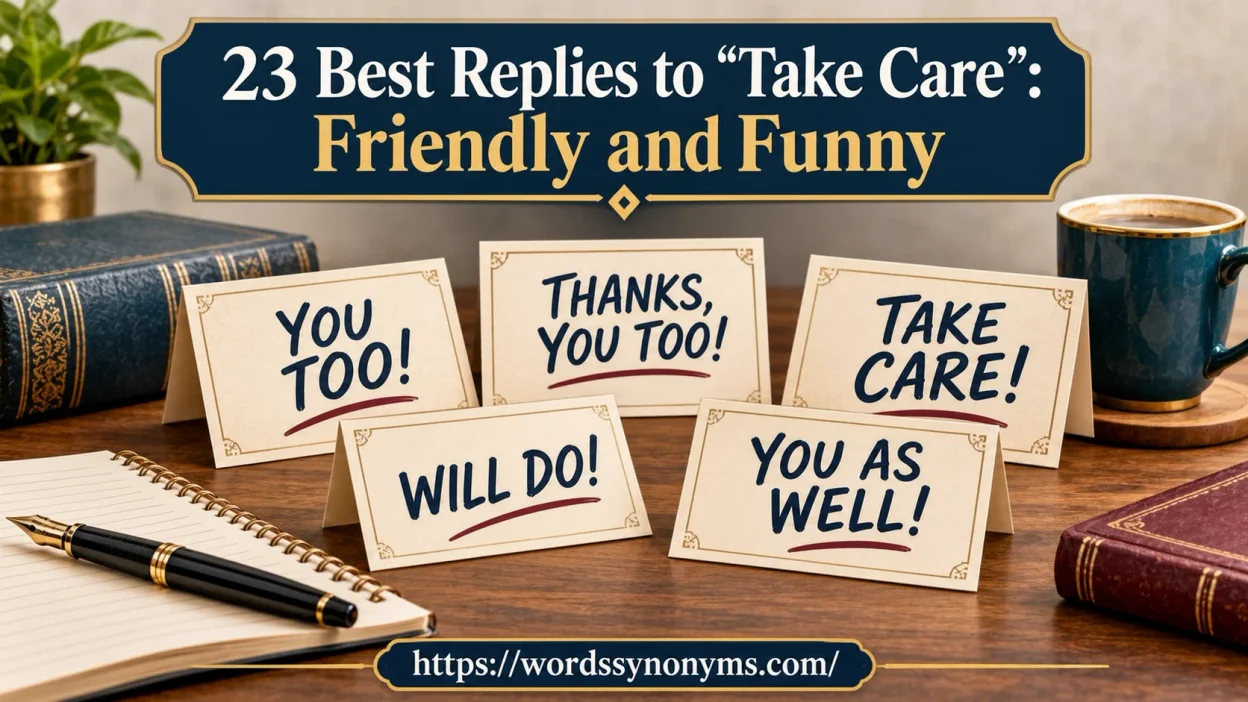
This guide to 23 Best Replies to “Take Care”: Friendly and Funny helps you choose a natural response for friends, family, partners, and coworkers. A good reply doesn’t need complicated words or a clever phrase. Instead, consider your relationship, the situation, and the tone of the conversation.
When saying goodbye to a close friend, you might say “Stay safe,” “Talk to you soon,” or “Look after yourself.” These friendly alternatives sound natural and show that you care. They also make everyday communication feel warmer without repeating the same expression.
However, a professional email to your boss or coworker needs a more polite and appropriate response. You can choose professional alternatives that sound respectful without feeling too formal. The right goodbye phrase depends on your workplace relationship and the message’s purpose.
From my experience, the best replies are the ones that match the other person’s feelings and communication style. A simple “Thanks” can work well, but sometimes a funny, sweet, heartfelt, affectionate, casual, or sincere response feels more suitable. Small changes in wording can make a farewell more personal.
For example, a warm reply or friendly goodbye works nicely with friends and family. Meanwhile, a romantic reply may be better for your partner or romantic partner. You can also use thoughtful caring words to make someone feel appreciated and valued.
The following examples, conversation tips, and suggestions will help you explore different alternative expressions, alternative phrases, phrase variations, and goodbye alternatives for everyday social interactions. Whether you want to sound friendly, funny, or thoughtful, choose words that feel natural to you.
Quick Answer
The most natural response to “Take care” is “You too!”
You can also say:
- “Thanks, you too!” — warm and universally useful
- “You as well!” — polite and slightly more formal
- “Thanks, I will!” — useful when someone genuinely expresses concern
- “Will do!” — casual and friendly
- “Same to you!” — simple and direct
- “Take care!” — perfectly natural when you want to return the same farewell
- “Talk soon!” — useful when you expect to speak again
- “Have a good one!” — casual and upbeat
The safest choice is “Thanks, you too!” because it acknowledges the person’s words while returning the same good wish.
What Does “Take Care” Mean?
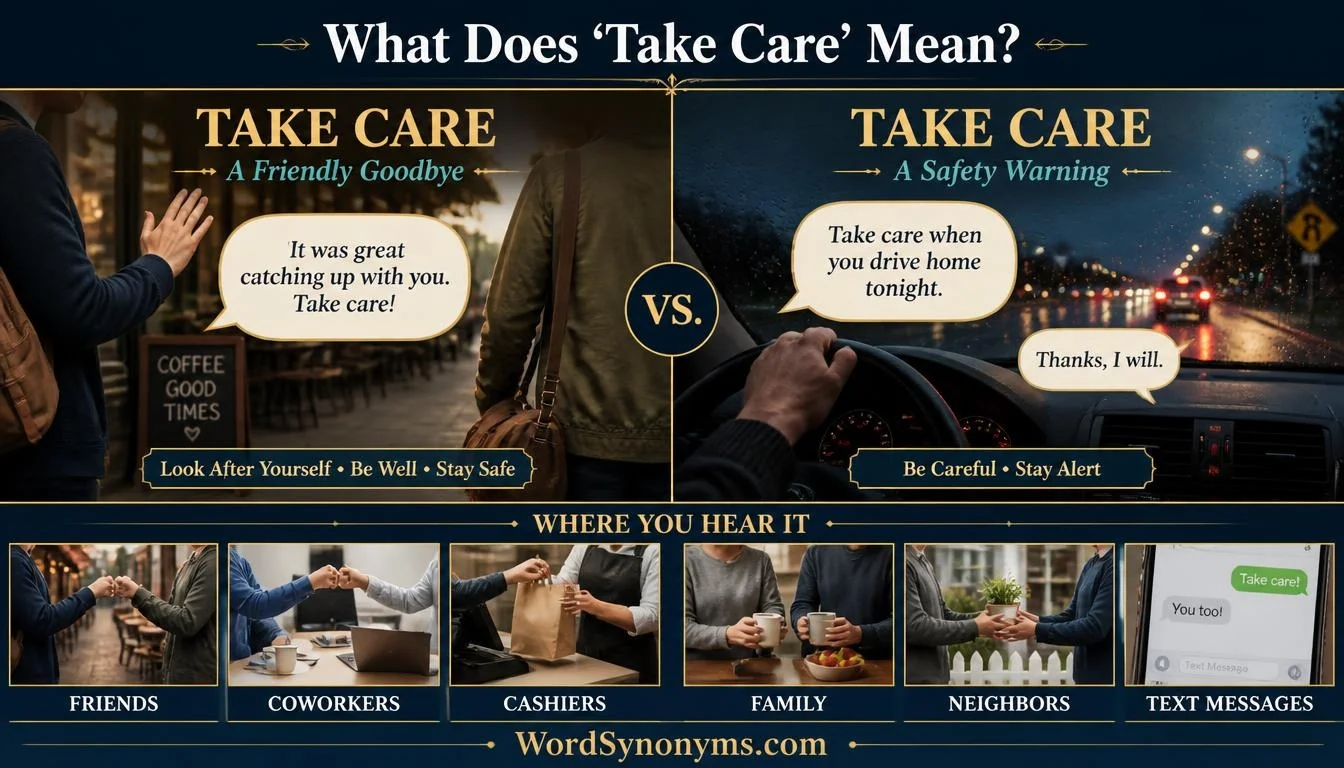
“Take care” usually means “look after yourself,” “be well,” or “stay safe.” In everyday conversation, people often use it as a friendly way to end a conversation.
For example:
“It was great catching up with you. Take care!”
Here, nobody is giving you a serious instruction. The speaker is simply wishing you well before saying goodbye.
However, “take care” can also mean “be careful.” Context determines the meaning.
For example:
“Take care when you drive home tonight.”
This version carries a more literal safety warning. A response such as “Thanks, I will” makes more sense here than simply saying “You too.”
Is “Take Care” a Goodbye?
Yes. “Take care” commonly functions as a farewell.
It sits somewhere between a simple “bye” and a warmer expression such as “look after yourself.” It can sound friendly without becoming overly emotional.
You might hear it from:
- A friend ending a phone call
- A coworker leaving the office
- A cashier finishing a conversation
- A family member saying goodbye
- A neighbor heading home
- Someone ending a text conversation
- A professional ending a casual business conversation
The phrase doesn’t automatically carry a deep hidden message. Often, it’s simply a pleasant way to end an interaction.
Read more: A Lion Doesn’t Concern Himself With the Opinions of the Sheep
23 Best Replies to “Take Care”
The right response depends on what you want to communicate. Here are 23 natural replies to “take care” that cover casual, professional, warm, playful, and humorous situations.
1. “You Too!”
“You too!” is the easiest and most natural response to “take care.”
It works because you’re returning the same good wish. The complete meaning is essentially “You take care too.” English speakers commonly leave the repeated words unstated because the context makes them obvious.
Example:
Person A: “I have to run. Take care!”
Person B: “You too!”
This response works with friends, coworkers, acquaintances, and even strangers. It’s short, polite, and almost impossible to misinterpret.
Best for: Everyday conversations.
2. “Thanks, You Too!”
If you want something slightly warmer, try “Thanks, you too!”
The word “thanks” acknowledges the person’s kindness before returning the sentiment. It sounds natural without feeling overly formal.
Example:
“Thanks for helping me today. Take care!”
“Thanks, you too!”
This is one of the most useful responses because it fits nearly any ordinary situation.
Best for: Friends, coworkers, acquaintances, and casual professional conversations.
3. “You As Well!”
“You as well!” carries the same basic meaning as “you too.” The difference lies mostly in tone.
It sounds a little more polished and restrained. That’s useful when you’re speaking with someone you don’t know well or when the setting feels more formal.
Example:
“Thanks for coming by. Take care.”
“You as well!”
You wouldn’t normally use this with your closest friend if you’re joking around. In a workplace conversation, though, it fits nicely.
Best for: Professional or polite situations.
4. “Same to You!”
“Same to you!” directly returns the good wish.
It has a friendly, straightforward tone. You can use it when you want to acknowledge the phrase without adding much extra conversation.
Example:
“Take care on your way home.”
“Same to you!”
This response works particularly well when both people are leaving or heading somewhere.
Best for: Casual conversations and mutual farewells.
5. “Thanks, I Will!”
When “take care” sounds like genuine concern, “Thanks, I will!” becomes a better choice.
It acknowledges the person’s concern rather than simply returning the phrase.
For example, imagine telling a friend that you’re heading home late at night. They say:
“Take care getting home.”
You might respond:
“Thanks, I will!”
Here, the speaker isn’t merely saying goodbye. They’re encouraging you to stay safe.
Best for: Situations involving genuine advice or concern.
6. “Will Do!”
“Will do!” sounds casual, confident, and friendly.
It essentially means “I will take care of that” or “I will do what you suggested.” Because of that, it works especially well when “take care” carries a slightly literal meaning.
Example:
“Take care of yourself this weekend.”
“Will do!”
It’s also useful in casual texting.
Best for: Friends, coworkers, and relaxed conversations.
7. “Thanks!”
Sometimes you don’t need anything more than “Thanks!”
If someone says “Take care” while walking away, a simple acknowledgment can feel completely natural.
Example:
“Have a good evening. Take care!”
“Thanks!”
The conversation may already be ending. Adding another farewell isn’t necessary.
Best for: Brief everyday interactions.
8. “Take Care, Too!”
If you want to mirror the original wording, say “Take care, too!”
This response sounds slightly more deliberate than “you too,” but it remains friendly and natural.
Example:
“It was good seeing you. Take care!”
“You too. Take care, too!”
In most situations, however, “You too!” sounds more effortless.
Best for: Warm conversations and mutual goodbyes.
9. “Absolutely. You Too!”
“Absolutely. You too!” adds a little extra enthusiasm.
It can make your response sound warmer without becoming sentimental. This works especially well when someone has been particularly kind.
Example:
“Thanks for checking in. Take care!”
“Absolutely. You too!”
The word “absolutely” gives the response more energy than a plain “you too.”
Best for: Friendly conversations.
10. “Thanks for Caring!”
When someone says “take care” because they’re genuinely worried about you, “Thanks for caring!” can feel more meaningful.
Imagine you’ve had a difficult day and a friend says:
“Take care of yourself, okay?”
Instead of automatically saying “you too,” you might answer:
“Thanks for caring. I really appreciate it.”
That response recognizes the emotion behind the words.
Best for: Personal or supportive conversations.
11. “I Appreciate That. You Too.”
“I appreciate that. You too.” is a thoughtful response when someone has shown genuine concern.
It works particularly well after a serious or personal conversation. The first sentence acknowledges their kindness while the second returns the good wish.
Example:
“I hope things get easier. Take care of yourself.”
“I appreciate that. You too.”
This sounds sincere without becoming overly dramatic.
Best for: Meaningful conversations and supportive relationships.
12. “Stay Safe!”
“Stay safe!” works when safety actually matters.
For example, someone might say “Take care” before you drive through severe weather or travel late at night. Returning the specific safety wish makes sense.
Example:
“I’m heading out now. Take care.”
“You too. Stay safe!”
The phrase can also stand alone as a farewell.
Best for: Travel, driving, late-night plans, bad weather, or other safety-related situations.
13. “Have a Good One!”
“Have a good one!” is a relaxed alternative to “take care.”
The phrase usually means “Have a good day, evening, or rest of your time.” It doesn’t specify exactly what the person should have a good time doing.
Example:
“Thanks for your help. Take care!”
“You bet. Have a good one!”
It’s casual and upbeat.
Best for: Stores, workplaces, neighbors, and everyday interactions.
14. “See You Later!”
If you expect to see the person again, “See you later!” makes a natural farewell.
You don’t need to use the exact same phrase the other person used. Conversations often end with different but compatible farewells.
Example:
“I’m heading home. Take care!”
“You too. See you tomorrow!”
This response also works well with classmates and coworkers.
Best for: People you expect to see again.
15. “Talk Soon!”
“Talk soon!” works especially well in texts and phone calls.
It tells the other person that you expect the relationship or conversation to continue. That makes it warmer than a simple “bye.”
Example:
“I need to get some sleep. Take care!”
“You too. Talk soon!”
It’s short, natural, and easy to use.
Best for: Friends, family, texting, and phone conversations.
16. “Catch You Later!”
“Catch you later!” is a relaxed, informal farewell.
It has a more playful feel than “you as well.” Use it with people who are comfortable with casual language.
Example:
“I’ve got to go. Take care!”
“You too. Catch you later!”
It’s not the best choice for a formal email to a client. Context matters.
Best for: Close friends and casual acquaintances.
17. “You Know I Will!”
“You know I will!” works best when you have a close relationship with the person.
It suggests familiarity. The response carries an implied message: “You don’t need to worry about me.”
Example:
“Take care of yourself, okay?”
“You know I will!”
This can sound affectionate when exchanged between close friends or family members.
Best for: Close relationships.
18. “Always!”
A single word can sometimes carry plenty of meaning.
“Always!” can respond to “Take care” when the relationship already provides the necessary context.
For example:
“Take care, okay?”
“Always.”
The response feels warm because it relies on shared understanding rather than explanation.
Still, this isn’t an all-purpose answer. With a stranger, “always” might sound confusing.
Best for: Close friends, family, or emotionally warm conversations.
19. “Only If You Do the Same!”
For a playful response, try “Only if you do the same!”
You’re turning the farewell into a friendly little exchange. It works particularly well when someone genuinely cares about you.
Example:
“Take care!”
“Only if you do the same!”
This response adds personality without changing the basic meaning.
Best for: Friends and playful conversations.
20. “Take Care of Yourself Too!”
“Take care of yourself too!” adds warmth to the standard response.
It works particularly well when the conversation has been personal or emotional.
Example:
“You’ve been working too hard. Take care of yourself.”
“Thanks. You take care of yourself too.”
The phrase feels more deliberate than “you too” because it repeats the idea of self-care.
Best for: Friends, family, and supportive conversations.
21. “Thanks. I Appreciate It.”
Sometimes returning the same wish isn’t necessary.
If someone says “take care” after a difficult conversation, “Thanks. I appreciate it” can sound more sincere.
Example:
“I hope everything works out. Take care.”
“Thanks. I appreciate it.”
This response focuses on gratitude rather than repetition.
Best for: Personal, professional, or serious conversations.
22. “Likewise!”
“Likewise!” means “the same applies to you.”
It’s concise and polished. You can use it when you want to return the sentiment without sounding overly casual.
Example:
“Take care!”
“Likewise!”
It works particularly well in workplace conversations. However, with very close friends, “you too” usually sounds more relaxed.
Best for: Polite and professional situations.
23. “Take Care of What?”
For a humorous response, “Take care of what?” can turn the phrase into a joke.
You’re pretending to interpret “take care” literally.
Example:
“Okay, I’ve got to go. Take care!”
“Take care of what?”
This can be funny with someone who understands your humor. With a stranger, however, it might sound sarcastic or deliberately difficult.
Best for: Close friends and playful conversations.
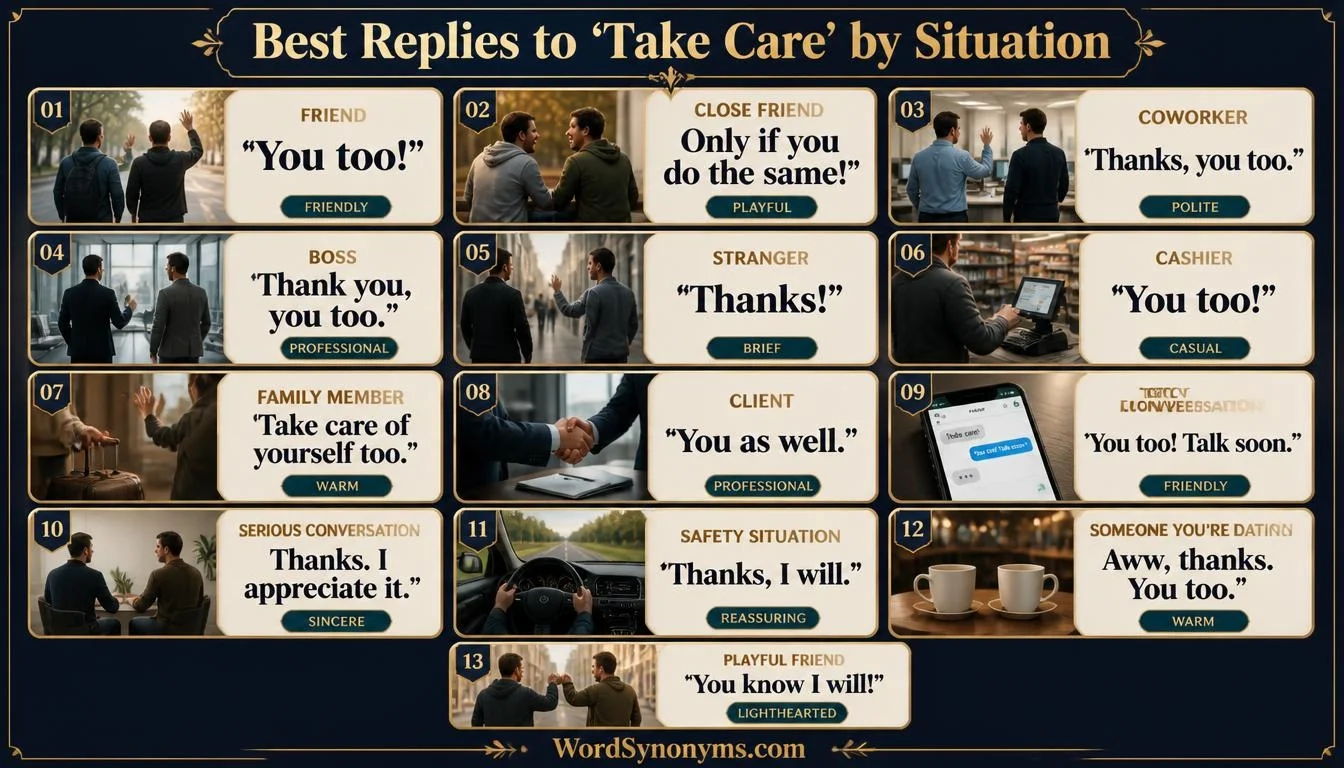
Best Replies to “Take Care” by Situation
A good response should match the relationship. You wouldn’t necessarily speak to your boss the same way you speak to your best friend.
| Situation | Natural Response | Tone |
| Friend | “You too!” | Friendly |
| Close friend | “Only if you do the same!” | Playful |
| Coworker | “Thanks, you too.” | Polite |
| Boss | “Thank you, you too.” | Professional |
| Stranger | “Thanks!” | Brief |
| Cashier | “You too!” | Casual |
| Family member | “Take care of yourself too.” | Warm |
| Client | “You as well.” | Professional |
| Text conversation | “You too! Talk soon.” | Friendly |
| Serious conversation | “Thanks. I appreciate it.” | Sincere |
| Safety situation | “Thanks, I will.” | Reassuring |
| Someone you’re dating | “Aww, thanks. You too.” | Warm |
| Playful friend | “You know I will!” | Lighthearted |
Best Replies to “Take Care” From a Friend
Friends give you more freedom with your response.
You can keep it simple:
- “You too!”
- “Will do!”
- “Talk soon!”
- “Catch you later!”
- “Only if you do the same!”
- “Take care of yourself too!”
If the friend has been checking on you, choose something more personal.
“Thanks for caring. You take care too.”
That small change can make the response feel much more genuine.
Best Replies to “Take Care” From a Coworker
Workplace conversations usually benefit from a friendly but measured tone.
Good choices include:
- “Thanks, you too.”
- “You as well.”
- “Have a good one.”
- “Take care.”
- “Thanks. Talk soon.”
You generally don’t need a clever response. In fact, trying too hard to be funny can make an ordinary farewell feel awkward.
A simple “Thanks, you too” usually hits the sweet spot.
Best Replies to “Take Care” From Your Boss
When your boss says “take care,” a respectful response works best.
Try:
- “Thank you, you too.”
- “Thanks. You as well.”
- “Thank you. Have a great evening.”
- “You too. Take care.”
You don’t need to sound stiff. Professional doesn’t mean robotic.
Best Replies to “Take Care” Over Text
Texting gives you more room to adjust the tone.
1. For casual messages, try:
- “You too!”
- “Thanks, you too 😊”
- “Will do!”
- “Same to you!”
- “Talk soon!”
2. For warmer conversations:
- “Thanks for checking in. You take care too.”
- “I appreciate that. Take care of yourself too.”
- “Aww, thanks. You too!”
3. For playful conversations:
- “Only if you do!”
- “Consider it done 😄”
- “I’ll try!”
- “You know I will!”
Emojis can soften short messages, especially when the words might otherwise seem abrupt.
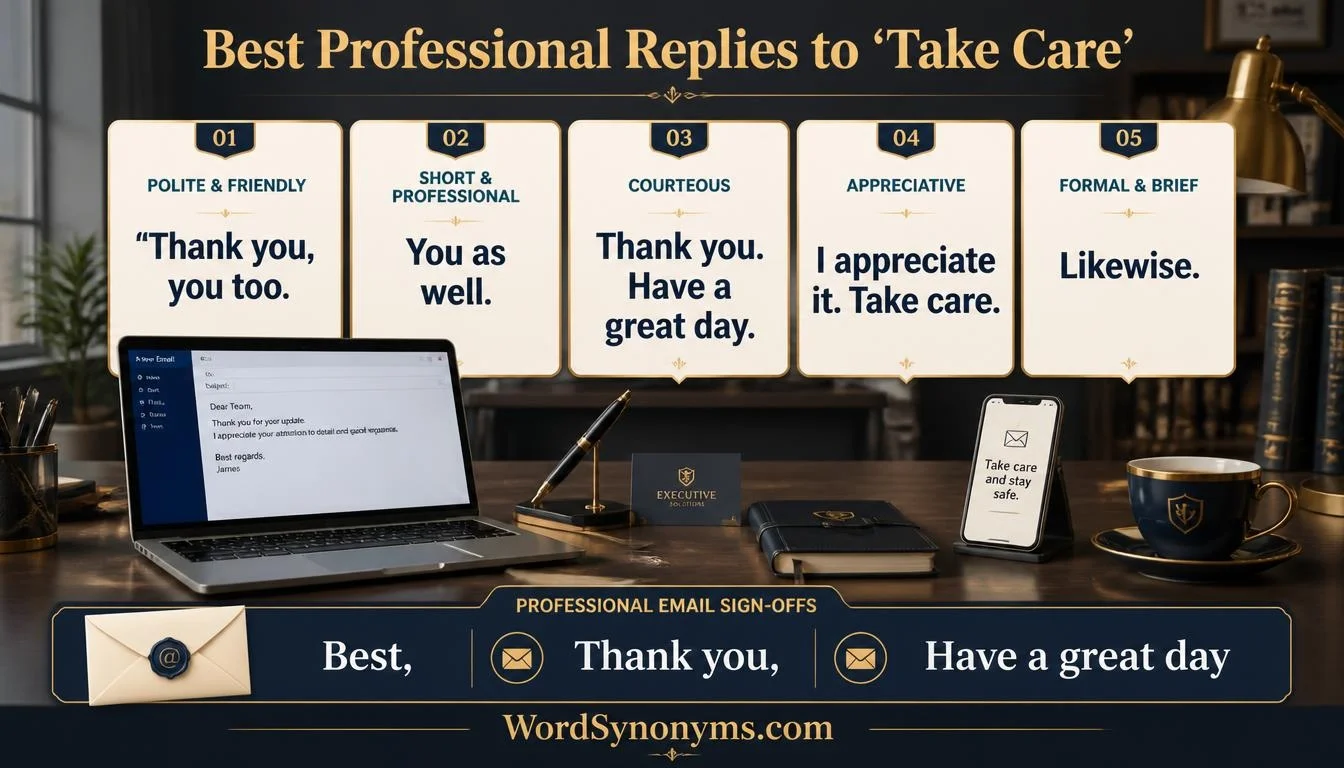
Best Professional Replies to “Take Care”
Professional settings call for clarity rather than cleverness.
The safest options are:
- “Thank you, you too.”
- “You as well.”
- “Thank you. Have a great day.”
- “I appreciate it. Take care.”
- “Likewise.”
For a business email, “Take care” itself can sometimes feel slightly informal depending on the relationship. A closing such as “Best,” “Thank you,” or “Have a great day” may suit a more formal exchange better.
However, if the other person already uses “take care” naturally, there’s nothing wrong with returning it.
Funny Replies to “Take Care”
Humor can make an ordinary farewell memorable. It can also backfire if the relationship doesn’t support it.
Here are a few playful options:
- “Take care of what?”
- “Only if you promise to do the same!”
- “Consider it taken care of!”
- “I’ll try my best!”
- “You know I will!”
- “I plan on it!”
- “No promises!”
The key is relationship and timing.
A joke that makes your best friend laugh could sound rude to a coworker. That’s why humor belongs near the bottom of your toolbox rather than at the top.
Is “You Too” a Correct Response to “Take Care”?
Yes. “You too” is a completely natural response to “take care.”
The shortened phrase works because English speakers regularly omit repeated words when the meaning remains obvious.
Consider this exchange:
“Take care!”
“You too!”
The full response would essentially be:
“You take care too.”
Nobody needs to say the entire sentence. The shorter version sounds more natural in everyday speech.
If you want to sound slightly warmer, add “thanks”:
“Thanks, you too!”
That’s one of the safest replies you can use.
Can You Reply “Take Care” to “Take Care”?
Absolutely.
Repeating the same farewell is perfectly natural.
“Take care!”
“Take care!”
You might also say:
“You too. Take care!”
Repeating a farewell doesn’t make the conversation awkward. In fact, people often mirror each other’s closing phrases without thinking about it.
The choice usually comes down to personal speaking style.
What If “Take Care” Means “Be Careful”?
This distinction matters.
When someone says:
“Take care!”
They may simply mean goodbye.
But when they say:
“Take care when you’re driving home.”
they’re giving you safety advice.
The appropriate response changes with the meaning.
| Meaning | Example | Good Response |
| Friendly farewell | “Take care!” | “You too!” |
| Safety advice | “Take care on the road.” | “Thanks, I will.” |
| Personal concern | “Take care of yourself.” | “Thanks, I appreciate it.” |
| Mutual farewell | “Okay, take care.” | “You too!” |
| Travel concern | “Take care while you’re away.” | “Thanks, I will.” |
When in doubt, look at what surrounds the phrase. Context does the heavy lifting.
Common Mistakes When Replying to “Take Care”
Overthinking a Simple Farewell
Not every “take care” contains a hidden message.
Sometimes someone simply wants to say goodbye politely. A natural “You too!” is usually enough.
Using Humor With the Wrong Person
Sarcasm requires familiarity.
A response like “Take care of what?” might amuse a close friend. With a client, stranger, or supervisor, it could sound dismissive.
Sounding Too Formal
You don’t need a grand response to a casual farewell.
Something like “I sincerely appreciate your considerate expression of concern” would sound unnatural in ordinary conversation.
Keep your response proportional to the moment.
Assuming “Take Care” Always Means Something Serious
The phrase can express genuine concern. More often, though, it’s simply a friendly closing.
Don’t read too much into routine language.
Saying “You Too” When Someone Gives Specific Advice
If someone says:
“Take care when you drive home.”
then “Thanks, I will” may sound better than “you too.”
You can still say:
“Thanks, you too. Drive safely.”
The key is responding to the actual meaning rather than just repeating a stock phrase.
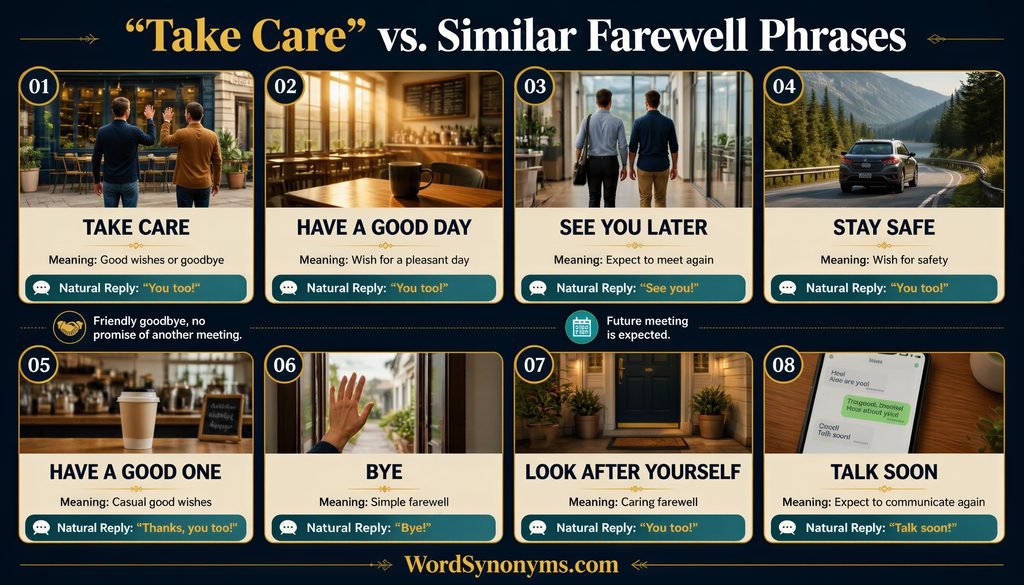
“Take Care” vs. Similar Farewell Phrases
Several expressions can sound similar while carrying slightly different shades of meaning.
| Phrase | Meaning | Natural Reply |
| Take care | Good wishes or goodbye | “You too!” |
| Have a good day | Wish for a pleasant day | “You too!” |
| See you later | Expect to meet again | “See you!” |
| Stay safe | Wish for safety | “You too!” |
| Have a good one | Casual good wishes | “Thanks, you too!” |
| Bye | Simple farewell | “Bye!” |
| Look after yourself | Caring farewell | “You too!” |
| Talk soon | Expect to communicate again | “Talk soon!” |
These phrases overlap, but they aren’t identical.
For example, “see you later” implies another meeting. “Take care” doesn’t necessarily make that promise.
Quick Guide: Which Reply Should You Choose?
If you want the fastest possible answer, use this guide.
For a casual conversation
“You too!”
For a warmer response
“Thanks, you too!”
For a professional conversation
“You as well.”
When someone is genuinely concerned
“Thanks, I will.”
For a close friend
“Only if you do the same!”
For texting
“You too! Talk soon.”
For a safety situation
“Thanks, I will.”
For a funny response
“Take care of what?”
For someone you expect to see again
“You too. See you later!”
Read more: Address an Issue: Meaning, Examples and Alternatives
Case Study: Choosing the Right Reply
Imagine three different conversations.
Case 1: A Coworker Leaves the Office
Your coworker grabs their bag and says:
“I’m heading out. Take care!”
The most natural response is:
“Thanks, you too!”
There’s no need to make the exchange complicated. You’re simply returning a friendly farewell.
Case 2: A Friend Is Worried About You
You tell a friend that you’ve been exhausted lately. They respond:
“You’ve got to slow down. Take care of yourself.”
A better response would be:
“Thanks. I really appreciate that.”
Here, “take care” expresses concern rather than merely ending a conversation.
Case 3: Someone Warns You About a Long Drive
Someone says:
“Take care on that drive. The roads may be icy.”
A natural response is:
“Thanks, I will.”
This time, the phrase acts as advice. Saying “you too” wouldn’t address the specific warning unless the other person is also driving.
These examples show why context matters more than memorizing one perfect phrase.
FAQs
1. What is the best reply to “Take Care”?
A simple “You too!” is one of the best replies. It sounds natural, friendly, and polite. You can also say “Thanks, stay safe!” to return the kind wishes.
2. How do you reply to “Take Care” in a funny way?
You can add a little humor without making the other person uncomfortable. Try saying “I’ll try not to cause trouble!” or “Only if you promise to do the same!” Both replies keep the conversation light.
3. What should I reply when my crush says “Take Care”?
Keep your response warm without sounding too serious. You could say “You too! Don’t forget to take care of yourself.” If you share a playful connection, try “I will, but you better do the same!”
4. How do you respond to “Take Care” from a friend?
A relaxed reply works best with friends. Say “You too, buddy!”, “Stay out of trouble!”, or “Catch you later!” Choose something that matches your usual friendship style.
5. Is saying “Thanks, you too” a good response to “Take Care”?
Yes! “Thanks, you too” is a polite and natural response. It acknowledges the person’s kindness and returns their good wishes without making the exchange awkward.
6. How do you reply to “Take Care” professionally?
When responding to a boss or coworker, keep your message respectful. You can say “Thank you. Take care as well” or “Thanks, wishing you a great day!” Both options work well in workplace conversations.
7. What is a sweet reply to “Take Care” from someone you love?
You can make your response more affectionate with a personal touch. Try “I will, sweetheart. You take care too” or “Always! You’re in my thoughts.” These replies show warmth without sounding forced.
8. How do you respond to “Take Care” over text?
Text messages give you room to sound casual and expressive. You can reply with “You too 😊”, “Thanks! Talk soon!”, or “Stay safe out there!” A simple emoji can also make your message feel friendlier.
9. What does it mean when someone says “Take Care” before leaving?
It usually means they care about your well-being and hope things go smoothly for you. Depending on your relationship, it can express friendship, affection, politeness, or genuine concern. Sometimes, it’s simply a warm way to end a conversation.
10. Should I reply differently to “Take Care” depending on who says it?
Absolutely! Your response should match your relationship with the speaker. A funny reply might suit a close friend while a polite response works better with your boss. With someone you love, a sweet or affectionate message can make the goodbye more meaningful.
Conclusion
Finding the right reply to “Take Care” doesn’t have to be difficult. Sometimes, a simple “You too!” is enough to make someone feel appreciated. Other times, a funny comeback, sweet message, or thoughtful response makes the goodbye more memorable. The trick is to consider who you’re talking to and choose words that match your relationship. Whether you’re replying to a close friend, family member, romantic partner, or coworker, a natural response always feels better than a forced one.
Personally, I believe small exchanges can make a big difference in everyday relationships. A few thoughtful words can show kindness, return someone’s concern, and leave a positive impression. So, the next time someone tells you “Take Care,” don’t feel limited to saying just “Thanks.” Pick a reply that reflects your personality, brings a smile, or makes the other person feel valued. After all, meaningful communication often starts with the simplest words.

Hamza Rehman is passionate about English vocabulary, synonyms, and word meanings. He enjoys exploring how words connect and how the right word can make communication clearer. Through WordsSynonyms, he creates easy-to-understand vocabulary guides, practical examples, and helpful word alternatives for students and writers.


