

This guide to 30 Best Replies to “Do I Know You?” helps you handle awkward encounters with humor, confidence, and good manners. Whether you’re going about your day, minding your own business, or walking out on the street, someone might approach you with an unexpected question.
Sometimes, they recognize your face but struggle to remember your name. Perhaps they’re a familiar person, a stranger, or an unfamiliar person trying to start a conversation. Whatever the reason, this dreaded question can create an awkward situation during an ordinary everyday conversation. Even if you don’t know them, you can handle the moment without feeling uncomfortable.
The best approach depends on the personal encounter and the other person’s intentions. During a face-to-face interaction, a witty response, humorous response, or clever comeback can keep things light. A little humor often makes an unexpected conversation less uncomfortable.
On the other hand, a polite response, friendly response, or appropriate reply works better when you want to remain respectful. These examples include funny replies, funny comebacks, and ways of responding humorously or responding politely. They also help you handle asking questions, recognition, recognizing someone, knowing someone, meeting someone, and casual conversation naturally.
With a little humor, confidence, and good manners, you can improve your social etiquette and communication skills. Whether you’re dealing with a social interaction, street encounter, or personal interaction, the right words can make all the difference.
Quick Answer
Some good replies to “Do I know you?” include “Not yet, but I’m happy to change that,” “Maybe from somewhere interesting,” “I don’t think we’ve officially met,” and “You might recognize me after a little conversation.” Choose a funny response for casual situations or a polite answer when speaking with someone unfamiliar.

30 Best Replies to “Do I Know You?” (Funny & Polite)
The best response depends on what you want from the conversation. You might want to make someone laugh, introduce yourself, or end an uncomfortable interaction gracefully.
Below are 30 different responses organized by tone and situation. Each one includes an explanation so you can understand when it works best.
Funny Replies to “Do I Know You?”
A little humor can turn an awkward question into an enjoyable exchange. Funny responses work particularly well when the other person seems relaxed and genuinely curious.
Try these five playful answers when you want to make someone smile without sounding offensive.
1. “Not yet, but there’s still time!”
This response turns an ordinary question into a friendly opportunity. It suggests that you haven’t met before but could get acquainted.
It’s especially useful when meeting someone at a party, social gathering, or casual event. The playful wording keeps things light without putting pressure on the other person.
Example:
Person: “Do I know you?”
You: “Not yet, but there’s still time!”
2. “Maybe I’m just unforgettable!”
Here’s a confident answer that adds a little humor to the conversation. It jokingly suggests that the person should recognize you because you’re memorable.
Use this response when you’re already sharing a playful conversation. However, deliver it with a smile so your confidence doesn’t sound like arrogance.
3. “I hope so. Otherwise, this introduction is going to be awkward!”
This response makes fun of the situation rather than the person asking. It acknowledges the awkwardness while creating an opportunity to introduce yourself.
It’s particularly suitable for social gatherings where neither person remembers meeting before.
4. “Only in your dreams, apparently!”
This cheeky response adds a little absurd humor to an ordinary exchange. It works best between people who already share a playful attitude.
Be careful with the delivery. Someone who doesn’t know you might interpret it as flirting or an unnecessarily strange answer.
5. “I’m the person your memory hasn’t introduced you to yet!”
This is a creative way to respond without sounding defensive. It jokingly blames the missing introduction rather than the other person’s memory.
Use it when you want to make someone laugh and keep the conversation moving.
Clever and Witty Replies to “Do I Know You?”
Sometimes, a clever answer works better than an ordinary joke. These responses use wordplay, unexpected observations, and playful logic to make the conversation interesting.
Choose one when you want to sound quick-witted without being rude.
6. “That depends. Are you good with faces?”
This answer turns the question into another question. It creates a little suspense while giving the other person an easy opportunity to respond.
They might laugh, admit they’re terrible with faces, or explain where they think they’ve seen you.
7. “We might have crossed paths somewhere along the way.”
This response sounds thoughtful and slightly mysterious. It acknowledges that you could have met without pretending to remember something you don’t.
It’s useful when someone’s face seems familiar but you cannot place the exact location.
8. “Not officially, but we can fix that.”
A simple answer can sometimes carry more charm than an elaborate comeback. This one suggests that an introduction could solve the mystery.
It works well in casual conversations and friendly social settings. It can also sound subtly flirty when the situation feels right.
9. “I was about to ask you the same thing!”
This is a clever way to turn the question around without making things uncomfortable. It suggests that both people might be equally confused.
Use it when neither person seems certain about their connection.
10. “Perhaps we’re remembering different chapters of the same story.”
This response adds a little creativity to the conversation. It suggests that you might have encountered each other before but remember different details.
It’s better suited to playful conversations than formal introductions. If you want something more straightforward, simply ask where they think you’ve met.
Read more: A Lion Doesn’t Concern Himself With the Opinions of the Sheep
Polite Replies to “Do I Know You?”
Not every conversation needs a clever comeback. When someone genuinely doesn’t recognize you, a respectful response can make the interaction much smoother.
These five replies help you sound approachable without pretending to know someone.
11. “I don’t think we’ve officially met. I’m [your name].”
This is one of the easiest ways to handle the situation. It answers the question directly and introduces you naturally.
It’s especially useful at workplaces, networking events, conferences, and social gatherings.
12. “Maybe not, but I’d be happy to introduce myself.”
This response is friendly without assuming that the other person knows you. It also gives them the opportunity to continue the conversation.
Use it when meeting someone new or responding to an unfamiliar person online.
13. “I think we’ve seen each other around, but I’m not completely sure.”
Sometimes, a face looks familiar without bringing back a specific memory. This response acknowledges that possibility without making an unsupported claim.
It works particularly well when you share a workplace, neighborhood, school, or social circle.
14. “I’m sorry if I seem familiar. We might have mutual friends.”
This is a considerate response when someone appears confused about your identity. It offers a reasonable explanation without insisting that you’ve met.
You can follow it with a question about mutual acquaintances if the conversation continues naturally.
15. “Possibly! Where do you think we might have met?”
Rather than guessing, this response invites the other person to share their thoughts. It can help both of you identify a shared connection.
It’s a practical option when you genuinely aren’t sure whether you’ve met before.
Sarcastic but Playful Replies to “Do I Know You?”
A little sarcasm can make your response memorable. However, there’s a fine line between playful teasing and sounding unnecessarily dismissive.
These four answers work best when the conversation already feels relaxed.
16. “Well, that’s a mystery we’re both trying to solve!”
This response makes the situation sound like a small detective story. It also acknowledges that neither person has all the answers.
Use it when you’re comfortable joking with the other person.
17. “Your memory might need a software update!”
This is a lighthearted joke about forgetting people. It compares human memory to a device that occasionally needs maintenance.
It’s suitable for friends or acquaintances who enjoy harmless teasing. Avoid using it with someone who seems genuinely uncomfortable.
18. “I guess I’ll have to make a better first impression!”
This answer uses self-deprecating humor to keep the interaction friendly. Instead of criticizing the other person’s memory, you make yourself part of the joke.
It’s particularly useful when meeting someone at a social event.
19. “Not sure. Should I be worried?”
This short response adds a playful twist to the question. It creates an opening for the other person to explain why they’re asking.
Use it when the conversation has a joking tone. Otherwise, a straightforward introduction might work better.
Flirty Replies to “Do I Know You?”
When someone you’re attracted to asks this question, you might want to add a little charm. A flirty response can turn an ordinary introduction into a memorable exchange.
However, keep your answer respectful. Flirting should feel natural rather than forced.
20. “Not yet, but I’d love to change that.”
This is a confident and straightforward response. It communicates interest without relying on complicated pickup lines.
Use it when the other person seems open to conversation and you’re comfortable showing a little interest.
21. “Maybe we’re supposed to meet. Who knows?”
This answer adds a touch of playful mystery. It suggests that meeting could be a pleasant coincidence worth exploring.
It’s useful when you want to sound charming without making an overly direct romantic suggestion.
22. “You might not know me yet, but I’d like to get to know you.”
Sometimes, honesty is more attractive than an elaborate comeback. This response clearly expresses your interest while respecting the other person’s choice.
It’s suitable for friendly introductions, dating conversations, and casual social encounters.
23. “Not personally, but I’m open to changing that.”
This response sounds confident, relaxed, and slightly flirty. It makes your intentions clear without overwhelming the conversation.
Use it when the other person seems interested in getting acquainted.
Short and Sassy Replies to “Do I Know You?”
Not every situation needs a complete sentence. Sometimes, a short response delivers the message more effectively.
These four options work well in casual conversations, social media messages, and quick exchanges.
24. “Not that I remember!”
This is a simple response that leaves room for clarification. It doesn’t completely dismiss the possibility that you’ve met before.
It’s particularly useful when someone’s face or name seems unfamiliar.
25. “Maybe. Refresh my memory!”
This short comeback puts the conversation back in the other person’s hands. It also invites them to explain where they think you’ve met.
Use it when you’re genuinely curious about their question.
26. “Could be. What’s your guess?”
This response adds a little mystery without sounding unfriendly. It encourages the other person to share their thoughts.
It’s a good choice for casual conversations where you want to keep things interesting.
27. “Only if you’re lucky!”
This is a confident and slightly cheeky answer. It works best when both people enjoy playful banter.
Avoid using it with strangers who might interpret the response as dismissive or arrogant.
Friendly Replies When You’re Not Sure If You Know Someone
Recognizing someone’s face but forgetting their name can happen to anyone. Instead of pretending to remember, use a friendly response that helps you reconnect.
These final three replies are especially useful for acquaintances and people from your past.
28. “You look familiar, but I can’t quite place where we’ve met.”
This is an honest way to acknowledge a familiar face. It also gives the other person an opportunity to remind you of your connection.
It’s useful when you recognize someone’s appearance but cannot remember their name or background.
29. “Have we met through a mutual friend?”
This response offers a natural starting point for identifying a shared connection. It works particularly well when you attend similar events or belong to overlapping social circles.
If they mention a mutual friend, you can continue with a more specific question.
30. “I feel like we’ve crossed paths before. Remind me where?”
This answer combines friendliness with genuine curiosity. It avoids making the other person feel unimportant if you cannot immediately remember them.
Use it when you suspect you’ve met before but need a little help remembering.
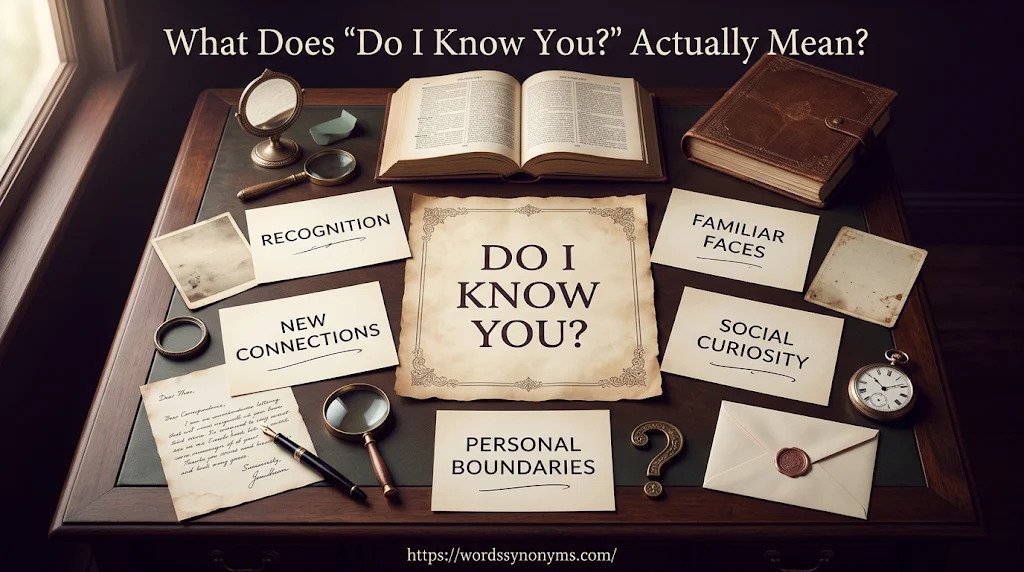
What Does “Do I Know You?” Actually Mean?
The question “Do I know you?” sounds straightforward, but its meaning depends heavily on context. Someone might ask because they recognize your face, feel confused, or want to understand why you’re approaching them.
Sometimes, the question is simply an invitation to introduce yourself. In other situations, it communicates uncertainty or a desire for personal space.
Understanding the possible meaning helps you choose an appropriate response.
They Genuinely Don’t Recognize You
The most obvious explanation is that the person doesn’t recognize your face or remember your name.
This often happens when you’ve met only once or twice. People also forget acquaintances when they encounter them outside their usual environment.
For example, someone who knows you from school might not immediately recognize you at a shopping mall.
Best response: “We met at the college event last year. I’m [your name].”
Providing a little context helps refresh their memory without making them feel embarrassed.
They Think You’ve Met Somewhere Before
Sometimes, someone recognizes your face but cannot remember where they saw you. You might share a workplace, neighborhood, school, gym, or group of friends.
This situation creates a familiar feeling without a clear memory.
Instead of assuming they’ve forgotten you, help them identify the connection.
Best response: “I think we might have mutual friends. Do you know anyone from [place]?”
A simple reminder can solve the mystery.
They’re Trying to Start a Conversation
Not every question requires a literal answer. Someone might use “Do I know you?” as an easy way to approach another person.
This can happen at parties, networking events, social gatherings, or dating situations.
The question creates a natural opening without requiring a complicated introduction.
Best response: “Not yet, but I’m happy to introduce myself!”
If the person seems friendly, continue with a simple introduction or ask what brought them to the event.
They Want to Know Why You’re Contacting Them
Online conversations create another common situation. Someone might receive a message, friend request, or follow from an unfamiliar account.
Naturally, they want to understand who you are and why you’re contacting them.
In this context, vague or overly playful replies might create more confusion.
Best response: “We haven’t met, but I came across your profile through a mutual friend.”
Be honest about how you found their account. Avoid pretending to have a connection that doesn’t exist.
They’re Setting a Boundary
Sometimes, “Do I know you?” isn’t an invitation to become friends. It can signal that someone feels uncomfortable with an unexpected approach.
This matters especially when you’re speaking to strangers or contacting someone who hasn’t invited communication.
If the person sounds distant or uncomfortable, respect that signal.
Best response: “No, sorry. I didn’t mean to interrupt. Have a good day.”
A respectful exit is better than forcing a conversation. You don’t need a clever comeback for every situation.
How to Choose the Best Response to “Do I Know You?”
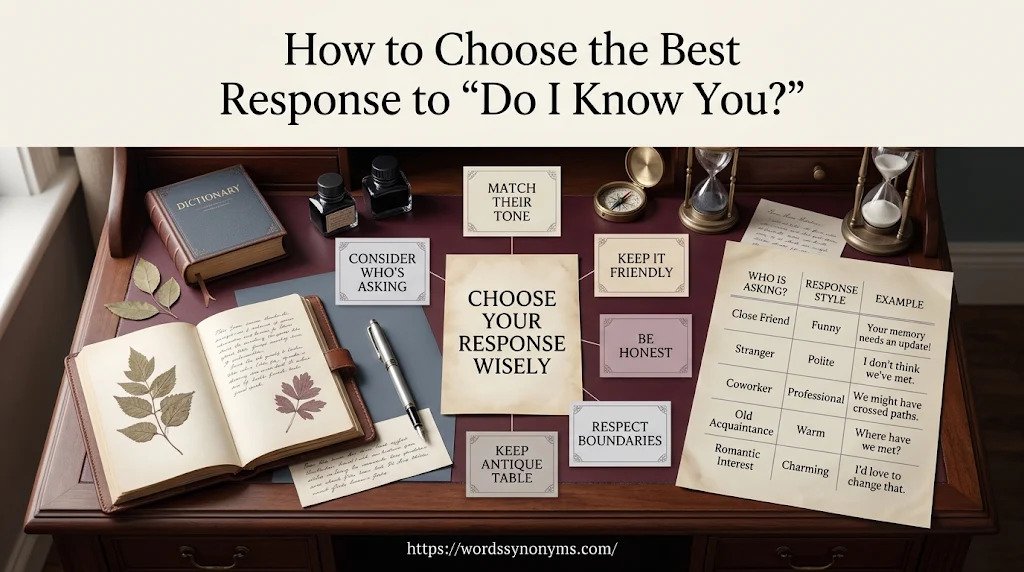
Choosing a response isn’t only about finding the funniest sentence. You also need to consider the person, setting, and tone of the interaction.
A reply that works perfectly with a close friend might sound strange when used with a stranger. Here’s how to make the right choice.
Consider Who Is Asking
Your relationship with the other person should influence your answer.
For example, a friend might appreciate a sarcastic joke. A coworker may prefer a polite introduction.
Consider these common situations:
| Who Is Asking? | Recommended Response Style | Example |
| Close friend | Funny or sarcastic | “Your memory needs an update!” |
| Stranger | Polite and straightforward | “I don’t think we’ve met. I’m Alex.” |
| Coworker | Professional and friendly | “We might have crossed paths at work.” |
| Old acquaintance | Warm and familiar | “You look familiar! Where have we met?” |
| Romantic interest | Charming and flirty | “Not yet, but I’d love to change that.” |
| Social media contact | Clear and honest | “We haven’t met, but we have mutual friends.” |
The goal is to make your response appropriate without overthinking every word.
Match Their Tone
Pay attention to how someone asks the question. Their facial expression, voice, and body language can provide useful clues.
If they smile and sound playful, a funny response might fit. However, a serious or confused expression calls for something more direct.
Consider these examples:
- Friendly tone: “Not yet, but I’m happy to introduce myself!”
- Confused tone: “We met at Sarah’s birthday party.”
- Playful tone: “Maybe I’m just unforgettable!”
- Professional tone: “I don’t believe we’ve officially met.”
- Uncomfortable tone: “Sorry, I didn’t mean to bother you.”
Matching someone’s tone helps prevent misunderstandings. It also makes your response feel more natural.
Decide Whether You Want to Continue the Conversation
Your answer can influence what happens next. Some responses encourage another question while others politely close the interaction.
If you’re interested in meeting someone, choose an answer that invites conversation.
For example:
“Not yet, but I’d be happy to change that. What’s your name?”
On the other hand, if you don’t want to continue talking, keep your answer brief.
For example:
“No, I don’t think we’ve met. Take care!”
You don’t have to turn every unexpected interaction into a new friendship.
Be Honest If You Recognize Them
Pretending not to recognize someone can create unnecessary confusion. If you remember where you met, simply mention it.
For example:
“We met at the workshop last month. You were sitting near the front.”
Specific details make it easier for someone to remember you. They also show that you’re genuinely trying to establish a connection.
If you cannot remember their name, don’t panic. A friendly question can help:
“I’m sorry, I remember meeting you but can’t recall your name. Could you remind me?”
Most people understand that names and faces don’t always stay connected in memory.

Real-Life Examples: How to Respond to “Do I Know You?”
Understanding the replies becomes easier when you see how they work in everyday situations. The following examples show how the same question can lead to different conversations.
Situation: Someone Approaches You at a Party
Imagine you’re attending a birthday party. Someone walks over, looks at you, and asks, “Do I know you?”
You suspect they might be a friend of the host.
Possible conversation:
Person: “Do I know you?”
You: “Not officially, but we can fix that. I’m Alex.”
Person: “Nice to meet you! I’m Daniel.”
You: “Nice to meet you too. How do you know the birthday girl?”
Why it works: Your response is friendly and gives the other person an easy opportunity to introduce themselves.
Situation: An Old Classmate Doesn’t Recognize You
You meet someone at a shopping mall who attended your school several years ago. They look familiar but don’t immediately recognize you.
Possible conversation:
Person: “Do I know you?”
You: “I think we went to the same school. Remember the annual sports event?”
Person: “Wait! Were you in the science section?”
You: “Exactly! It’s been a while.”
Why it works: Mentioning a shared experience helps the other person connect the memory with your face.
Situation: Someone Messages You on Instagram
An unfamiliar person sends you a message. You respond, and they ask whether they know you.
Possible conversation:
Person: “Do I know you?”
You: “Not personally. I came across your profile through a mutual friend.”
Person: “Oh, who’s the mutual friend?”
You: “I believe we both know Sarah.”
Why it works: You explain the connection honestly instead of giving a mysterious or confusing answer.
Situation: Someone You’re Interested In Asks
You’re talking to someone at a social event. They smile and ask, “Do I know you?”
Possible conversation:
Person: “Do I know you?”
You: “Not yet, but I’d love to change that.”
Person: “That’s a pretty confident answer!”
You: “I figured a good introduction was worth trying.”
Why it works: The response shows interest while keeping the conversation light and respectful.
Read more: BBB Slang Meaning in Text, Chat and Social Media
FAQs
1. What should I say when someone asks, “Do I know you?”
You can say, “Maybe we’ve crossed paths before,” or “I’m not sure, but nice to meet you!” Both replies sound natural and friendly.
2. How do you respond to “Do I know you?” in a funny way?
Try saying, “Not yet, but we can fix that!” or “Only if you have a good memory!” A little humor can make the conversation more enjoyable.
3. How do you politely tell someone you don’t know them?
You can simply say, “I don’t think we’ve met before,” or “Sorry, I don’t recognize you.” These responses are honest without sounding unfriendly.
4. What does it mean when a stranger asks, “Do I know you?”
They might recognize your face, confuse you with someone else, or simply want to start a conversation. Their tone and behavior can help you understand their intentions.
5. How do you respond when someone thinks they know you?
You can say, “You might be thinking of someone else,” or “Maybe we met somewhere before.” This gives them room to explain without making things awkward.
6. What is a witty comeback to “Do I know you?”
A clever reply could be, “That depends. Are you famous?” or “Not according to my memory!” Keep your delivery light so the joke doesn’t sound rude.
7. How do you respond to “Do I know you?” over text?
You could reply, “I’m not sure. Where do you think we met?” This encourages the other person to explain how they recognize you.
8. Is it rude to say, “I don’t know you”?
No, it’s not rude if you say it respectfully. A softer alternative is, “I’m sorry, I don’t think we’ve met before.”
9. What should I say if I recognize someone but can’t remember their name?
Try saying, “Your face looks familiar, but I’m having trouble remembering your name.” It’s honest, friendly, and less awkward than pretending to remember.
10. How can I end an uncomfortable conversation politely?
You can say, “It was nice talking to you, but I have somewhere to be.” This helps you leave the conversation without creating unnecessary tension.
Conclusion
Being asked “Do I Know You?” can catch you off guard, especially when you have no idea who the other person is. However, you don’t need to feel pressured or search for the perfect words. A little humor, a friendly smile, or a simple polite response can make the situation much easier. Whether you prefer a clever comeback or a respectful answer, choose something that feels natural to you.
Remember, not every unexpected conversation needs a long explanation. Sometimes, a funny reply breaks the ice, while a straightforward answer sets clear boundaries. The next time someone asks if you know them, you’ll have plenty of funny and polite replies ready. Stay relaxed, trust your instincts, and let your personality do the talking.

Hamza Rehman is passionate about English vocabulary, synonyms, and word meanings. He enjoys exploring how words connect and how the right word can make communication clearer. Through WordsSynonyms, he creates easy-to-understand vocabulary guides, practical examples, and helpful word alternatives for students and writers.



[…] Read more: 30 Best Replies to “Do I Know You?” […]