

This guide to 26 Best Replies to “Mind Your Own Business” That Actually Work helps you set boundaries without sounding rude or starting unnecessary conflict. In everyday conversations, an intrusive question can make you uncomfortable.
Although saying mind your own business seems direct, it may sound confrontational or dismissive in the wrong situation. A polite response can protect your privacy, communicate your feelings, and prevent unnecessary tension.
In my experience, a coworker once asked about my salary. Instead of reacting sharply, I simply said, “I prefer to keep that private.” This simple response established a clear boundary without creating drama or damaging our professional relationship.
At work, professional communication and respectful language help you handle uncomfortable questions. With friends, natural expressions and a little humor can make your response feel friendlier. However, repeated unwanted interference may require firm responses.
The right wording, tone, and communication style depend on the situation. You can use diplomatic expressions to guide the conversation toward a safer topic or choose direct responses when someone ignores your boundaries.
Learning these alternative phrases improves your communication skills, confidence, and assertiveness. More importantly, you can communicate confidently, protect your personal space, maintain professionalism, and build healthier relationships while staying calm and respectful.
Quick Answer
The best reply to “Mind your own business” depends on the person’s tone and your relationship with them. For a playful situation, try “I would, but yours seemed more interesting.” For a calm response, say “Fair enough. I’ll leave it there.” If someone is being unnecessarily rude, you can say “You could’ve just said you didn’t want to discuss it.”
Here are 26 useful replies:
- “I would, but yours seemed more interesting.”
- “Relax, the investigation is officially over.”
- “Message received loud and clear.”
- “Fair enough. Consider it handled.”
- “I’ll add that to my list of things not to ask.”
- “Don’t worry. I’ve got plenty of my own.”
- “Case closed.”
- “And just like that, my curiosity retired.”
- “No problem. My detective badge is officially retired.”
- “Fine. I’ll return to my regularly scheduled business.”
- “Fair point. I’ll leave it there.”
- “No problem. I was only asking.”
- “I understand. You don’t have to explain.”
- “You’re right. I’ll give you some space.”
- “I respect your privacy.”
- “You can set a boundary without being rude.”
- “If you don’t want to answer, just say so.”
- “I understand your point, but your tone wasn’t necessary.”
- “There’s no need to make this hostile.”
- “I’ll respect your privacy if you respect mine.”
- “I’ll stay out of it. Let’s keep things respectful.”
- “Understood.”
- “No problem.”
- “Fair enough.”
- “Got it. I’ll leave it alone.”
- “All right. Let’s move on.”
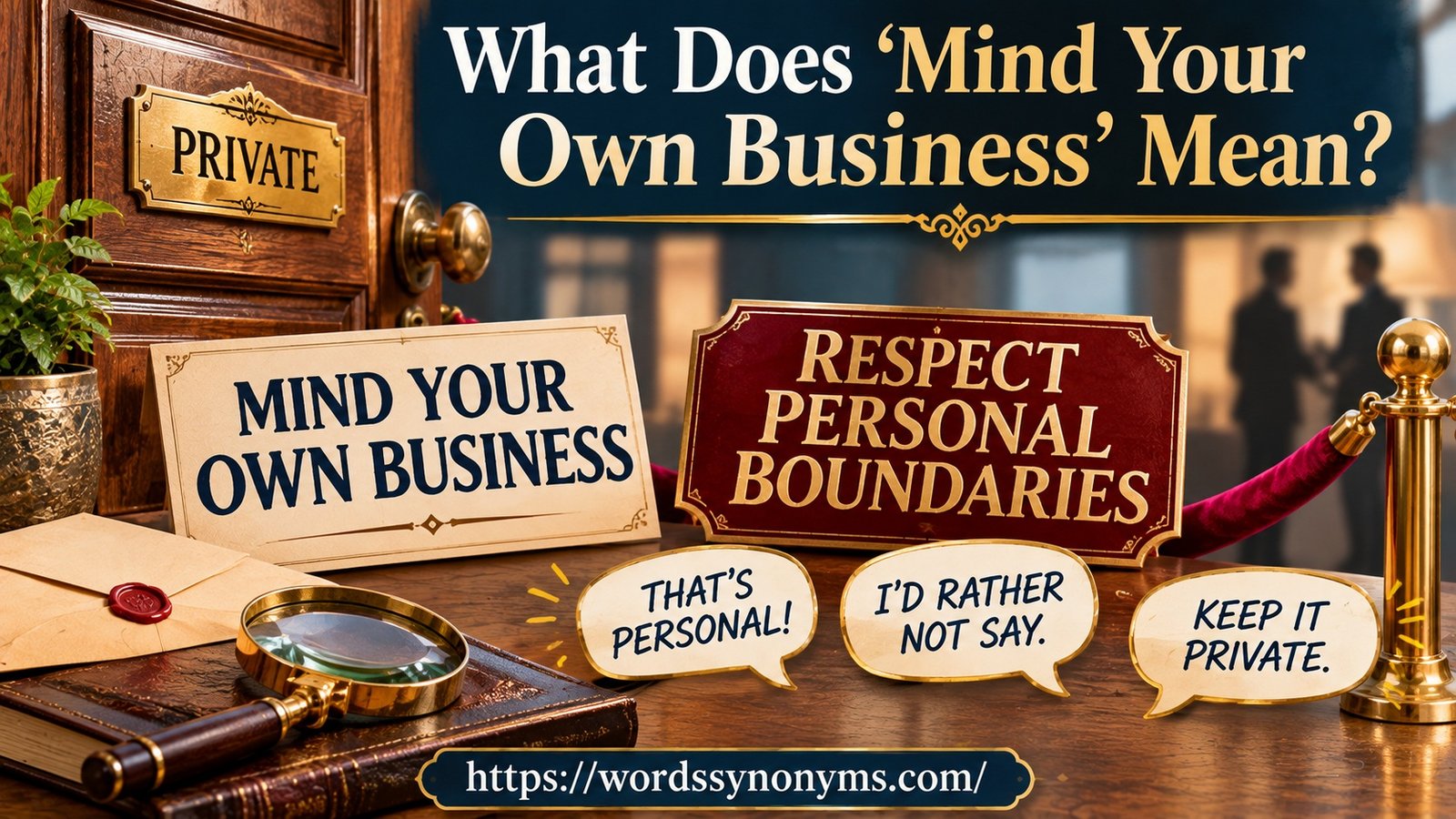
What Does “Mind Your Own Business” Mean?
“Mind your own business” means that someone doesn’t want you asking questions about their private affairs. In plain English, they’re telling you to stop getting involved in something they consider personal.
The phrase can cover a surprisingly wide range of situations. Someone might say it after you ask about their relationship. Another person might use it when you comment on their finances, family situation, plans, appearance, or personal choices.
For example:
“Are you two dating?”
“Mind your own business.”
The second speaker isn’t necessarily angry about the question itself. They may simply consider the subject private.
However, the phrase often sounds blunt or rude because it directly dismisses the other person’s curiosity. A gentler response would be something like “I’d rather not talk about that” or “That’s personal.”
That distinction matters when you’re deciding how to respond.
The Tone Changes Everything
The same words can carry completely different meanings depending on delivery.
A friend might grin and say:
“Mind your own business!”
You might both laugh because the exchange is clearly playful.
A coworker who says the same words sharply during a disagreement creates a different situation. There may be genuine tension behind the remark.
Before choosing a comeback, consider three things:
- Their tone: playful, annoyed, defensive, or hostile?
- Your relationship: friend, family member, coworker, stranger, or acquaintance?
- The subject: harmless curiosity or something deeply personal?
Those three clues can help you pick the right response in seconds.
What Should You Say When Someone Says “Mind Your Own Business”?
First, decide what you actually want from the conversation.
If you’re joking with a friend, a witty response can keep things light. If someone clearly wants privacy, respecting that boundary is usually the smarter move. When someone speaks disrespectfully, you can address their tone without turning the exchange into a verbal boxing match.
Think of it like choosing the right tool for a job. You wouldn’t use a hammer to tighten a tiny screw. Likewise, you don’t need an aggressive comeback for every rude remark.
A useful rule is simple:
Match the seriousness of the response to the seriousness of the situation.
1. If the moment is light, be playful.
2. If it’s serious, be measured.
3. If it’s hostile, protect your boundaries and disengage when necessary.
Read more: 25 Best Replies to “Just Kidding”: Sarcastic and Firm Comebacks
26 Best Replies to “Mind Your Own Business”
These replies to “mind your own business” cover different moods and situations. Some are playful. Others help you end the conversation without unnecessary drama.
1. “I would, but yours seemed more interesting.”
This is one of the cheekier witty replies to “mind your own business.” It works best when both people understand that the exchange is playful.
The line flips their statement back on them without becoming an outright insult. Use it with friends or people who appreciate sarcasm.
Don’t use it when someone is visibly upset. In that situation, it could pour gasoline on a small fire.
2. “Relax, the investigation is officially over.”
This response turns the conversation into a mock detective scene.
It works particularly well when someone reacts dramatically to an innocent question. The humor can signal that you weren’t trying to pry into their private life.
For example, if your friend refuses to reveal where they bought a surprise gift, this line can keep the mood light.
3. “Message received loud and clear.”
Sometimes a dry response says more than a clever one.
This reply acknowledges the boundary without apologizing excessively or starting another argument. It also works when you want to make it obvious that you won’t ask again.
The understated delivery is part of its charm.
4. “Fair enough. Consider it handled.”
This is a clean response when you don’t need the final word.
It tells the other person that you’ve heard them. More importantly, it closes the subject.
If you’re dealing with someone who genuinely wants privacy, this is often better than a sarcastic comeback.
5. “I’ll add that to my list of things not to ask.”
This has a mild sarcastic edge without becoming openly hostile.
It can work between friends who regularly tease each other. The humor comes from treating the exchange like an imaginary personal rulebook.
Still, tone matters. A playful smile can make the difference between humor and irritation.
6. “Don’t worry. I’ve got plenty of my own.”
This is a classic funny reply to “mind your own business.”
It subtly reminds the person that you have your own life to manage. You aren’t desperate to know every detail of theirs.
The line works because it’s short and doesn’t invite a long argument.
7. “Case closed.”
Few responses are more concise.
“Case closed” gives the exchange a playful courtroom flavor. It’s especially useful when someone jokingly treats your question like an investigation.
You can say it with a grin and move on.
8. “And just like that, my curiosity retired.”
This response uses exaggeration for comic effect.
Instead of arguing about whether the question was appropriate, you pretend that your curiosity has dramatically ended its career.
It’s a good choice when the conversation is casual and nobody feels genuinely offended.
9. “No problem. My detective badge is officially retired.”
This is another playful option for friends.
The imaginary detective badge makes your original curiosity seem humorous rather than intrusive. It also communicates that you won’t continue asking.
When delivered naturally, it can defuse an awkward moment.
10. “Fine. I’ll return to my regularly scheduled business.”
This line works through mock seriousness.
You pretend that your own business is a television program that has been interrupted. That exaggerated image gives the response a light comedic touch.
It’s best suited to casual conversations rather than formal settings.
11. “Fair point. I’ll leave it there.”
This is one of the strongest calm replies to “mind your own business.”
It doesn’t challenge the other person. It doesn’t apologize for something you didn’t necessarily do wrong either.
Instead, it recognizes their boundary and closes the subject.
Sometimes maturity looks remarkably unexciting. That’s not a bad thing.
12. “No problem. I was only asking.”
Use this when your question came from ordinary curiosity rather than malicious intent.
The sentence clarifies your intention without demanding an explanation from the other person.
It can be especially useful when someone reacts more sharply than you expected.
13. “I understand. You don’t have to explain.”
This response gives the other person room to step away from the subject.
It works particularly well when you realize you’ve accidentally touched a sensitive topic.
Rather than defending your question, you acknowledge their discomfort. That small change can prevent the conversation from becoming unnecessarily tense.
14. “You’re right. I’ll give you some space.”
This is a respectful response when someone clearly doesn’t want to continue.
It doesn’t mean you agree that your question was inappropriate. It simply means you’re choosing not to push the issue.
That distinction is useful. Respecting someone’s boundary doesn’t require you to accept their attitude.
15. “I respect your privacy.”
Few phrases are more direct.
This response works when you want to show maturity without sounding overly formal. It also communicates that you understand where the line is.
If the subject involves relationships, money, family problems, or another sensitive matter, this can be one of the safest responses.
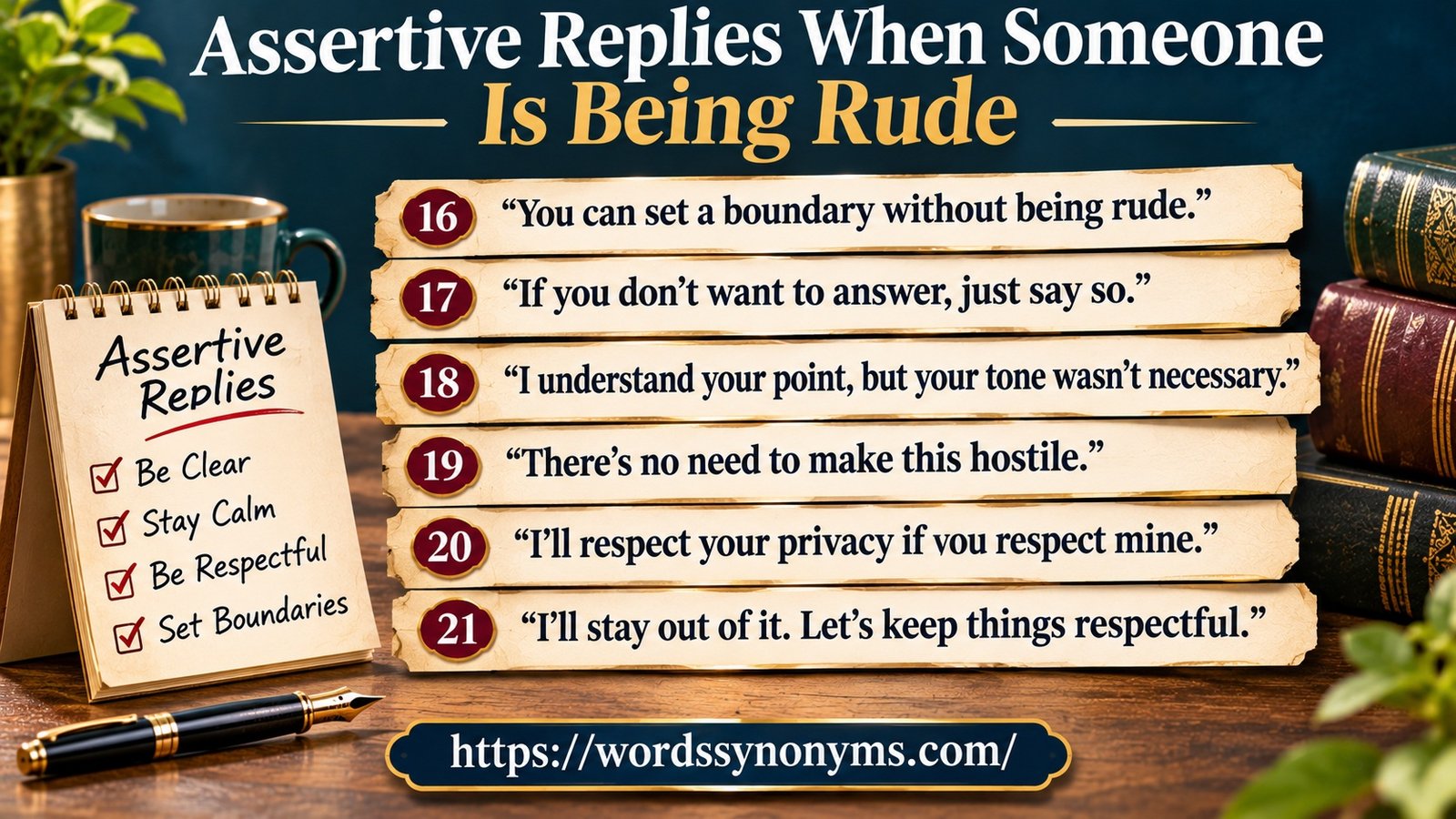
Assertive Replies When Someone Is Being Rude
Not every situation requires you to quietly absorb disrespect.
Sometimes a person could have established a perfectly reasonable boundary without speaking harshly. In those cases, an assertive response can address the behavior without escalating the conflict.
16. “You can set a boundary without being rude.”
This response separates two issues: their right to privacy and their manner of communicating it.
You’re acknowledging that they don’t have to answer your question. At the same time, you’re making it clear that disrespect isn’t necessary.
Use this when the conversation has become unnecessarily hostile.
17. “If you don’t want to answer, just say so.”
This line is useful when the original question was reasonable.
It gives the person a simple alternative to a rude dismissal. You aren’t demanding an answer. You’re asking for basic courtesy.
However, don’t use it when the topic is obviously sensitive. In that case, their desire for privacy should take priority.
18. “I understand your point, but your tone wasn’t necessary.”
This is a strong assertive reply to “mind your own business” because it focuses on behavior rather than attacking the person.
Instead of saying, “You’re rude,” you explain exactly what bothered you.
That makes the statement less inflammatory and more constructive.
19. “There’s no need to make this hostile.”
Use this when a minor exchange suddenly becomes heated.
The sentence doesn’t insult the other person. It simply points out that the conversation has taken an unnecessarily aggressive turn.
If they continue escalating, don’t feel obligated to keep defending yourself.
20. “I’ll respect your privacy if you respect mine.”
This response establishes a two-way boundary.
It works particularly well when someone expects privacy from you while regularly prying into your affairs.
The key is delivery. Say it calmly rather than as a challenge.
21. “I’ll stay out of it. Let’s keep things respectful.”
This is a useful middle ground between silence and confrontation.
You’re agreeing to step back from their private matter while making your expectations clear.
It can work well with coworkers, acquaintances, neighbors, or family members when the conversation starts getting tense.
Short Replies When You Don’t Want an Argument
Sometimes you don’t need a clever response. You need an exit.
A short answer can prevent a pointless back-and-forth, especially when someone is already defensive.
22. “Understood.”
One word can end the conversation.
There’s no sarcasm. No accusation. No invitation to argue.
If someone clearly wants privacy, this may be the most effective response available.
23. “No problem.”
This is neutral and easy to deliver.
It works particularly well when you weren’t emotionally invested in the subject anyway.
You can simply move on to another topic.
24. “Fair enough.”
This acknowledges their position without necessarily agreeing with their tone.
It’s short, natural, and versatile.
When the conversation doesn’t deserve another five minutes of your energy, “Fair enough” can close the door.
25. “Got it. I’ll leave it alone.”
This response clearly communicates that you’ve understood the boundary.
There’s no ambiguity. You won’t continue asking.
It’s especially appropriate when the other person appears uncomfortable.
26. “All right. Let’s move on.”
Use this when the topic is creating unnecessary tension.
It works because it focuses on what happens next rather than who was right.
Sometimes the best comeback is simply refusing to keep the argument alive.
Best Replies to “Mind Your Own Business” by Situation
The perfect response changes depending on where the conversation happens. A line that makes your best friend laugh could make a coworker uncomfortable.
| Situation | Best Response Style | Example |
| Close friend joking | Funny | “Case closed.” |
| Friend setting a real boundary | Calm | “I understand. You don’t have to explain.” |
| Family disagreement | Assertive | “You can set a boundary without being rude.” |
| Coworker | Professional | “Understood. I’ll leave it there.” |
| Stranger | Brief | “No problem.” |
| Online argument | Short | “Fair enough. I’ll move on.” |
| Sensitive personal matter | Respectful | “I respect your privacy.” |
| Someone repeatedly prying into your life | Firm | “I’ll respect your privacy if you respect mine.” |
This table highlights an important point: context matters more than cleverness.
A great comeback isn’t necessarily the funniest one. It’s the one that accomplishes what you actually want.
Replies to “Mind Your Own Business” From a Friend
Friends often have more freedom to joke with each other.
If someone says “mind your own business” with a grin, a funny response can turn the moment into harmless banter.
For example:
Friend: “Where are you going tonight?”
You: “Mind your own business.”
Friend: “Case closed.”
That exchange works because neither person appears genuinely upset.
However, friends can also use humor to hide real discomfort. If their tone suddenly changes, pay attention.
A good response might then be:
“Okay, I’ll leave it alone.”
That simple sentence shows that you can recognize a real boundary even after joking around.
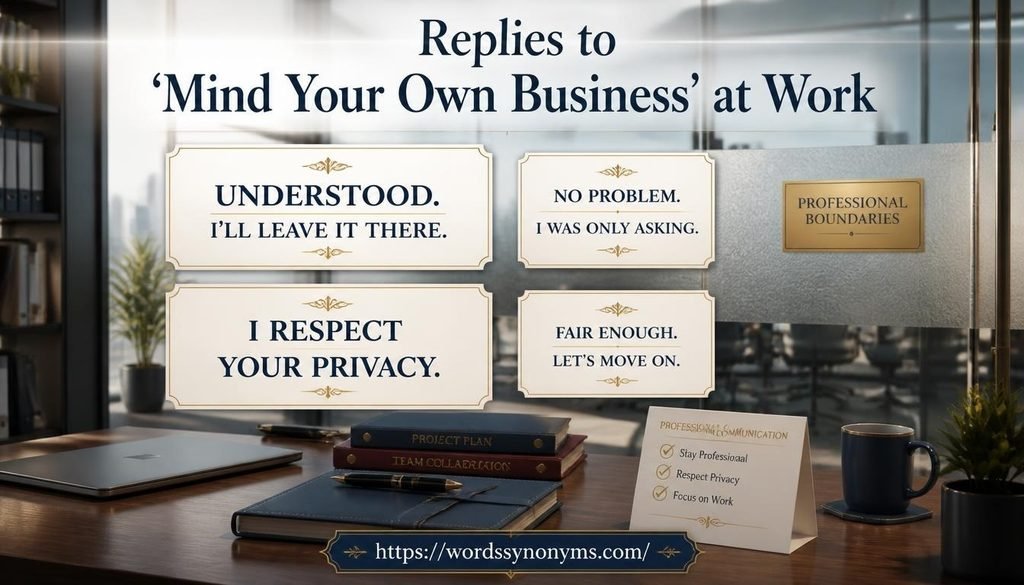
Replies to “Mind Your Own Business” at Work
Workplace conversations require more care.
A sarcastic comeback might feel satisfying for five seconds. Unfortunately, it can create awkwardness that lasts for weeks.
If a coworker says “mind your own business,” keep your response professional unless you have a very relaxed relationship.
Good options include:
- “Understood. I’ll leave it there.”
- “No problem. I was only asking.”
- “I respect your privacy.”
- “Fair enough. Let’s move on.”
The situation changes if the matter directly affects your work.
For example, if a coworker’s actions affect a shared project, asking a relevant question isn’t necessarily prying. The key is to keep the discussion focused on responsibilities rather than personal details.
Instead of:
“Why are you always leaving early?”
Try:
“I need to know when you’ll be available for the project.”
That approach removes the personal judgment and focuses on the practical issue.
Replies to “Mind Your Own Business” From a Stranger
With strangers, brevity usually wins.
You don’t know their temperament. You don’t know what they’re dealing with. Most importantly, you have little reason to turn a random interaction into a prolonged argument.
Useful responses include:
- “No problem.”
- “Understood.”
- “Fair enough.”
- “I’ll leave it there.”
Then walk away or change the subject.
There’s no trophy for winning an argument with someone you’ll probably never see again.
When Someone Says “Mind Your Own Business” Rudely
A person can have a legitimate boundary while still communicating it poorly.
That’s an important distinction.
Suppose you ask a coworker about a personal matter. They could say:
“I’d rather not discuss that.”
Instead, they snap:
“Mind your own business!”
You don’t have to respond with another insult.
A better approach might be:
“I understand you don’t want to discuss it. There was no need to be rude.”
This response does two things at once. It respects their privacy while protecting your own dignity.
If the person continues provoking you, disengagement becomes more useful than another comeback.
When You Shouldn’t Use a Comeback
Not every sharp remark deserves a sharper answer.
Some situations call for restraint because the subject carries emotional weight. A clever line may feel satisfying in the moment yet cause unnecessary damage afterward.
Avoid witty comebacks when:
- Someone is grieving.
- The subject involves serious family problems.
- Someone appears emotionally distressed.
- The conversation involves financial hardship.
- The person is discussing a private relationship problem.
- You’re dealing with a workplace conflict.
- The other person appears genuinely angry.
- The situation could become physically unsafe.
- Continuing the exchange serves no useful purpose.
In those moments, “Okay, I understand” may be far stronger than a cutting joke.
Knowing when not to speak is a social skill. Sometimes silence isn’t weakness. It’s judgment.
How to Choose the Right Response
Choosing among dozens of responses to “mind your own business” becomes easier when you ask yourself a few quick questions.
Who Said It?
A friend gives you more room for playful banter than a stranger.
A coworker requires professional judgment. A family member may need something between the two.
What Was Their Tone?
Listen beyond the actual words.
Were they smiling? Laughing? Rolling their eyes? Raising their voice?
Tone often reveals whether the phrase was playful or serious.
What Do You Want to Accomplish?
Your goal matters.
Do you want to:
- Make them laugh?
- End the conversation?
- Defend yourself?
- Respect their privacy?
- Address their disrespect?
- Change the subject?
Once you know your goal, the right response becomes much easier to choose.
How Serious Is the Subject?
A question about someone’s new haircut isn’t the same as a question about their divorce.
Likewise, asking about someone’s weekend plans differs greatly from asking about their finances.
The more personal the subject, the more careful your response should be.
Witty vs. Calm vs. Assertive Replies
Different responses serve different purposes.
| Response Type | Main Purpose | Best For | Possible Risk |
| Witty | Add humor | Friends and casual banter | May sound sarcastic |
| Funny | Defuse tension | Light conversations | Could seem dismissive |
| Calm | Respect privacy | Serious situations | Less dramatic |
| Assertive | Address disrespect | Tense conversations | May escalate things |
| Brief | End interaction | Strangers and arguments | Can sound blunt |
| Professional | Preserve relationships | Workplace situations | May sound formal |
The best response isn’t always the most entertaining one.
In many situations, the calm response wins because it gives the other person nothing to fight against.
Examples of Real Conversations
When Humor Works
Friend: “Why were you checking my phone?”
You: “I was conducting important research.”
Friend: “Mind your own business.”
You: “Case closed.”
Both people understand that the exchange is playful. No personal boundary has been seriously crossed.
When a Calm Reply Works Better
Coworker: “Mind your own business.”
You: “Fair enough. I’ll leave it there.”
The conversation ends without creating another problem.
That’s especially useful in professional settings where unnecessary tension can linger.
When an Assertive Reply Is Necessary
Person: “Mind your own business!”
You: “I understand you don’t want to discuss it. You could’ve said that without being rude.”
This response doesn’t attack their character. It identifies the behavior and sets a clear expectation.
When Walking Away Is Better
Person: “Mind your own business!”
You: “Understood.”
Then you leave the conversation.
Sometimes that is the strongest move available.
You don’t have to turn every disagreement into a battle of verbal one-upmanship.
Is “Mind Your Own Business” Rude?
It can be.
The phrase often sounds rude because it directly tells someone to stop involving themselves. However, the level of rudeness depends heavily on tone and context.
For example:
“Mind your own business!”
sounds much harsher than:
“Hey, mind your own business!”
said jokingly between longtime friends.
Even then, context remains important.
Someone has a legitimate right to keep personal matters private. They don’t owe everyone an explanation about their relationships, finances, family decisions, or personal plans.
The healthier distinction is this:
A person can have a valid boundary while expressing it poorly.
That means you can respect the boundary without pretending the delivery was polite.

What Is Another Way to Say “Mind Your Own Business”?
If you want to communicate the same idea more politely, several alternatives work better.
Polite Alternatives
- “I’d rather not discuss that.”
- “That’s personal.”
- “I’d prefer to keep that private.”
- “I don’t want to talk about it.”
- “I’d rather keep that to myself.”
- “Let’s change the subject.”
- “I’m not comfortable discussing that.”
- “I’d rather not get into it.”
These expressions establish a boundary without sounding unnecessarily hostile.
For example, compare:
“Mind your own business.”
with:
“I’d rather keep that private.”
Both communicate the same basic message. The second one simply leaves less emotional debris behind.
Read more: 26 Best Replies When Someone Texts You “K”
“Mind Your Own Business” vs. “None of Your Business”
These phrases overlap, but they aren’t identical in tone.
“Mind your own business” tells someone to stop involving themselves in your affairs.
“None of your business” directly labels the information as outside their concern.
Both can sound dismissive. In many situations, “none of your business” feels even more abrupt because it directly rejects the other person’s right to know.
For example:
“Where did you get that information?”
“None of your business.”
The response shuts the door immediately.
A more diplomatic alternative would be:
“I’d rather not say.”
The meaning stays intact while the conversation remains calmer.
FAQs
1. What is the best reply to “Mind Your Own Business”?
A good reply is, “I was only asking, but I respect your privacy.” It sounds calm and shows that you understand personal boundaries without starting an argument.
2. How do you politely tell someone to mind their own business?
You can say, “I’d rather keep that private” or “That’s something I’d prefer not to discuss.” Both phrases communicate your boundary without sounding disrespectful.
3. What is a clever response to “Mind Your Own Business”?
Try saying, “Don’t worry, I have enough business of my own!” It’s a lighthearted response that adds humor without turning the conversation into an argument.
4. How do you respond when someone is too nosy?
Stay calm and avoid sharing details you aren’t comfortable discussing. You can simply say, “That’s a little personal, don’t you think?” This makes your feelings clear without being unnecessarily harsh.
5. Is saying “Mind Your Own Business” considered rude?
It can sound rude depending on your tone and the situation. However, sometimes a direct response is necessary when someone repeatedly ignores your personal boundaries.
6. How do you respond professionally to “Mind Your Own Business”?
You can say, “I understand, and I didn’t mean to overstep. I’ll respect your privacy.” This response keeps workplace communication polite and prevents unnecessary tension.
7. What is a funny way to tell someone to mind their own business?
You could say, “My business isn’t hiring investigators today!” A playful response like this can lighten the mood when you’re talking with friends or people you know well.
8. How do you shut down personal questions without offending someone?
Try saying, “I’d rather keep that part of my life private.” It establishes a clear boundary while allowing the other person to move on without embarrassment.
9. What should you say when someone keeps interfering in your personal life?
Be firm and consistent. Say, “I appreciate your concern, but I’d like to handle this myself.” If they continue interfering, repeat your boundary without getting drawn into an argument.
10. How can you set boundaries without sounding disrespectful?
Use calm language, speak confidently, and avoid personal attacks. Phrases such as “I’m not comfortable discussing that” help you protect your privacy while maintaining mutual respect.
Conclusion
Knowing how to respond to “Mind Your Own Business” can save you from awkward conversations and unnecessary arguments. Sometimes, a polite sentence is enough to make someone understand your boundaries. Other times, you may need a firm or witty comeback to get your point across. The trick is to read the situation and choose words that match your feelings. You don’t have to explain every personal decision or answer every question someone asks.
Remember, protecting your privacy doesn’t mean being disrespectful. I’ve found that calm, confident responses often work better than reacting in anger. Whether you’re dealing with a nosy coworker, a curious friend, or someone crossing personal boundaries, speak clearly and stand your ground. Use humor when it fits and be direct when necessary. After all, you can respect others without allowing them to interfere in every part of your life.

Sophia Mitchell enjoys researching English words, their meanings, and their different uses in everyday communication. She focuses on synonyms, antonyms, alternative expressions, and vocabulary development. Her goal is to help readers choose appropriate words and make their writing more natural, engaging, and expressive.