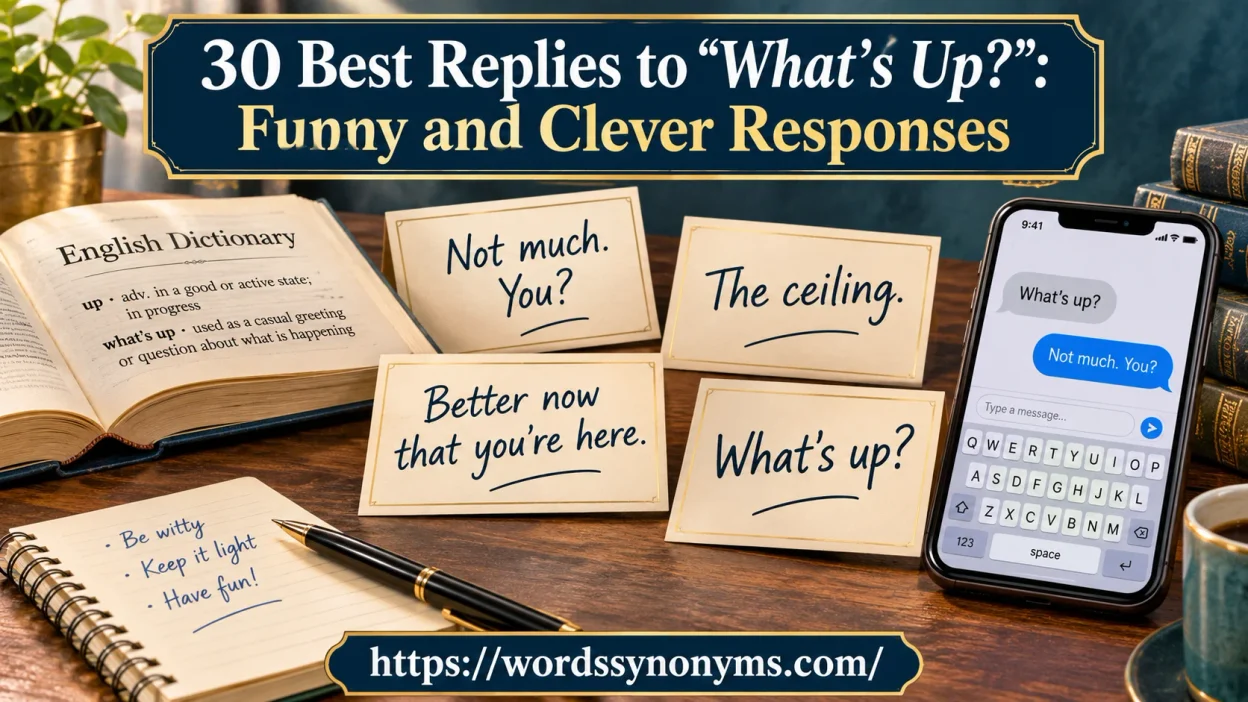
Find the 30 Best Replies to “What’s Up?”: Funny and Clever Responses, with natural ideas for friends, coworkers, crushes, and casual chats. Knowing how to respond to this common English greeting can make your conversations feel more natural and less awkward.
People often ask “What’s up?” when greeting friends, classmates, coworkers, crushes, and even new acquaintances. Most of the time, you don’t need to explain everything in great detail. A simple reply like “Not much, you?” is usually sufficient.
However, your answer can change depending on who’s asking and how you feel. You might choose a funny, flirty, cute, casual, or savage response to keep the conversation lively.
When the world is spinning fast, having a few solid options in your head helps you feel ready for unexpected chats. You don’t need to think too hard or pick complicated words to sound confident.
In my experience, the best replies are usually short, natural, and suited to the person you’re talking with. A friendly answer can make the conversation flow smoothly and help you handle the moment comfortably.
“What’s up?” is a classic, informal greeting that friends and acquaintances use alike. It can simply mean hello or good morning without expecting a detailed explanation. Sometimes, a playful response works better than a standard greeting. So, look below for 30 best replies that fit different people, moods, and situations.
Quick Answer
The safest and most natural response is:
“Not much. You?”
It works because it answers the greeting briefly while giving the other person an easy way to continue talking.
Other useful replies to “What’s up?” include:
- “Nothing much. What about you?” — casual and friendly
- “I’m good. How about you?” — warm and simple
- “Just hanging out. You?” — relaxed
- “The ceiling.” — funny and playful
- “Better now that you’re here.” — flirty
- “Just working right now.” — useful when you’re busy
- “Honestly, I’ve had a rough day.” — appropriate when something is wrong
- “Not much. What have you been up to?” — keeps the conversation moving
The key is to understand what the person actually means before choosing your response.
What Does “What’s Up?” Mean?
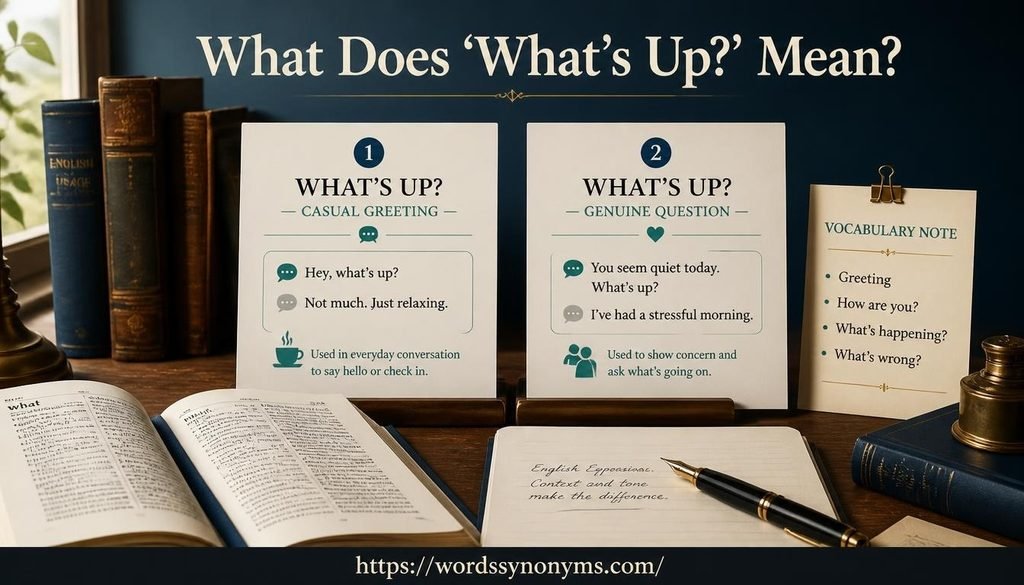
“What’s up?” is an informal expression that can work as either a greeting or a genuine question. Its meaning comes largely from context, tone, and the relationship between the speakers.
When a friend walks into a room and says, “Hey, what’s up?” they probably aren’t asking for a detailed report about your day. They’re saying hello and opening the door to conversation.
However, imagine your friend notices that you look worried and asks, “What’s up?” In that situation, they probably want to know what’s bothering you.
The phrase can therefore carry several meanings:
- Hello: “Hey, what’s up?”
- How are you?: “What’s up? You doing okay?”
- What are you doing?: “What’s up? Are you busy?”
- What’s happening?: “What’s up at the office?”
- What’s wrong?: “You seem upset. What’s up?”
- What’s new?: “So, what’s up with you these days?”
This flexibility explains why one universal response doesn’t always work.
Is “What’s Up?” a Question or a Greeting?
It can be both.
As a casual greeting, “What’s up?” often expects a short answer. You might say “Not much” and move on to another topic.
As a genuine question, however, it may invite more information. If someone asks, “What’s up with your car?” they’re asking about a specific situation.
The surrounding words matter. So does body language in face-to-face conversations.
For example:
Friend: “Hey, what’s up?”
You: “Not much. Just relaxing.”
That sounds like a greeting.
Now compare it with:
Friend: “You seem quiet today. What’s up?”
You: “I’ve had a stressful morning.”
Here, the question clearly asks about your situation.
Read more: 23 Best Replies to “Take Care”: Friendly and Funny
How to Reply to “What’s Up?”
The easiest approach is to match the other person’s energy.
If someone casually says “What’s up?” while walking past you, don’t launch into a five-minute explanation about your schedule. A short response fits better.
If someone sits down and genuinely wants to talk, give them something more substantial.
A simple formula works in most situations:
Answer briefly + return the question + add a detail when useful.
For example:
“Not much. I’m finishing some work. What are you up to?”
That response does three things. It answers the question, provides a small piece of information, and invites another response.
Common Situations and Natural Responses
| Situation | Natural response |
| Casual greeting | “Not much. You?” |
| You’re doing well | “I’m good. How about you?” |
| You’re relaxing | “Just taking it easy.” |
| You’re busy | “Just working right now.” |
| You have good news | “Actually, I’ve got some good news.” |
| Something is wrong | “I’ve had a rough day.” |
| You want to continue chatting | “Not much. What are you up to?” |
| You want to make plans | “Not much. Want to hang out?” |
| You want to joke | “The ceiling.” |
| You want to flirt | “Better now that you’re here.” |
The trick isn’t finding the most clever sentence. It’s choosing a response that feels natural for that particular conversation.
30 Best Replies to “What’s Up?”
Below are practical responses to “What’s up?” for different personalities, relationships, and situations. Some are straightforward. Others add humor, confidence, or flirtation.
Casual Replies to “What’s Up?”
Casual answers work best when someone is simply checking in.
1. “Not much. You?”
This is probably the most useful everyday answer.
It’s short, friendly, and easy to understand. More importantly, it keeps the conversation balanced because you return the question.
Best for: friends, classmates, coworkers, acquaintances, and casual texts.
2. “Nothing much. What about you?”
This version sounds slightly fuller while remaining relaxed.
Use it when you want to acknowledge the person rather than give a one-word response.
Example:
“Nothing much. What about you? How’s your day going?”
3. “I’m good. How about you?”
This response treats “What’s up?” more like “How are you?”
It’s especially useful when you don’t have anything specific to report.
The answer also sounds warm without trying too hard.
4. “Just hanging out. You?”
If you’re relaxing at home or spending time with friends, this response fits naturally.
“Just hanging out” suggests that nothing particularly important is happening.
Best for: casual conversations and texting.
5. “Just taking it easy.”
Sometimes you don’t need to return the question immediately.
This response works when you’re relaxing, enjoying some downtime, or simply having a quiet day.
6. “All good over here.”
This answer communicates that everything is fine.
It has a slightly more confident and upbeat feel than “Not much.”
7. “Just doing my thing.”
This phrase sounds relaxed and independent.
It can mean you’re working, relaxing, running errands, or simply getting through your day.
Because it’s intentionally vague, the other person may follow up with another question.
8. “Same old, same old.”
This classic expression means that nothing particularly new or exciting has happened.
It works well with friends who already understand your usual routine.
Example:
“Same old, same old. Work, dinner, sleep. You?”
Funny Replies to “What’s Up?”
Humor can turn an ordinary greeting into a memorable exchange.
The safest funny replies usually play with the literal meaning of “up.”
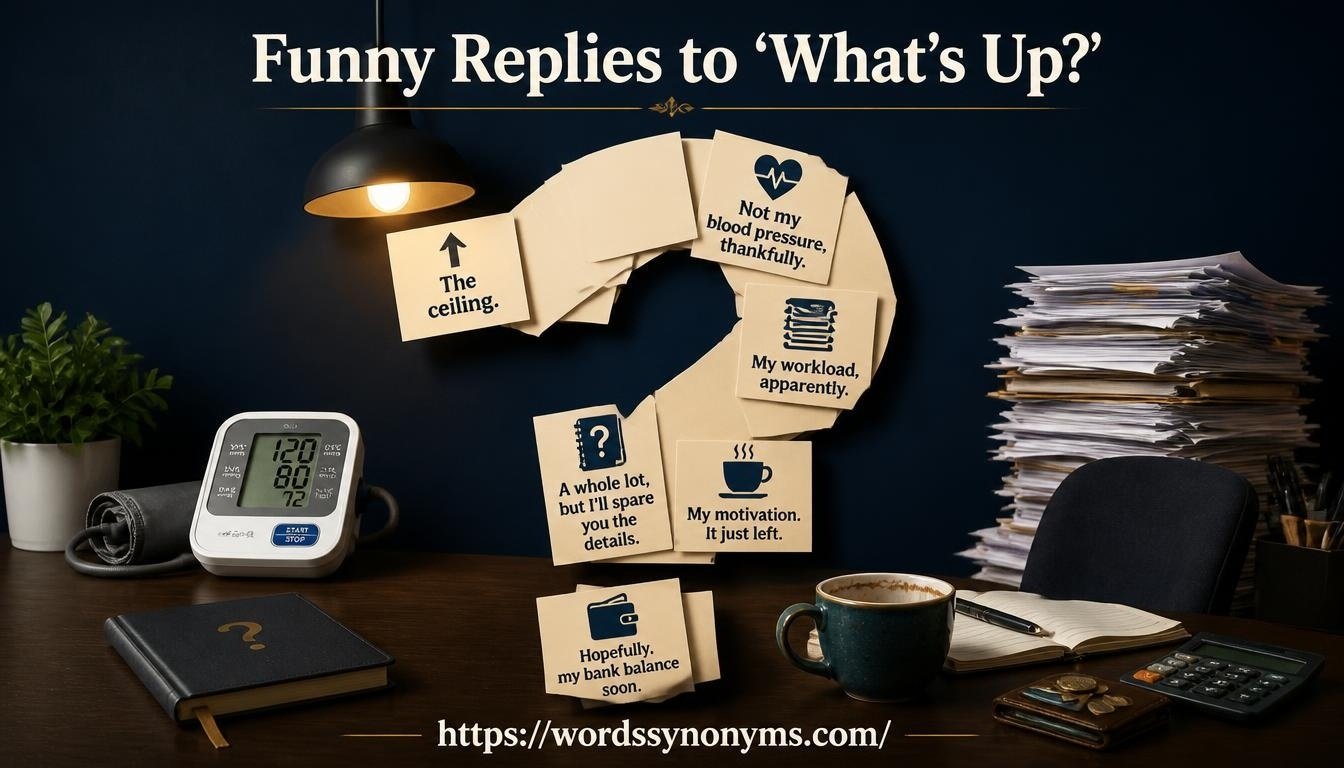
9. “The ceiling.”
This is the classic joke.
The person asks “What’s up?” and you point out what is physically above you.
It’s simple, quick, and deliberately obvious.
10. “Not my blood pressure, thankfully.”
This answer works best with someone who appreciates dry humor.
It turns a routine greeting into a small joke without becoming too elaborate.
11. “My workload, apparently.”
This works particularly well when you’re busy.
It gives you a funny way to acknowledge that you’ve got too much going on.
12. “A whole lot, but I’ll spare you the details.”
This response creates curiosity while keeping the mood light.
Someone may naturally ask, “Like what?”
That gives you an easy opening for a longer conversation.
13. “My motivation. It just left.”
This is relatable when you’re having one of those unproductive days.
It works especially well in casual texts between friends.
14. “Hopefully, my bank balance soon.”
This response uses humor around money without needing a long explanation.
It’s best used with people who understand your sense of humor.
A good rule for funny replies: don’t force the joke.
If the other person asks “What’s up?” because they’re genuinely worried about you, a sarcastic answer may land badly.
Clever Replies to “What’s Up?”
Clever responses sit between ordinary conversation and humor.
They give the other person something interesting without turning the exchange into a comedy routine.
15. “More than you’d expect.”
This short answer creates a little mystery.
It’s useful when something interesting actually happened and you want the other person to ask for details.
16. “A few things. Where should I start?”
Use this when you genuinely have several updates.
It can also sound playful when you have a lot going on.
17. “Nothing I can’t handle.”
This response sounds confident and composed.
It works especially well when someone asks because you’ve been dealing with a challenge.
18. “Depends. How much time do you have?”
This answer suggests that you’ve got a story to tell.
It’s playful without being overly silly.
If the person has time, you can follow up with the most interesting part.
19. “A little chaos, a little progress.”
This is a more thoughtful response.
It works when your day has included both problems and accomplishments.
The phrase also gives the other person an easy opening:
“What kind of chaos?”
That can turn a basic greeting into a genuine conversation.
Flirty Replies to “What’s Up?”
Flirty answers can work well when there is already some romantic interest.
However, context matters. A flirtatious response can feel awkward if the relationship doesn’t support that tone.
20. “You, apparently.”
This is short, playful, and clearly suggestive.
It works best when the conversation already has some chemistry.
21. “Better now that you’re here.”
This response communicates interest without being overly intense.
It can work in person or over text.
22. “I was wondering when you’d text.”
This reply shows that you noticed their absence.
It can sound especially warm when you’re already interested in the person.
23. “Not much. Want to change that?”
This response invites the other person to do something with you.
It works particularly well when you want to move the conversation toward making plans.
24. “Honestly? You’ve been on my mind.”
This one is more direct.
Use it when the relationship already has a romantic or emotionally open tone. It can feel too strong in a brand-new conversation.
Flirty Responses Should Match the Relationship
A good flirty reply should feel like a natural extension of the conversation.
Don’t jump from “Hey, what’s up?” to an extremely intense declaration if you’ve barely spoken before.
Instead, think of flirtation as a dimmer switch rather than an on/off button.
Start lightly:
“Not much. You?”
Then, if the conversation feels receptive:
“Better now that you’re here.”
That gradual shift usually feels more natural.
Replies to “What’s Up?” From a Friend
Friends generally give you more freedom to joke, tease, or share personal updates.
You can respond casually without worrying too much about sounding polished.
25. “Not much. What are you up to?”
This response naturally turns the conversation back toward your friend.
It works especially well over text.
26. “Just chilling. Want to hang out?”
Use this when you’re free and want to make plans.
Instead of letting the conversation drift, you give it a clear direction.
27. “I’m free right now. What’s going on?”
This answer is useful when you suspect your friend has a reason for messaging.
It also makes it easy for them to suggest an activity.
28. “Same stuff, different day. How’ve you been?”
This response works well when you haven’t talked recently.
It acknowledges that nothing dramatic is happening while inviting your friend to share an update.
Confident or Short Replies to “What’s Up?”
Sometimes less really is more.
You don’t need a clever line every time someone says hello.
29. “Doing great. What’s up with you?”
This response sounds upbeat and confident.
It also returns the conversation to the other person.
30. “All good. What’s happening?”
This is short without sounding dismissive.
It’s useful when you want to keep the exchange moving but don’t have much to say.
Best Replies to “What’s Up?” Over Text
Text conversations change the equation slightly.
Without facial expressions or vocal tone, a very short response can sometimes look colder than intended.
For example:
“Nothing.”
That might simply mean you’re doing nothing.
Yet the recipient could read it as annoyance or disinterest.
Adding two words can change the entire feel:
“Nothing much. You?”
Now the message sounds open and conversational.
Good Text Responses
- “Not much, you?”
- “Just relaxing. What about you?”
- “Nothing exciting 😂”
- “Just surviving Monday.”
- “I’m good! What are you up to?”
- “Not much. How’s your day going?”
- “Actually, I’ve got some news.”
- “Just finishing work. You?”
- “Nothing much. Want to talk?”
- “Better now that I heard from you 😉”
Should You Use Emojis?
Emojis can clarify tone in casual texting.
For example:
“The ceiling 😂”
feels obviously playful.
Meanwhile:
“The ceiling.”
could sound intentionally dry or sarcastic.
You don’t need emojis in every message. Use them when they genuinely match your usual texting style.
Best Replies When You Actually Have Something Going On
Sometimes “What’s up?” gives you the perfect opportunity to share news.
If something interesting happened, don’t automatically answer “Nothing much.”
Instead, offer one useful detail.
1. If You Got Good News
- “Actually, I got the job!”
- “I just got some great news.”
- “I finally finished that project.”
- “I got the results today, and they were better than expected.”
2. If You’re Busy
- “I’m in the middle of something right now.”
- “Just finishing a deadline.”
- “I’m heading out in a few minutes.”
- “I’m working on something pretty urgent.”
3. If You’re Excited
- “I’ve got something exciting to tell you.”
- “I’m getting ready for a big trip.”
- “I just made some really good plans.”
4. If Something Unexpected Happened
- “You won’t believe what just happened.”
- “Actually, quite a lot happened today.”
- “I’ve got a story for you.”
These responses work because they provide conversation hooks.
A conversation hook is a detail that naturally invites another question.
For example:
“I’ve got a story for you.”
Almost begs the other person to ask:
“What happened?”
That’s much more engaging than simply saying “Nothing.”
How to Reply When “What’s Up?” Means “What’s Wrong?”
This is where context becomes especially important.
If someone asks “What’s up?” after noticing that you’re unusually quiet, they may not be making small talk.
They may be checking on you.
In that situation, a joking answer can accidentally shut down the conversation.
Instead, choose a response that reflects how much you want to share.
If You Don’t Want to Explain
“Nothing serious. I’m just tired.”
If You Had a Difficult Day
“I’ve had a rough day, honestly.”
If Something Is Bothering You
“Something’s been bothering me, but I’m still working through it.”
If You Want Support
“Actually, I could use someone to talk to.”
If You Need Space
“I’m okay. I just need some time to myself.”
You don’t owe everyone a complete explanation.
A simple, honest boundary can be better than pretending everything is fine.
How to Keep the Conversation Going After “What’s Up?”
A response doesn’t have to end with your answer.
If you want the conversation to continue, give the other person something to work with.
Ask a Follow-Up Question
The easiest technique is to return the question.
Try:
- “What have you been up to?”
- “How’s your day going?”
- “Anything interesting happening?”
- “How have you been?”
- “What’s new with you?”
A question creates a conversational bridge.
Share One Small Detail
Instead of saying:
“Not much.”
Try:
“Not much. I’m trying a new restaurant tonight.”
That tiny detail gives the other person several possible directions.
1. They might ask where you’re going.
2. They might ask who you’re going with.
3. They might even recommend a restaurant.
Connect It to Something They Mentioned Before
Remembering details makes conversations feel more personal.
For example:
“Not much. How did your interview go?”
That’s much stronger than another generic “You?” because it shows that you remember what mattered to them.
Suggest an Activity
If you want to see the person, don’t hide behind endless small talk.
Try:
“Not much. Want to grab coffee?”
Or:
“I’m free tonight. Want to hang out?”
A simple invitation can turn a routine greeting into an actual plan.
What Not to Say When Someone Asks “What’s Up?”
Not every response works equally well.
Some answers can make a casual conversation unnecessarily awkward.
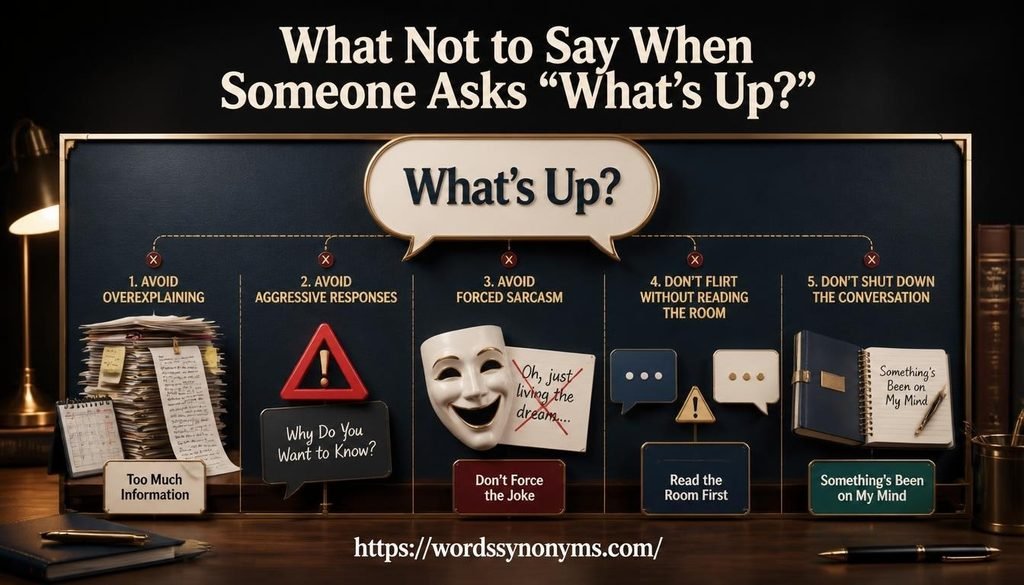
Avoid Overexplaining
If someone casually says:
“Hey, what’s up?”
you probably don’t need to explain your entire schedule.
A short answer is usually enough.
Avoid Aggressive Responses
Answers such as:
“Why do you want to know?”
can sound defensive unless you’re intentionally challenging the person.
Avoid Forced Sarcasm
Sarcasm works when both people understand the joke.
It can fail badly when the other person is genuinely checking on you.
Don’t Flirt Without Reading the Room
A flirty line can be charming with the right person.
The same line can feel uncomfortable when the relationship doesn’t have that tone.
Don’t Say “Nothing” If You Want to Talk
If something is bothering you and you actually want support, “Nothing” can close the door.
Try:
“Actually, something’s been on my mind.”
That keeps the conversation open without forcing you to explain everything immediately.
Which Reply Should You Choose?
The easiest way to choose a response is to start with the tone you want.
| You want to sound… | Try this response |
| Casual | “Not much. You?” |
| Friendly | “I’m good! How about you?” |
| Funny | “The ceiling.” |
| Clever | “Depends. How much time do you have?” |
| Flirty | “Better now that you’re here.” |
| Busy | “Just working right now.” |
| Honest | “Honestly, I’ve had a rough day.” |
| Interested | “Not much. What have you been up to?” |
| Inviting | “Not much. Want to hang out?” |
| Brief | “All good!” |
| Playful | “A little chaos, a little progress.” |
| Curious | “Not much. What’s up with you?” |
The strongest response isn’t necessarily the funniest one.
It’s the one that fits the moment.
“What’s Up?” vs. “How Are You?” vs. “What’s Going On?”
These expressions overlap, but they aren’t identical.
| Expression | Typical tone | Common meaning |
| “What’s up?” | Very casual | Hello, what are you doing, or what’s happening |
| “How are you?” | Neutral to casual | Asking about someone’s well-being |
| “What’s going on?” | Casual | Asking about current events or circumstances |
| “How have you been?” | Friendly | Asking about someone’s recent life |
| “What’s new?” | Casual | Asking about recent developments |
“What’s up?” is generally the most flexible of these phrases.
It can function almost like a verbal handshake.
You don’t always need to provide a literal answer.
For example:
“Hey, what’s up?”
can simply mean:
“Hey, good to see you.”
That’s why “Not much” makes sense even though the literal question asks what is “up.”
Is “What’s Up?” Formal or Informal?
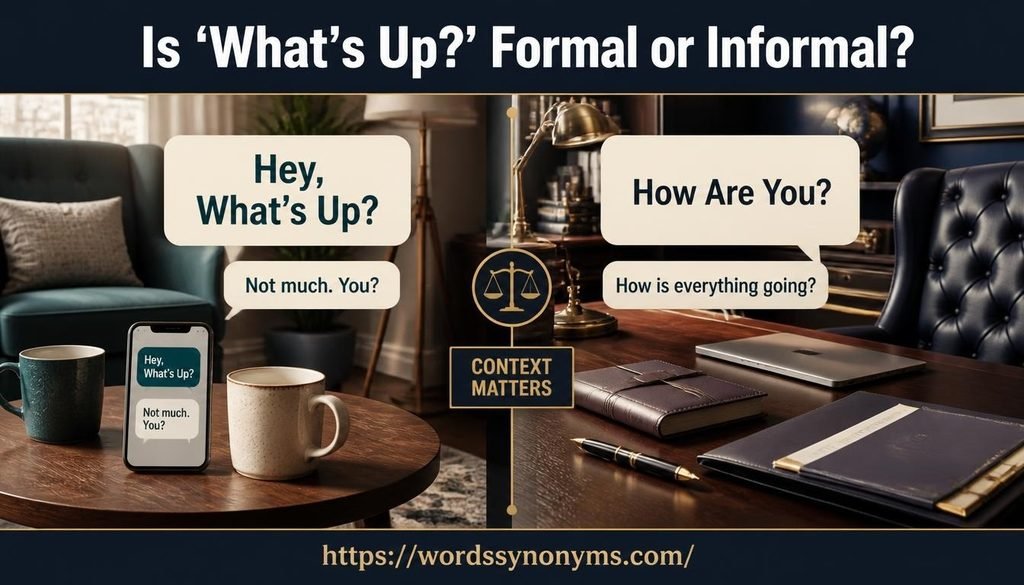
“What’s up?” is informal.
It fits relaxed conversations with friends, family, classmates, acquaintances, and coworkers in casual workplace cultures.
However, it isn’t the best choice for every professional setting.
If you’re meeting a senior executive for the first time, a more neutral greeting may sound appropriate:
- “How are you?”
- “How have you been?”
- “How is everything going?”
- “How’s your day going?”
Workplace culture matters too.
A relaxed creative office may use “What’s up?” constantly. A formal business environment may favor more conventional greetings.
The important point is simple: match the level of formality around you.
Case Study: Why Context Changes the Best Reply
Consider three conversations involving the exact same phrase.
Situation 1: A Friend Sends a Text
Friend: “Hey! What’s up?”
You: “Not much. Just watching a movie. You?”
Here, the phrase works as a casual conversation starter.
Situation 2: A Coworker Sees You Working Late
Coworker: “Hey, what’s up?”
You: “Just trying to finish this report before tomorrow.”
Now the question probably asks what you’re doing.
Situation 3: A Friend Notices You’re Upset
Friend: “You seem stressed. What’s up?”
You: “I’ve had a rough day.”
Here, “What’s up?” means something closer to “What’s wrong?”
The words haven’t changed.
The context has.
That distinction is the key to choosing natural replies to “What’s up?”
Read more: 26 Best Replies to “Thank You” That Sound Natural
Quick Guide to Choosing the Right Response
When someone asks “What’s up?” take a moment to read the situation.
If It’s Just a Greeting
Say:
“Not much. You?”
If You Want to Sound Friendly
Say:
“I’m good! How about you?”
If You Want to Make Them Laugh
Say:
“The ceiling.”
If You Want to Flirt
Say:
“Better now that you’re here.”
If You’re Actually Busy
Say:
“Just working right now.”
If You Have Exciting News
Say:
“Actually, I’ve got some good news.”
If Something Is Wrong
Say:
“Honestly, I’ve had a rough day.”
If You Want to Make Plans
Say:
“Not much. Want to hang out?”
If You Want Them to Keep Talking
Say:
“Not much. What have you been up to?”
This simple approach covers most everyday situations.
FAQs
1. What Does “What’s Up?” Actually Mean?
“What’s up?” is a casual way to greet someone or ask how things are going. It doesn’t always mean someone wants a detailed update about your life. Most people simply expect a friendly response.
2. What Is the Best Reply to “What’s Up?”
“Not much, how about you?” is one of the easiest and most natural replies. It answers the question without making things complicated. It also gives the other person a chance to continue chatting.
3. How Do You Reply to “What’s Up?” Without Saying “Nothing Much”?
You can try something like “Just enjoying my day,” “Taking it easy,” or “Trying to stay productive.” These responses sound more interesting while keeping the conversation relaxed.
4. How Do You Respond to “What’s Up?” in a Funny Way?
Try saying, “The ceiling, last time I checked!” or “My stress levels, unfortunately.” Funny replies add humor to an ordinary greeting. Just make sure your joke matches the other person’s sense of humor.
5. What Should I Reply When My Crush Says “What’s Up?”
Keep your response friendly with a little flirtiness. You could say, “Nothing much, but my day just got better,” or “Waiting for someone interesting to text me.” These replies show interest without sounding too serious.
6. Is “I’m Good, You?” a Correct Response to “What’s Up?”
Yes, it’s perfectly acceptable in casual conversations. Although “What’s up?” doesn’t directly ask how you feel, people often use it like “How are you?” Your response sounds natural and polite.
7. How Do You Reply to “What’s Up?” Over Text?
Texting gives you more freedom to be playful or relaxed. You can write “Just chilling,” “Watching something interesting,” or “Nothing exciting yet. What’s happening with you?” Choose something that makes it easy to keep the conversation going.
8. What Does It Mean When Someone Says “What’s Up?” Instead of Hello?
It usually means they’re greeting you in a relaxed and friendly way. Some people prefer “What’s up?” because it feels less formal than a traditional hello. It can also open the door to a longer conversation.
9. How Do You Respond to “What’s Up?” Professionally?
Keep your answer polite and straightforward. For example, “Not much, just working on a few things. How about you?” or “I’m doing well. How can I help?” These replies work well with coworkers and professional acquaintances.
10. Can I Reply With Just “Hey” to “What’s Up?”
Absolutely! Saying “Hey” is a simple way to acknowledge the greeting. However, it may not give the other person much to respond to. If you want to continue the conversation, add something like “Hey! How’s your day going?”
Conclusion
Knowing how to respond to “What’s up?” might seem like a small thing, but the right words can make everyday conversations more enjoyable. You don’t always need a clever comeback or a long explanation. Sometimes, a simple “Not much, how about you?” does the job perfectly. Other times, a funny, flirty, cute, or savage reply can bring a little personality to the conversation. The trick is to consider who’s talking to you and respond in a way that feels natural.
Personally, I think the best replies are the ones that sound like something you’d actually say rather than something memorized. Whether you’re chatting with your best friend, texting your crush, or greeting a coworker, there’s no single perfect answer. Explore these 30 replies, pick your favorites, and keep a few ready for your next unexpected greeting. After all, even a simple “What’s up?” can lead to a surprisingly good conversation!

Sophia Mitchell enjoys researching English words, their meanings, and their different uses in everyday communication. She focuses on synonyms, antonyms, alternative expressions, and vocabulary development. Her goal is to help readers choose appropriate words and make their writing more natural, engaging, and expressive.