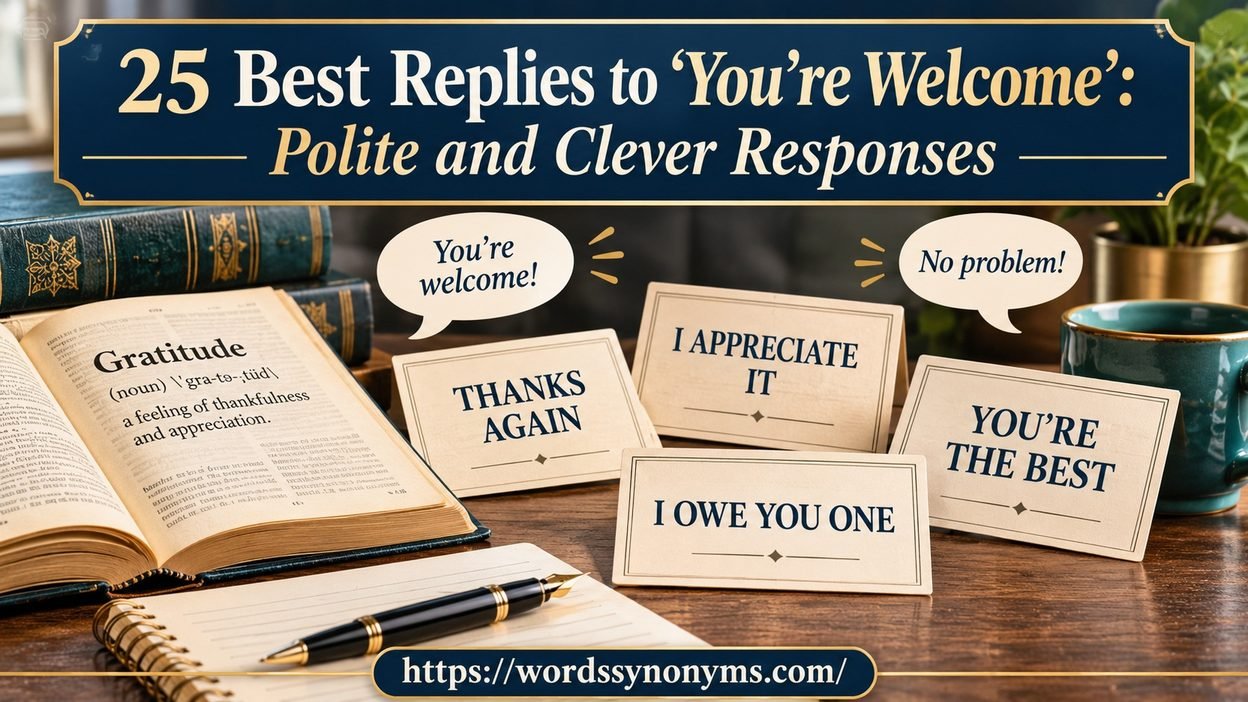
This guide to 25 Best Replies to “You’re Welcome”: Polite and Clever Responses helps you choose a natural reply that fits the moment and relationship. When someone says “you’re welcome” after your thank you, you might wonder what to say next. This small moment can feel awkward, especially when you want to keep the conversation going, show appreciation, or end the exchange in a friendly way.
The good news is that you don’t need a long answer or complicated words. A simple response like “I appreciate it,” “thanks again,” or “sure” often works perfectly. You can also try “my pleasure,” “happy to help,” “anytime,” “of course,” “no problem,” or “glad I could help.” These natural expressions and alternative replies make everyday interactions easier.
In my experience, choosing words that match the moment makes everyday conversations feel more natural. For example, a funny response might suit a close friend, while a polite reply or professional reply works better for a client, customer-service email, or workplace conversation. The right choice depends on the situation, who you are talking to, what they are thanking you for, and the tone you want to communicate.
You can explore short responses, funny responses, friendly responses, warm responses, and professional responses for different relationships and settings. Although some phrases seem interchangeable, they can communicate slightly different things. A casual expression may sound natural with friends but feel out of place in a formal setting. That’s why it’s helpful to understand the purpose behind each reply.
This guide shares 25 ways to respond and ways to reply through texting, casual communication, workplace communication, and customer service. You’ll also find relationship-specific options, practical examples, and useful conversational expressions for better social interaction, everyday communication, and verbal response. These options can help you express yourself without making a simple exchange complicated.
Remember that there’s no right answer or wrong answer when expressing gratitude and thankfulness. Sometimes a smile, nod, or natural change of topic is enough to finish the conversation without needing to say anything. Choose an appropriate response that feels polite, warm, and friendly while keeping the conversation comfortable.
Quick Answer
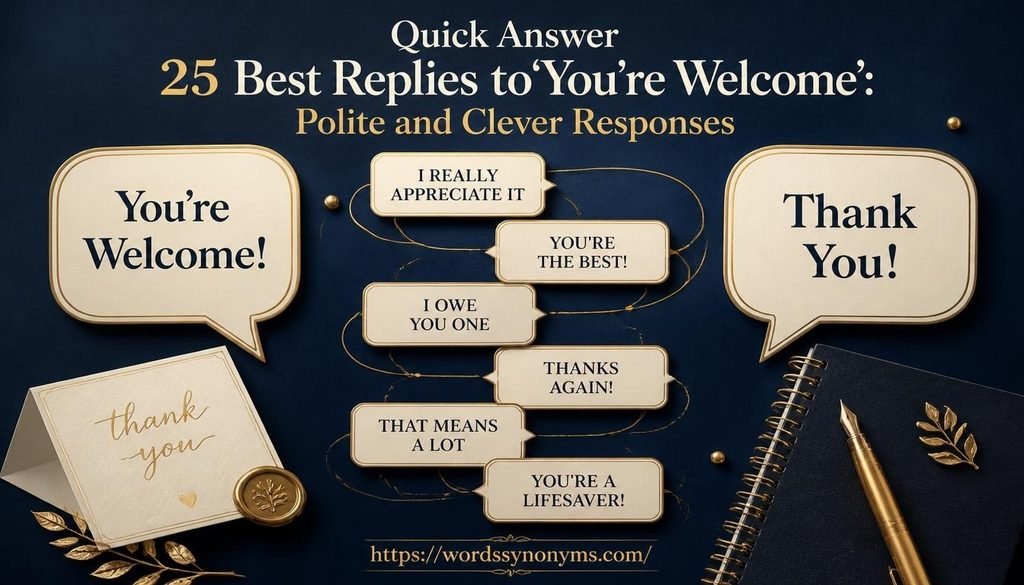
When someone says “You’re welcome” after you thank them, you can respond with another expression of appreciation, a friendly comment, or a natural conversation closer. Some popular replies include:
- “I really appreciate it.” – To express genuine gratitude.
- “You’re the best!” – To respond warmly to a friend.
- “I owe you one.” – When someone has done you a favor.
- “That means a lot to me.” – To show heartfelt appreciation.
- “Thanks again!” – A simple and polite response.
- “You’re a lifesaver!” – When someone has helped you out of a difficult situation.
- “I’ll take you up on that.” – When someone offers future help.
- “Have a great day!” – To end the conversation pleasantly.
You don’t always need another response. Sometimes a smile, nod, or friendly goodbye completes the exchange perfectly. The best choice depends on your relationship with the person and the situation.
25 Best Replies to “You’re Welcome”
A good response doesn’t need to sound clever or elaborate. It simply needs to fit the conversation. Here are 25 natural ways to respond when someone says “You’re welcome,” along with their meanings and examples.
Polite and Thoughtful Replies to “You’re Welcome”
These responses work when you want to acknowledge someone’s kindness without making the conversation unnecessarily formal. They’re particularly useful when someone has given you valuable assistance or taken time out of their day.
“I Really Appreciate It”
This response communicates genuine gratitude. It works especially well when someone has done more than a small everyday favor.
For example, imagine a coworker helps you finish an important presentation before a deadline. After you thank them, they reply, “You’re welcome.” Saying “I really appreciate it” reinforces how much their help matters.
Example conversation:
- You: Thanks for helping me organize the presentation.
- Them: You’re welcome!
- You: I really appreciate it. You saved me a lot of time.
Best for: Friends, coworkers, classmates, and anyone who has offered meaningful assistance.
“That Means a Lot to Me”
Sometimes a person’s kindness carries more emotional weight than they realize. This response acknowledges that feeling without requiring a lengthy explanation.
Use it when someone supports you during a difficult period, remembers something important, or makes an effort to help. It sounds sincere because it focuses on the personal value of their gesture.
Example conversation:
- You: Thank you for checking on me yesterday.
- Them: You’re welcome.
- You: That means a lot to me. I really needed someone to talk to.
Best for: Close friends, family members, partners, and emotionally meaningful situations.
“You’re So Kind”
This phrase turns your appreciation toward the person rather than the favor itself. It recognizes their generous nature and thoughtful behavior.
For instance, someone might offer you a ride when your car breaks down. After they say “You’re welcome,” you can respond with this warm expression.
Example conversation:
- You: Thanks for driving me home.
- Them: You’re welcome!
- You: You’re so kind. I really appreciate it.
Best for: Thoughtful gestures, personal favors, and friendly conversations.
“I Won’t Forget This”
When someone makes a meaningful effort on your behalf, this response shows that their kindness left an impression.
It carries more emotional weight than an ordinary thank-you. However, use it when the favor genuinely matters. Saying it after someone passes you a pen might sound unnecessarily dramatic.
Example conversation:
- You: Thank you for helping me prepare for the interview.
- Them: You’re welcome.
- You: I won’t forget this. Your advice really helped.
Best for: Significant favors, mentorship, and important personal support.
“I Couldn’t Have Done It Without You”
This response gives someone credit for playing an important role in your success. It recognizes their contribution instead of treating their assistance as insignificant.
Use it when a person has helped you complete a project, solve a difficult problem, or achieve something meaningful.
Example conversation:
- You: Thanks for helping me prepare for the competition.
- Them: You’re welcome!
- You: I couldn’t have done it without you.
Best for: Teamwork, major projects, academic achievements, and personal milestones.
“I Appreciate Your Help”
This is a straightforward expression that works in almost any setting. It sounds respectful without becoming overly formal.
You can use it after receiving technical assistance, advice, professional support, or practical help. It also works well in written communication.
Example conversation:
- You: Thanks for explaining how the new software works.
- Them: You’re welcome.
- You: I appreciate your help. Everything makes sense now.
Best for: Workplace conversations, customer service, academic settings, and everyday interactions.
“You’re a Lifesaver”
When someone helps you escape a stressful situation, this expression communicates relief and appreciation at once.
It’s an informal phrase rather than a literal statement. You’re simply telling the person that their assistance made a difficult moment much easier.
Example conversation:
- You: Thanks for bringing my forgotten documents.
- Them: You’re welcome!
- You: You’re a lifesaver. I would’ve missed the appointment without them.
Best for: Friends, coworkers, family members, and situations involving urgent assistance.
“That’s Really Sweet of You”
This response works when someone does something thoughtful or considerate. It recognizes the kindness behind their action.
For example, a friend might bring you coffee because they know you’ve had a stressful morning. You can use this expression to acknowledge the gesture warmly.
Example conversation:
- You: Thanks for remembering my favorite coffee.
- Them: You’re welcome.
- You: That’s really sweet of you!
Best for: Friends, partners, family members, and thoughtful everyday gestures.
“I Hope I Can Return the Favor”
This response shows that you value the person’s help and would gladly support them someday.
It doesn’t create an obligation or promise an exact repayment. Instead, it communicates a willingness to help when an opportunity arises.
Example conversation:
- You: Thanks for helping me move those boxes.
- Them: You’re welcome!
- You: I hope I can return the favor sometime.
Best for: Personal favors, helpful neighbors, friends, and supportive coworkers.
“I’ll Definitely Keep That in Mind”
This phrase works particularly well when someone has offered advice, guidance, or a useful suggestion.
It acknowledges their contribution while showing that you intend to remember what they shared. However, use it when the person actually gave you something worth considering.
Example conversation:
- You: Thanks for explaining how to handle that situation.
- Them: You’re welcome.
- You: I’ll definitely keep that in mind.
Best for: Advice, professional guidance, learning situations, and mentoring conversations.
“I Appreciate You”
This expression focuses on the person rather than a particular action. It can communicate warmth, affection, and genuine respect.
It’s slightly more personal than “I appreciate your help.” That’s why it works naturally with people you know well.
Example conversation:
- You: Thanks for always being there when I need help.
- Them: You’re welcome!
- You: I appreciate you. Seriously.
Best for: Close friends, family, partners, and people who consistently support you.
“Thanks Again, Seriously”
Sometimes a regular thank-you doesn’t seem strong enough. This phrase adds emphasis and makes your appreciation sound more personal.
The word “seriously” tells the other person that you’re not simply following a social routine. You genuinely recognize their effort.
Example conversation:
- You: Thanks for covering my shift yesterday.
- Them: You’re welcome.
- You: Thanks again, seriously. That helped me a lot.
Best for: Significant favors, friendly workplace relationships, and casual conversations.
“You’re Too Kind”
This phrase acknowledges someone’s generosity with a touch of modesty. It works when a person does something unexpectedly thoughtful or offers more help than you anticipated.
Depending on your tone, it can sound sincere, playful, or slightly bashful.
Example conversation:
- You: Thank you for bringing lunch for everyone.
- Them: You’re welcome!
- You: You’re too kind. That was really thoughtful.
Best for: Friendly conversations, generous gestures, and informal social situations.
“I Was Lucky to Have Your Help”
This response recognizes that someone’s assistance made a real difference. It also communicates how fortunate you feel to have received their support.
Use it when a person contributes valuable knowledge, experience, or encouragement during a challenging situation.
Example conversation:
- You: Thanks for helping me prepare for the presentation.
- Them: You’re welcome.
- You: I was lucky to have your help. I feel much more confident now.
Best for: Mentorship, professional projects, academic work, and challenging situations.
Casual and Friendly Replies to “You’re Welcome”
When you’re talking to friends, relatives, or familiar coworkers, you don’t need stiff language. A relaxed response often sounds more genuine and keeps the conversation moving.
“I Owe You One”
This is a popular informal expression used when someone does you a favor. It means you’d be happy to help them in return someday.
The phrase doesn’t mean you literally owe them money. Instead, it creates a friendly sense of mutual support.
Example conversation:
- You: Thanks for lending me your charger.
- Them: You’re welcome!
- You: I owe you one.
Best for: Friends, siblings, classmates, and friendly coworkers.
“You’re the Best”
Short, cheerful, and easy to remember, this expression works when someone has genuinely made your day easier.
It adds enthusiasm to your appreciation without requiring a complicated response. You can also use it in text messages when a friend helps you out.
Example conversation:
- You: Thanks for picking up my package.
- Them: You’re welcome!
- You: You’re the best!
Best for: Friends, family members, close coworkers, and casual conversations.
“I Knew I Could Count on You”
This response recognizes someone’s reliability. It tells them that you trust their judgment and appreciate their willingness to help.
However, use it when you share an established relationship. Otherwise, it might sound overly familiar or suggest that you expected their assistance.
Example conversation:
- You: Thanks for helping me fix the computer.
- Them: You’re welcome.
- You: I knew I could count on you!
Best for: Close friends, trusted colleagues, siblings, and reliable family members.
“I’ll Get You Back Next Time”
This is a playful alternative to “I owe you one.” It suggests that you’ll return the favor when another opportunity comes along.
The phrase works best when both people understand the friendly tone. It shouldn’t sound like you’re planning revenge or keeping score.
Example conversation:
- You: Thanks for buying my lunch today.
- Them: You’re welcome!
- You: I’ll get you back next time.
Best for: Friends, classmates, and informal workplace relationships.
“Haha, I Still Owe You Coffee!”
A small reward can turn an ordinary thank-you into a friendly exchange. This response is especially natural when someone helps you with work, errands, or a minor emergency.
It also gives you an easy reason to spend time together later.
Example conversation:
- You: Thanks for helping me finish those reports.
- Them: You’re welcome!
- You: Haha, I still owe you coffee!
Best for: Friends, coworkers, classmates, and casual acquaintances.
“Well, I Won’t Say No to Your Help Again”
This playful response suggests that you appreciated the assistance and wouldn’t mind receiving it again.
Use it with people who understand your humor. With someone you don’t know well, it could sound as though you’re taking their generosity for granted.
Example conversation:
- You: Thanks for helping me carry everything upstairs.
- Them: You’re welcome.
- You: Well, I won’t say no to your help again!
Best for: Friends, siblings, and people with whom you share relaxed conversations.
“Don’t Be Surprised When I Thank You Again”
This response adds humor while acknowledging that the person’s kindness deserves recognition.
It works particularly well when someone has helped you repeatedly. Your words suggest that one thank-you might not cover everything they did.
Example conversation:
- You: Thanks for helping me organize the event.
- Them: You’re welcome!
- You: Don’t be surprised when I thank you again tomorrow.
Best for: Friends, supportive coworkers, and people who regularly help you.
“You’re Making Me Blush”
Use this expression when someone responds warmly or compliments you during a conversation. It adds a playful, slightly bashful touch.
However, context matters. It can sound flirtatious depending on your relationship and delivery. Keep it for people who understand that kind of humor.
Example conversation:
- You: Thanks for helping me with the decorations.
- Them: You’re welcome. Anything for you!
- You: You’re making me blush!
Best for: Close friends, partners, and playful personal conversations.
“I’ll Take You Up on That”
This response is appropriate when someone offers additional assistance rather than simply saying “You’re welcome.”
For example, someone might say, “Anytime you need help, just ask.” You can respond with this phrase to show that you appreciate their offer.
Example conversation:
- You: Thanks for helping me move the furniture.
- Them: You’re welcome! Let me know if you need anything else.
- You: I’ll take you up on that.
Best for: Friends, helpful coworkers, neighbors, and people offering future assistance.
“Have a Great Day!”
Sometimes the nicest response is simply to end the conversation on a positive note. This phrase works especially well during brief interactions with strangers, service workers, or acquaintances.
You don’t need to add another expression of gratitude when the exchange has already reached a natural ending.
Example conversation:
- You: Thanks for your help.
- Them: You’re welcome!
- You: Have a great day!
Best for: Customer service interactions, stores, appointments, and everyday encounters.
Read more: 23 Best Replies to “It Is What It Is”: Sarcastic Comebacks
How to Choose the Right Reply to “You’re Welcome”
Not every response fits every conversation. A playful comment might work perfectly with your best friend but sound strange during a formal business meeting.
The easiest approach is to consider three things:
- Your relationship: Are you talking to a close friend, relative, stranger, or colleague?
- The favor: Did the person perform a small courtesy or provide meaningful assistance?
- The setting: Is this a workplace conversation, personal exchange, text message, or public interaction?
Here’s a quick reference table to help you choose.
| Situation | Suitable reply |
| A friend helps you | You’re the best! |
| Someone gives meaningful support | That means a lot to me. |
| A coworker assists with a task | I appreciate your help. |
| Someone does you a big favor | I owe you one. |
| A person offers future assistance | I’ll take you up on that. |
| Someone gives thoughtful advice | I’ll definitely keep that in mind. |
| A stranger helps you | Thanks again! |
| A family member supports you | I appreciate you. |
| A friend buys you something | I’ll get you back next time. |
| A conversation is ending | Have a great day! |
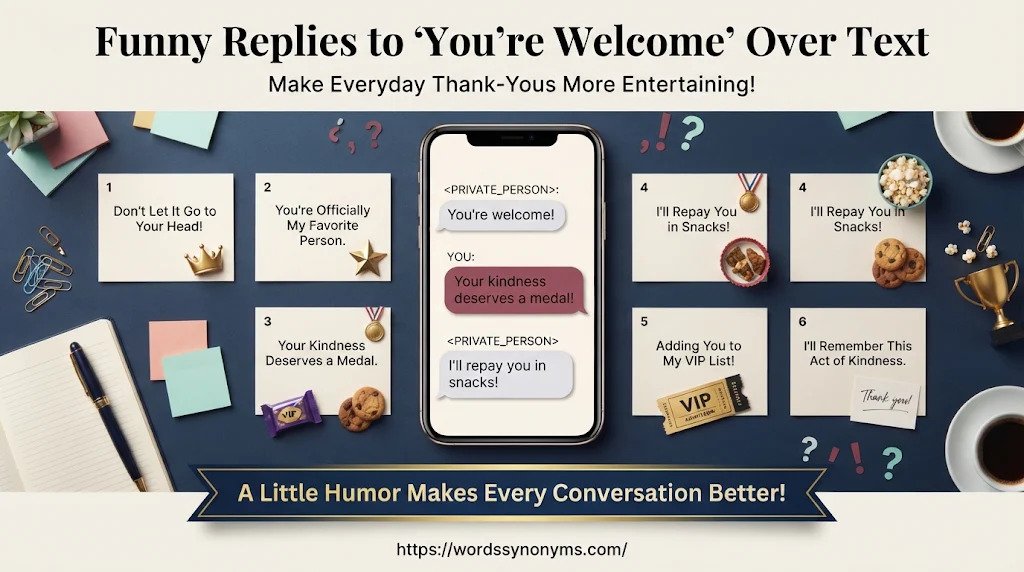
Funny Replies to “You’re Welcome” Over Text
Text conversations give you more room to play with humor. Since you can’t rely on facial expressions or vocal tone, choose messages that make your intention clear.
A funny response works best when you already share a relaxed relationship. Avoid jokes that make the other person feel unappreciated.
Here are some playful alternatives:
| Funny reply | When to use it |
| “Don’t let it go to your head!” | With a friend who enjoys teasing. |
| “You’re officially my favorite person.” | When someone does something especially helpful. |
| “Your kindness deserves a medal.” | After an unexpectedly generous favor. |
| “I’ll repay you in snacks!” | When a friend helps with something small. |
| “Adding you to my VIP list!” | During a playful exchange. |
| “I’ll remember this act of kindness.” | When joking about a favor. |
Example text conversation:
- You: Thanks for sending me those notes!
- Friend: You’re welcome!
- You: Your kindness deserves a medal. Seriously!
Another option:
- You: Thanks for bringing me lunch.
- Friend: You’re welcome!
- You: I’ll repay you in snacks. It’s a legally binding friendship agreement!
The second example works because the exaggeration is obviously playful. Your friend understands that you’re expressing appreciation rather than making an actual legal promise.
Professional Responses to “You’re Welcome” at Work
Workplace conversations call for a slightly different approach. You want to sound appreciative, confident, and respectful without becoming excessively formal.
A short response often works better than an elaborate expression. If a colleague helps you solve a problem, acknowledge their contribution and return to the task.
Here are several professional responses you can use:
“I Appreciate Your Support”
This expression works well when someone has helped you complete a project or overcome a workplace challenge.
Example:
- You: Thank you for helping me prepare the client report.
- Colleague: You’re welcome.
- You: I appreciate your support.
“Thanks Again for Your Assistance”
This phrase sounds professional without feeling stiff. It’s particularly useful when someone has spent considerable time helping you.
Example:
- You: Thank you for explaining the new process.
- Colleague: You’re welcome!
- You: Thanks again for your assistance. I appreciate it.
“That Was Very Helpful”
Use this response when someone provides useful information or practical guidance.
Example:
- You: Thanks for walking me through the updated software.
- Colleague: You’re welcome.
- You: That was very helpful.
“I’m Grateful for Your Time”
This response recognizes the effort someone made to assist you. It’s particularly suitable when a manager, mentor, or senior colleague spends time answering your questions.
Example:
- You: Thank you for meeting with me this afternoon.
- Manager: You’re welcome.
- You: I’m grateful for your time.
“I Look Forward to Working Together Again”
This phrase works when someone has helped you during a project or professional collaboration.
Example:
- You: Thank you for your excellent support throughout the project.
- Client: You’re welcome.
- You: I look forward to working together again.
Professional communication tip: You don’t need to respond to every “You’re welcome” with another full thank-you. A simple acknowledgment is enough when the conversation has naturally ended.
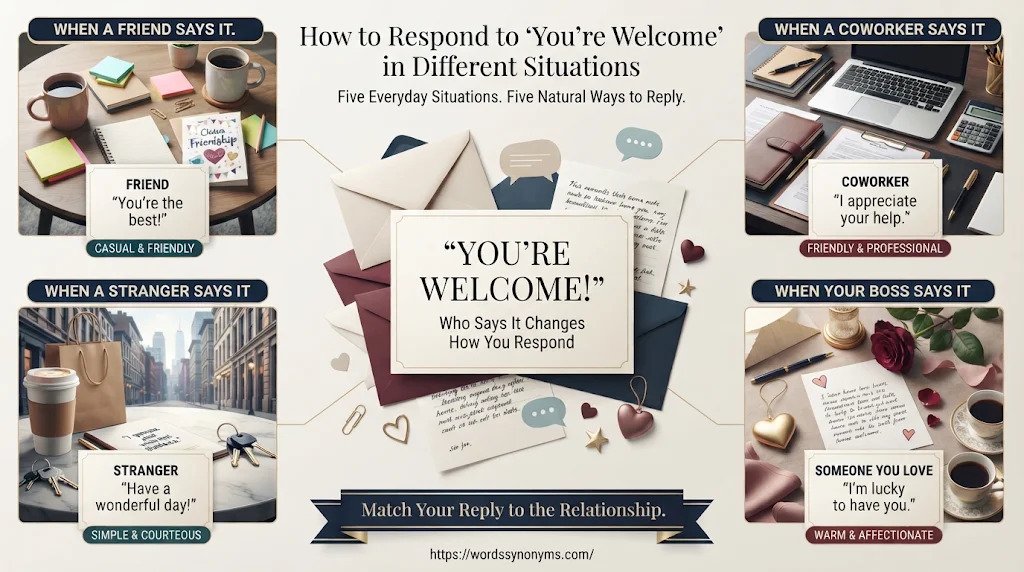
How to Respond to “You’re Welcome” in Different Situations
Your relationship with the speaker can change the meaning of an otherwise ordinary response. Here are practical examples for common situations.
When a Friend Says “You’re Welcome”
Friends usually appreciate relaxed and genuine expressions. You can use humor, familiar phrases, or a simple acknowledgment.
Try these responses:
- “You’re the best!”
- “I owe you one.”
- “Seriously, thanks again.”
- “You’re a lifesaver!”
- “I’ll get you back next time.”
Example:
Your friend helps you prepare for an exam. After saying “You’re welcome,” they probably don’t expect another formal expression of gratitude. A cheerful “You’re the best!” feels natural.
When a Coworker Says “You’re Welcome”
With coworkers, keep your response friendly but professional. You can express appreciation without making the interaction unnecessarily personal.
Try these:
- “I appreciate your help.”
- “Thanks again for your support.”
- “That was really helpful.”
- “I appreciate you taking the time.”
Example:
A coworker explains a complicated spreadsheet formula. You can say, “Thanks again. That cleared everything up.”
When Your Boss Says “You’re Welcome”
A manager’s help might involve guidance, feedback, or professional support. Choose a respectful response that recognizes their time and effort.
Suitable options include:
- “I appreciate your guidance.”
- “Thank you for taking the time.”
- “Your advice was really helpful.”
- “I appreciate your support.”
Example:
Your manager reviews your presentation and offers useful suggestions. After thanking them, you hear, “You’re welcome.” Responding with “I appreciate your guidance” sounds appropriate.
When a Stranger Says “You’re Welcome”
Brief interactions rarely need elaborate replies. A smile, nod, or simple expression of gratitude usually does the job.
Try these:
- “Thanks again!”
- “I appreciate it.”
- “Have a wonderful day!”
- “Take care!”
Example:
Someone holds the elevator door while you’re carrying several bags. You thank them and hear, “You’re welcome.” A quick “Thanks again!” is perfectly natural.
When Someone You Love Says “You’re Welcome”
With a partner or family member, your response can sound warmer and more personal.
Try these:
- “I appreciate you.”
- “You’re always so thoughtful.”
- “You’re wonderful.”
- “That means so much to me.”
- “I’m lucky to have you.”
Example:
Your partner remembers an important appointment and helps you prepare everything beforehand. After they say “You’re welcome,” responding with “You’re always so thoughtful” makes the appreciation feel personal.
What Should You Say After Someone Says “You’re Welcome”?
If you’re unsure what comes next, remember that conversations don’t require a response after every sentence.
“You’re welcome” usually completes the basic exchange of gratitude. However, you can continue naturally when the situation calls for it.
Here are a few practical approaches:
Acknowledge the kindness: When someone has helped you significantly, another short expression of appreciation makes sense.
Continue the conversation: If you’re already discussing something, move naturally to the next topic instead of repeating thank-yous.
Offer something friendly: You might say, “Let me know if I can help you sometime.”
End the interaction: When the conversation feels complete, use a friendly goodbye or simply smile.
For example, imagine a neighbor helps you carry groceries inside. You say thank you and they respond with “You’re welcome.” You can reply, “I appreciate it. Have a good evening!”
There’s no need to manufacture another exchange. Natural conversation matters more than finding an impressive phrase.
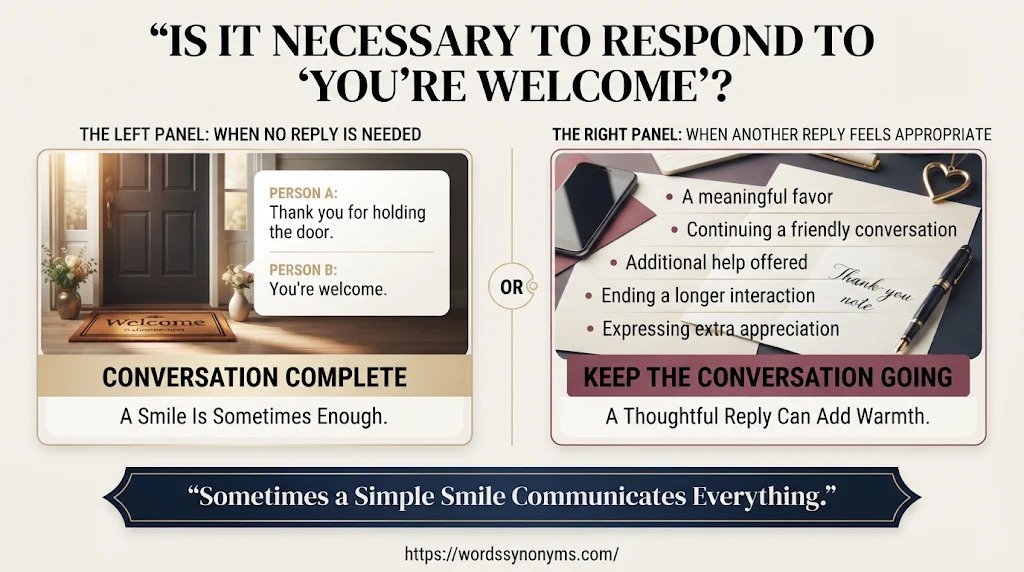
Is It Necessary to Respond to “You’re Welcome”?
No, you don’t always need to respond to “You’re welcome.” In ordinary conversation, the phrase acknowledges your gratitude and completes the exchange.
Consider this simple interaction:
- Person A: Thank you for holding the door.
- Person B: You’re welcome.
At this point, the conversation has reached a natural stopping point. Person A can smile and continue walking without seeming rude.
However, a further response might feel appropriate when:
- The person has done something particularly meaningful.
- You want to continue a friendly conversation.
- They offer additional help or assistance.
- You’re ending a longer interaction.
- You want to express appreciation beyond the original thank-you.
The important distinction is between politeness and unnecessary repetition. Saying “Thank you” five times doesn’t automatically make you more appreciative.
Sometimes a simple smile communicates everything.
Read more: 25 Best Replies to “Just Kidding”: Sarcastic and Firm Comebacks
Common Mistakes to Avoid When Responding to “You’re Welcome”
Even a well-intentioned response can sound awkward when it doesn’t match the situation. Keep these common mistakes in mind.
Repeating thank-yous excessively: Saying “Thank you” repeatedly can make an interaction feel uncomfortable. One sincere acknowledgment is usually enough.
Using overly formal expressions with friends: A phrase like “I sincerely appreciate your generous assistance” might sound amusingly stiff during a casual conversation.
Making jokes that sound dismissive: Humor works when both people understand your intention. Avoid jokes that make someone’s effort seem unimportant.
Sounding entitled: Saying “Well, you should help me again” can make generosity feel like an obligation. Keep playful comments friendly rather than demanding.
Using overly personal language professionally: Expressions like “You’re making me blush” might be inappropriate in a formal workplace exchange.
Forcing another conversation: You don’t need to invent a new topic after every polite exchange. Let the interaction end naturally.
FAQs
1. What should you say after someone says “You’re welcome”?
You can say “Thanks again,” “I appreciate it,” or “That’s very kind of you.” These replies sound natural and show that you value the other person’s kindness.
2. Do you need to respond when someone says “You’re welcome”?
No, you don’t always need another response. A smile, a nod, or a friendly gesture can end the exchange without making the conversation feel forced.
3. Is it polite to say “Thank you” after “You’re welcome”?
Yes, but it depends on the situation. Saying “Thanks again” works well when someone has helped you in a meaningful way. However, you don’t need to repeat your thanks every time.
4. What is a funny response to “You’re welcome”?
You can say “I owe you one,” “You’re a lifesaver,” or “I’ll remember this favor!” These playful replies work best with friends who enjoy a little humor.
5. How do you respond to “You’re welcome” professionally?
Try phrases like “I appreciate your help,” “Thank you for your support,” or “That’s very kind of you.” These expressions sound respectful in workplace conversations and business emails.
6. Can you reply with “No worries” after someone says “You’re welcome”?
Yes, you can use “No worries” in casual conversations. It’s friendly and relaxed, especially when you’re talking with friends, family members, or familiar coworkers.
7. What should you text back after “You’re welcome”?
A short message like “Thanks again!” or “I appreciate it 😊” is usually enough. You can also say “You’re the best!” when you’re texting someone close to you.
8. Is “My pleasure” better than “You’re welcome”?
Neither phrase is always better. “My pleasure” sounds slightly warmer and more personal, while “You’re welcome” is a standard polite response. Choose the one that suits your relationship and the situation.
9. How do you respond to “You’re welcome” without sounding repetitive?
Try changing your wording instead of repeating the same phrase. You might say “That’s really thoughtful,” “I appreciate you,” or “Thanks for being so helpful.” Small variations make conversations feel more genuine.
10. What is the best short reply to “You’re welcome”?
“Thanks again” is one of the easiest choices. Other options include “Appreciate it,” “You’re kind,” and “That means a lot.” Pick a phrase that feels natural rather than overthinking a simple exchange.
Conclusion
Knowing what to say after someone responds with “You’re welcome” can make everyday conversations feel smoother and more natural. You don’t need a clever comeback every time. Sometimes, a simple “Thanks again” or “I appreciate it” is enough to show genuine gratitude. If you’re talking to a close friend, a little humor can make the moment more enjoyable. In professional settings, however, a warm and respectful reply usually works better. The key is to consider the person, the situation, and the kind of connection you share.
Ultimately, the best response is one that sounds like you. Don’t feel pressured to fill every pause with another sentence. A friendly smile, a quick nod, or a thoughtful comment can be just as meaningful as spoken words. Try different replies from this list and see which ones feel comfortable in your everyday conversations. After all, good communication isn’t about finding perfect words. It’s about making the other person feel appreciated.

Daniel Brooks is interested in English word usage, confusing expressions, and language development. He researches commonly misunderstood words and explains their differences through definitions and practical examples. His work helps readers understand language more accurately and select the right expressions for different situations.



[…] Read more: 25 Best Replies to “You’re Welcome”: Polite and Clever Responses […]