Totaled vs. Totalled vs. Totaling vs. Totalling depends on American English, British English, and your audience.
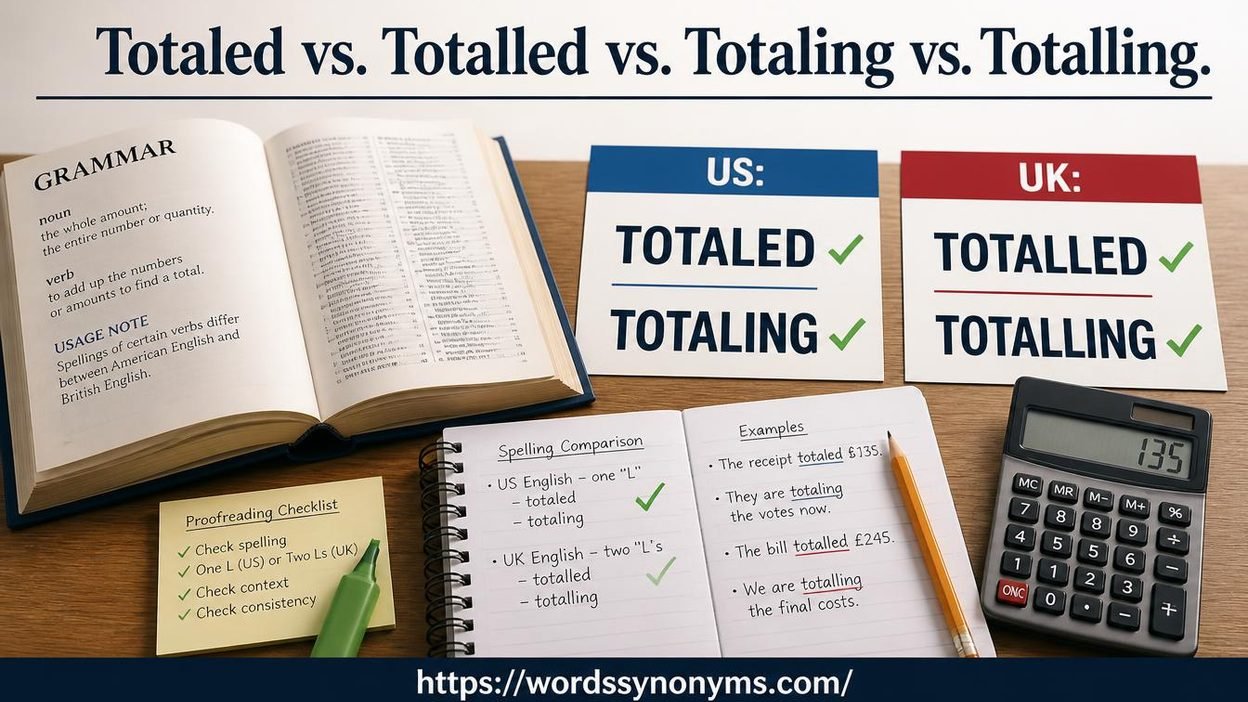
In American English, totaled and totaling are the preferred spellings with one L, while British English favors totalled and totalling with two Ls. This spelling choice does not change the meaning.
All four forms can describe adding numbers, reaching an amount, or damaging something so badly that it isn’t worth the repair cost. The United States follows the American pattern, while the United Kingdom, Australia, New Zealand, and other British English regions generally follow the British pattern.
These forms come from the verb total, and the participles reflect a spelling transition involving verbs ending in L during the early 20th century. As a reader, you’ll see these spellings in books, websites, and news articles, yet they still mean the same thing.
For writers, students, and professionals, the main rule is to choose the right version for your audience and remain consistent. Totaled and totaling work well in writing, an email, a school paper, a business report, or online content for American readers.
British-focused content and articles can use totalled and totalling instead. A useful guide should make clear that correct spellings and correct spelling depend on regional English, rather than a change in meaning. In real-world examples, this simple approach helps prevent common spelling mistakes.
If a document compares American and British English, showing both varieties in the same document makes sense. Otherwise, switching between words from different sources can weaken consistency. Clear explanations of the difference make it easier to use each form naturally.
Quick Answer
Here’s the simplest way to remember the difference:
| Spelling | English variety | Example |
| totaled | American English | The repairs totaled $4,000. |
| totalled | British English | The repairs totalled £4,000. |
| totaling | American English | The costs are totaling $4,000. |
| totalling | British English | The costs are totalling £4,000. |
So, which spelling should you use?
For standard US English, choose:
- totaled
- totaling
For standard British English, choose:
- totalled
- totalling
The difference isn’t a difference in meaning. It’s primarily a difference in spelling convention.
Cambridge Dictionary explicitly lists totaled as the US form and totalled as the UK form. It also identifies totaling as the US form and totalling as the UK form.
Quick rule: American English usually keeps one l in totaled and totaling. British English commonly doubles it.
That rule gives you the answer in most everyday writing situations.
What Does “Totaled” Mean?
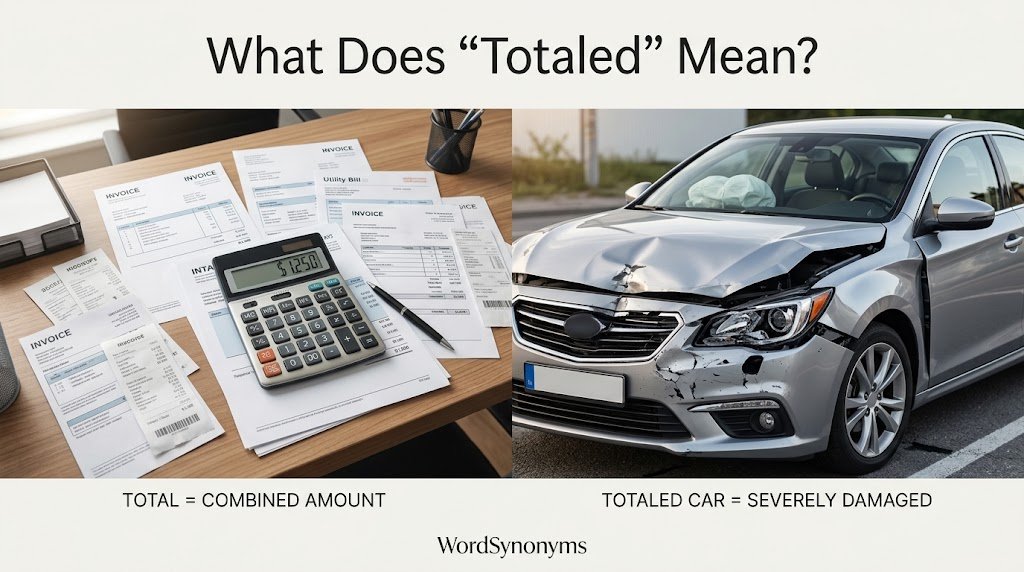
Totaled is the standard American English past tense and past participle of total when the verb means to reach or calculate a complete amount.
For example:
- The three invoices totaled $1,250.
- The hotel expenses totaled $3,800.
- Her annual expenses totaled nearly $20,000.
- The points totaled 95 after the final round.
In each example, totaled tells you the final amount produced by adding separate quantities.
The verb total can mean either to amount to a particular figure or to add figures together to find a final amount. Cambridge Dictionary gives both uses for the verb.
Consider this sentence:
The five bills totaled $740.
The five bills didn’t perform the calculation themselves. Their combined amount came to $740.
Now compare it with:
She totaled the five bills.
Here, totaled means she added the amounts together to calculate the final figure.
The same spelling works in both situations.
“Totaled” Can Also Describe a Destroyed Vehicle
American English has another important use of totaled.
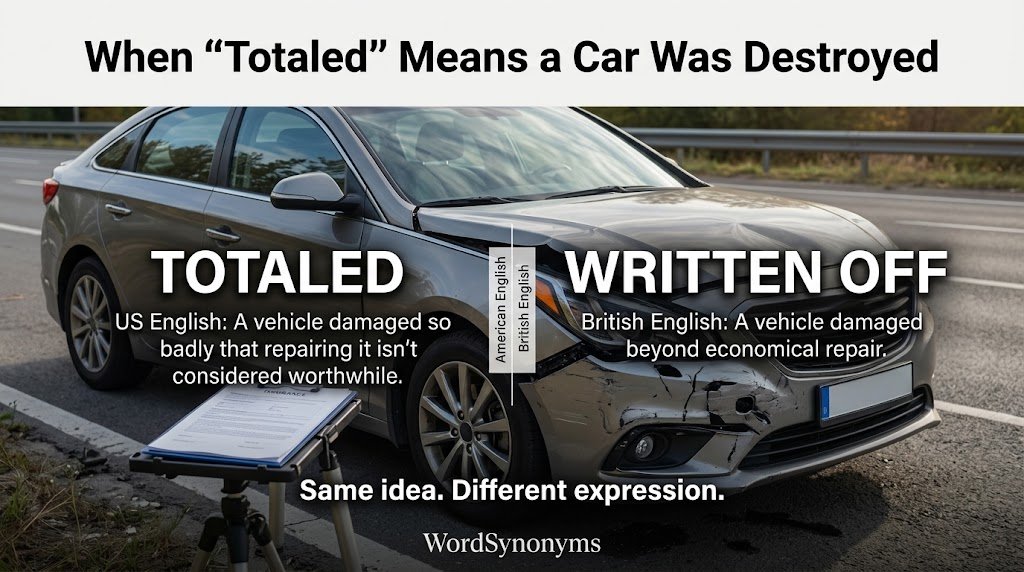
When someone says a car was totaled, they usually mean an accident damaged it so severely that repairing it isn’t considered worthwhile. The term is especially common in American automotive and insurance contexts.
For example:
The crash totaled his pickup.
Here, totaled doesn’t mean “added together.” It means the vehicle suffered severe damage.
Oxford’s American English dictionary identifies this as an informal use of total, meaning to damage a car so badly that it isn’t worth repairing.
This creates an interesting distinction:
- The bills totaled $8,000. → The combined amount was $8,000.
- The accident totaled the car. → The accident destroyed or severely damaged the car.
The surrounding words make the intended meaning clear.
What Does “Totalled” Mean?
Totalled has the same basic meanings as totaled, but it follows the spelling convention commonly used in British English.
For example:
- The repairs totalled £4,000.
- The company’s losses totalled £2 million.
- The scores totalled 86 points.
- The project costs totalled more than expected.
Cambridge Dictionary defines totalled as the past simple and past participle of total. Its examples include financial amounts, percentages, and quantities.
In other words, totalled isn’t a different verb.
It isn’t pronounced differently simply because it contains two ls. It doesn’t carry a different meaning either. The spelling reflects the English variety being used.
Is “Totalled” Correct in American English?
American English normally prefers totaled.
That doesn’t mean an American reader will fail to understand totalled. English readers regularly encounter spelling differences from other varieties. However, if you’re deliberately writing in standard US English, totaled is the better choice.
For example:
US English:
The project expenses totaled $15,000.
British English:
The project expenses totalled £15,000.
The key is consistency.
If the rest of your article follows American spelling, using totalled suddenly can make the writing look inconsistent. The same principle applies to words such as traveled/travelled, labeled/labelled, and canceled/cancelled.
Totaling vs. Totalling: What’s the Difference?
The same regional distinction appears in the present participle or -ing form.
American English generally uses totaling.
British English generally uses totalling.
For example:
American English:
The expenses are totaling more than $10,000.
British English:
The expenses are totalling more than £10,000.
Both sentences describe the same basic idea.
Cambridge Dictionary defines totalling as the present participle of total and provides examples involving amounts, numbers, distances, and groups of items.
Totaling in American English
Use totaling when you’re following standard US spelling.
Examples include:
- The donations are totaling $50,000.
- The invoices are totaling more than $7,500.
- The five sections are totaling 120 pages.
- The losses are totaling millions of dollars.
However, there’s an important stylistic point here.
Totaling is not always the most natural choice when another construction sounds cleaner.
For example:
The invoices total $7,500.
often sounds more direct than:
The invoices are totaling $7,500.
Likewise:
The five chapters total 180 pages.
may sound more polished than:
The five chapters are totaling 180 pages.
The -ing form is grammatically useful, but you don’t need it simply because you’re discussing an ongoing quantity.
Totalling in British English
British English uses totalling in the same situations.
Examples:
- The donations are totalling £50,000.
- The invoices are totalling more than £7,500.
- The losses are totalling millions of pounds.
- The five routes are totalling 40 miles.
Cambridge’s corpus examples include phrases such as “totalling £5 million” and “totalling 39 chapters,” showing how the form works naturally with both financial amounts and quantities.
Again, the extra l doesn’t change the meaning.
Why Does One Version Have Two Ls?
The difference comes from broader spelling conventions surrounding words ending in l.
British English commonly doubles a final l before certain endings. American English often keeps the single l in comparable forms.
That produces familiar pairs such as:
| American English | British English |
| totaled | totalled |
| totaling | totalling |
| traveled | travelled |
| traveling | travelling |
| labeled | labelled |
| labeling | labelling |
| canceled | cancelled |
| canceling | cancelling |
The pattern is useful, but don’t treat it as a universal mechanical rule. English spelling contains plenty of historical exceptions and word-specific conventions.
The important point is that total follows a well-established US-versus-UK spelling pattern.
Oxford’s American English entry lists totaled and totaling, while noting British-style forms with the doubled l. It also specifically identifies Canadian English as commonly using totalled and totalling in that entry.
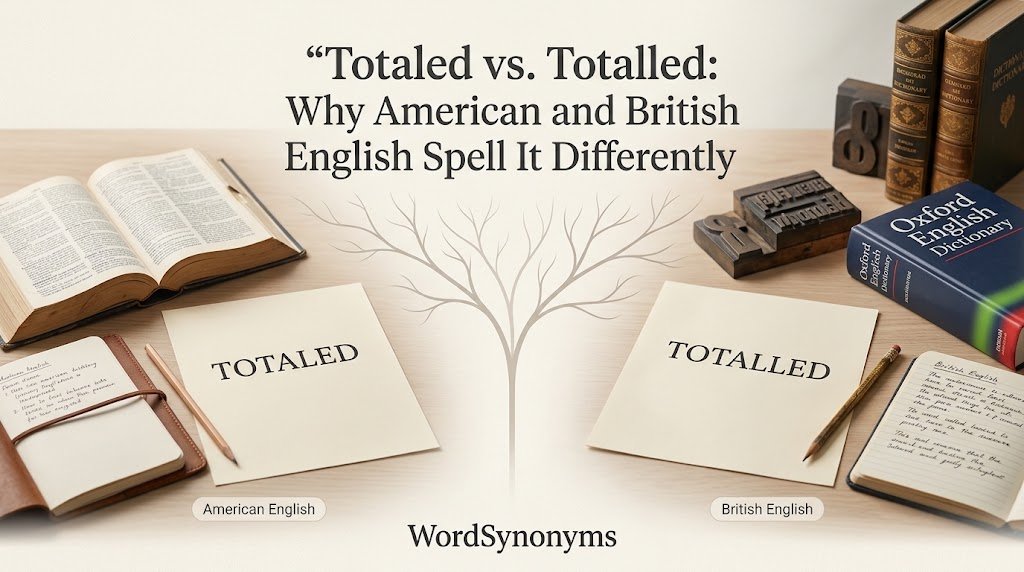
Why Does American English Use “Totaled” While British English Uses “Totalled”?
The difference belongs to a much larger history of English spelling.
British English retained many spelling conventions that developed through centuries of English usage, printing, dictionaries, and influence from other European languages. American English later developed its own preferences for certain spellings.
Noah Webster played an important role in promoting distinctive American spelling conventions in the late eighteenth and nineteenth centuries. His dictionaries favored various simplified spellings, although not every American spelling difference can be reduced to Webster alone.
The result is the familiar spelling split found in modern English.
You can think of it like two branches growing from the same tree.
The meaning remains connected. The spelling develops along slightly different paths.
That’s why totaled and totalled aren’t competing definitions. They’re regional variants.
Totaled vs. Totalled: Meaning and Pronunciation
The spelling difference doesn’t create a meaningful difference in pronunciation.
Both forms are generally pronounced the same way.
For practical writing purposes, you can treat these as equivalent:
- totaled = totalled
- totaling = totalling
The distinction appears on the page rather than in the basic spoken form.
This matters because learners sometimes assume that a doubled consonant must change pronunciation. English doesn’t work that neatly.
Consider traveler and traveller. The extra l doesn’t create an extra spoken syllable. The same principle applies here.
The Core Difference
| Feature | Totaled | Totalled |
| Meaning | Same | Same |
| Basic pronunciation | Same | Same |
| Main spelling convention | US | UK |
| Past tense | Yes | Yes |
| Past participle | Yes | Yes |
The same relationship applies to totaling and totalling.
Totaling vs. Totalling in Different English Varieties
American and British English aren’t the only varieties worth considering.
English spelling varies across countries because different national standards developed from related traditions.
A useful broad comparison looks like this:
| English variety | Common past form | Common -ing form |
| American English | totaled | totaling |
| British English | totalled | totalling |
| Canadian English | totalled is commonly used | totalling is commonly used |
| Australian English | totalled | totalling |
| New Zealand English | totalled | totalling |
These categories describe common spelling conventions rather than rigid rules followed by every writer.
Canadian English, for example, can show influence from both American and British spelling. Oxford specifically notes the -ll- forms as commonly Canadian for this verb.
So don’t use geography as a crude spelling detector.
Instead, identify the style standard you’re following.
A Canadian publication may use a different house style from another Canadian publication. A global company might even choose US English for all of its international content.
Totaled or Totalled in a Sentence?
Seeing the forms in context makes the distinction much easier.
Examples With “Totaled”
These examples follow standard US spelling:
- The four invoices totaled $2,840.
- Her expenses totaled nearly $6,000.
- The team’s points totaled 92.
- The repairs totaled $3,500.
- The accident totaled the vehicle.
- The donations totaled more than $100,000.
Notice that the word doesn’t change meaning because of the spelling.
In the first five examples, context determines the precise sense of totaled.
Examples With “Totalled”
These examples follow British spelling:
- The four invoices totalled £2,840.
- Her expenses totalled nearly £6,000.
- The team’s points totalled 92.
- The repairs totalled £3,500.
- The project costs totalled more than expected.
- The losses totalled several million pounds.
The grammatical function remains unchanged.
Examples With “Totaling”
For US English:
- The contracts are totaling $2 million.
- The three purchases are totaling $850.
- The five reports are totaling 700 pages.
- The grants are totaling $4.5 million.
- The routes are totaling nearly 100 miles.
You can also use totaling after a noun phrase:
The company received five grants, totaling $2 million.
Here, totaling $2 million gives additional information about the combined value of the grants.
Examples With “Totalling”
For British English:
- The contracts are totalling £2 million.
- The three purchases are totalling £850.
- The five reports are totalling 700 pages.
- The grants are totalling £4.5 million.
- The routes are totalling nearly 100 miles.
You can also write:
The company received five grants, totalling £2 million.
The grammatical structure matches the American version. Only the spelling changes.
Common Mistakes With Totaled and Totalled
The spelling itself isn’t particularly difficult. The bigger problems come from misunderstanding what the difference represents.
Treating One Spelling as Universally Correct
A common mistake is saying that totalled is wrong.
It isn’t.
Likewise, saying that totaled is always wrong would be inaccurate.
Both forms have legitimate uses in established English varieties.
The better question is:
Which English spelling standard are you following?
If you’re writing for a US audience, use totaled. If you’re writing in British English, use totalled.
Mixing American and British Spellings
Inconsistent spelling can make polished writing look careless.
For example, suppose an article uses:
- color
- traveling
- canceled
- totalled
The first three strongly suggest American English. The last one switches to the British spelling.
That doesn’t make the sentence impossible to understand. It simply creates an unnecessary inconsistency.
A better US-English version would use:
- color
- traveling
- canceled
- totaled
Consistency gives your writing a smoother surface.
Assuming “Totalling” Has a Different Meaning
It doesn’t.
Totalling is not a special version of totaling with a different definition.
Compare:
The expenses are totaling $9,000.
and:
The expenses are totalling £9,000.
The spelling changes. The underlying meaning doesn’t.
Confusing “Totaled” With “Total”
The tense also matters.
Compare these sentences:
The costs total $5,000.
This describes the amount in the present.
The costs totaled $5,000.
This places the total in the past.
The costs are totaling $5,000.
This presents the total as an ongoing process.
The spelling question doesn’t change these grammatical differences.
Total, Totals, Totaled, and Totaling: Word Forms Explained
The word total has several grammatical roles.
| Form | Function | Example |
| total | Verb | The expenses total $5,000. |
| totals | Third-person singular verb | The bill totals $500. |
| totaled | US past tense/past participle | The expenses totaled $5,000. |
| totalled | UK past tense/past participle | The expenses totalled £5,000. |
| totaling | US present participle | The expenses are totaling $5,000. |
| totalling | UK present participle | The expenses are totalling £5,000. |
| total | Noun | The total is $5,000. |
| total | Adjective | The total cost was $5,000. |
Cambridge Dictionary lists total as a noun, adjective, and verb. As a verb, it can mean to reach a complete amount or calculate that amount.
This flexibility explains why total appears in many different sentence patterns.
“Total” as a Noun
When total acts as a noun, it refers to the complete amount.
The total was $850.
Add the figures and check the total.
No -ed or -ing spelling question arises here.
“Total” as a Verb
When total acts as a verb, it describes adding amounts or reaching a final figure.
1. The receipts total $850.
2. The receipts totaled $850.
3. The receipts are totaling $850.
The tense and construction determine the form.
A Practical Case Study: Choosing the Right Spelling
Imagine an American company publishes this sentence:
The five projects totalled $12 million in expenses.
The meaning is perfectly clear. However, the spelling totalled doesn’t match standard US usage.
If the company’s editorial style uses American English, the polished version would be:
The five projects totaled $12 million in expenses.
Now imagine a British publication writing:
The five projects totaled £12 million in expenses.
Again, readers will understand the sentence. However, a British spelling convention would normally favor:
The five projects totalled £12 million in expenses.
The lesson is simple.
Don’t choose the spelling based on the currency. Choose it based on the English variety.
A US publication can discuss pounds and still write totaled. A British publication can discuss dollars and still write totalled.
Currency doesn’t control spelling.
The publication’s English style does.
When “Totaled” Means a Car Was Destroyed
One special meaning deserves extra attention because it is strongly associated with American English.
In US usage, to total a vehicle means to damage it so badly that repairing it isn’t considered worthwhile. Cambridge labels this vehicle sense as mainly US and notes that British English commonly uses write off for the same idea.
Compare:
American English:
The insurance company declared the car totaled.
British English:
The insurance company wrote the car off.
This is more than a spelling difference.
Here, the preferred expression itself can differ between English varieties.
That’s an important distinction because writers sometimes assume that every US-versus-UK difference involves only spelling. Many don’t.
However, totaled and totalled, when used for the ordinary verb meaning “to add up” or “amount to,” remain spelling variants of the same word.
Totaled vs. Totalled in Financial Writing
Financial writing frequently uses these forms because totals appear everywhere.
You might write:
The company’s operating costs totaled $18.7 million.
Or, in British English:
The company’s operating costs totalled £18.7 million.
Both constructions communicate a combined amount.
The same applies to:
- revenue
- expenses
- losses
- investments
- donations
- salaries
- sales
- debts
- grants
- payments
- claims
- damages
For example:
The six donations totaled $75,000.
The sentence means the combined value of six donations reached $75,000.
In British English:
The six donations totalled £75,000.
The spelling changes. The mathematical relationship remains the same.
Read more: Zee vs. Zed: What’s the Difference?
Totaled vs. Totalled in Formal Writing
Both forms work in formal writing when they match the chosen English standard.
You can use them in:
- academic papers
- financial reports
- business documents
- news articles
- government documents
- technical reports
- websites
- essays
- professional correspondence
The important issue is consistency.
If a report follows US English, use totaled and totaling throughout the document.
If it follows British English, use totalled and totalling.
This becomes especially important in long documents because spelling inconsistencies become more noticeable as the word count grows.
How to Remember the Difference
A simple memory trick can save you from second-guessing these forms.
US English = One L
Think:
total + ed → totaled
total + ing → totaling
British English = Two Ls
Think:
total + led → totalled
total + ling → totalling
The visual difference is tiny, but the pattern is easy to spot once you know what you’re looking for.
Here’s the shortcut:
US: totaled, totaling
UK: totalled, totalling
When in doubt, check the spelling style used by the rest of your document.
Totaled vs. Totalled vs. Totaling vs. Totalling: At a Glance
| Word | American English | British English | Meaning |
| totaled | Standard | Less typical | Past tense/past participle |
| totalled | Less typical | Standard | Past tense/past participle |
| totaling | Standard | Less typical | Present participle |
| totalling | Less typical | Standard | Present participle |
| total | Standard | Standard | Base verb, noun, adjective |
| totals | Standard | Standard | Third-person singular verb |
The most important point is that the extra l does not create a new definition.
It’s a regional spelling choice.
Oxford’s American English dictionary lists totaled as the past form and totaling as the -ing form. It also notes the corresponding doubled-l forms used in other English varieties.
Which Is Correct in American English?
If you’re writing standard US English, use:
Totaled
The repairs totaled $4,500.
And use:
Totaling
The repairs are totaling $4,500.
These are the forms readers expect in American English.
The same convention applies whether you’re writing about money, points, pages, distances, expenses, losses, or other quantities.
For example:
- The three invoices totaled $1,200.
- The tournament scores totaled 450 points.
- The documents are totaling 300 pages.
- The damages totaled $25,000.
If you’re describing a severely damaged vehicle, totaled is also the standard American spelling:
The accident totaled her car.
Which Is Correct in British English?
If you’re following British English, use:
Totalled
The repairs totalled £4,500.
And:
Totalling
The repairs are totalling £4,500.
British English uses the doubled l in these forms.
Cambridge’s dictionary entries provide direct evidence for both forms, identifying totalled as the past form and totalling as the present participle.
The choice is therefore not a matter of grammatical correctness alone. It’s a matter of matching the spelling standard you’re using.
FAQs
Is “totaled” or “totalled” correct?
Both are correct. Totaled is the standard American English spelling, while totalled is preferred in British English and many other varieties.
Is “totaling” or “totalling” correct?
Both spellings are correct. American English uses totaling, while British English generally uses totalling.
Why does American English use one L?
American English often simplifies certain words ending in L when adding suffixes. This spelling pattern became established during the early 20th century.
Does “totaled” mean something different from “totalled”?
No. The meaning stays the same. The difference is simply a regional spelling preference between American and British English.
Which spelling should I use in American English?
Use totaled and totaling if you’re writing for an American audience. These forms are standard in the United States.
Can I use “totaled” and “totalled” in the same document?
You can, but it’s usually better to choose one spelling system and stay consistent. If you’re comparing American and British English, using both forms makes sense.
Conclusion
Choosing between totaled, totalled, totaling, and totalling is mostly a matter of regional spelling, not meaning. Totaled and totaling are standard in American English, while totalled and totalling are preferred in British English and related varieties. So, the spelling you choose should match the audience you’re writing for.
The easiest way to remember it is simple: one L for American English, two Ls for British English. Whether you’re describing a final amount, adding figures, or saying something was badly damaged, the meaning remains unchanged. Once you pick the appropriate form, stick with it throughout your writing. That small detail can make an email, article, report, or school assignment look much more polished and consistent.

Samreen Saif is a passionate writer and language enthusiast who contributes informative and engaging content to WordsSynonyms.com. She enjoys exploring English vocabulary, synonyms, antonyms, word meanings, and language usage to help readers understand and use words with confidence.
Samreen focuses on creating clear, accurate, and easy-to-read content for students, writers, professionals, and English learners. Through her articles, she aims to make vocabulary learning simple, practical, and useful for everyday communication.
When she is not writing, Samreen enjoys learning about language, discovering new words, and creating helpful content that makes English learning more accessible to everyone.