
Sear vs. Seer vs. Sere: Differences and Examples explains how these similar-sounding words differ in meaning, spelling, pronunciation, and usage.
Sear is a verb that describes burning a surface with intense heat, often while cooking meat in a hot pan. Seer is a noun for someone believed to possess special vision or the ability to predict future events.
Sere is an adjective that describes something dry, faded, or withered, such as a leaf losing its freshness. These commonly confused words have different meanings and grammatical roles, so choosing the correct spelling depends on the message you want to convey.
A simple way to remember these words is to connect each one with a familiar image. Think of a sizzling steak for sear, a fortune-teller looking into the future for seer, and a brittle autumn leaf for sere.
These associations make their meanings easier to recall when writing essays, emails, or everyday messages. Although their pronunciation may sound similar, their spelling and context reveal which word belongs in a sentence.
Learning these distinctions strengthens your vocabulary, improves writing accuracy, and helps you express ideas clearly without confusing heat, foresight, and dryness.
Quick Answer
Sear means to burn, scorch, or cook something over high heat. Seer refers to a person believed to predict the future. Sere describes something dry or withered. Although these words sound alike, their meanings and uses differ.
- Sear: The chef will sear the steak.
- Seer: The seer predicted a great storm.
- Sere: Sere leaves covered the garden path.
Easy way to remember: Sear = heat, seer = foresight, and sere = dryness.

Sear vs. Seer vs. Sere: Quick Comparison
The easiest way to understand sear, seer, and sere is to compare their meanings and grammatical roles side by side.
| Word | Part of Speech | Meaning | Example |
| Sear | Verb; also noun | To burn, scorch, or cook a surface with intense heat | The chef will sear the steak. |
| Seer | Noun | A person believed to predict future events or receive supernatural visions | The seer warned the king. |
| Sere | Adjective; also a specialized noun | Dry, withered, or no longer fresh | Sere leaves covered the path. |
All three words are generally pronounced alike in American English. This makes them homophones, meaning words that share a pronunciation but have different spellings or meanings.
However, their grammatical roles provide useful clues. Sear commonly describes an action, seer names a person, and sere describes a condition or appearance.
Remember these three simple associations:
- Sear = heat
- Seer = foresight
- Sere = dryness
These connections will help you select the correct spelling whenever you encounter these words.
What Does Sear Mean?
The word sear usually means to burn, scorch, or expose something to intense heat. It can describe a physical action, a cooking technique, or an experience that leaves a lasting emotional impression.
As a verb, sear often suggests intense heat affecting a surface. The effect may be temporary, such as browning meat, or damaging, such as scorching a plant.
Sear as a Verb
In everyday English, sear most commonly appears as a verb. It describes exposing something to strong heat, often causing burning, scorching, or browning.
For example, a chef might sear meat in a hot skillet before finishing the cooking process. The intense heat quickly browns the outside and develops a rich flavor.
Here are several examples of sear used as a verb:
- The chef will sear the steak before serving it.
- The afternoon sun threatened to sear the delicate plants.
- The hot metal could sear the fabric on contact.
- The painful memory seemed to sear itself into his mind.
- She placed the fish in a hot pan to sear its surface.
Notice how the meaning changes with context.
1. In cooking, sear describes a technique.
2. In a description of heat damage, it refers to scorching.
3. In figurative writing, it can describe an experience that leaves a powerful impression.
Sear in Cooking
Cooking provides one of the clearest examples of how to use sear correctly.
When you sear a steak, you expose its surface to high heat. This creates browning and develops flavorful compounds through the Maillard reaction, a chemical process between amino acids and reducing sugars.
Despite a common misconception, searing does not seal in a steak’s juices. Moisture loss still occurs during cooking. Searing primarily adds color, flavor, and texture.
Consider these sentences:
- I sear chicken breasts before adding them to the sauce.
- The recipe recommends searing the beef in a heavy skillet.
- He seared both sides of the tuna for a golden crust.
In each example, sear describes an action involving heat. Neither seer nor sere would communicate the intended meaning.
Sear in Figurative Language
Writers also use sear to describe intense emotional experiences or memories that remain vivid.
Imagine witnessing a frightening accident. Years later, you might still remember every detail. A writer could describe that memory as something seared into the mind.
Examples include:
- The experience seared a lasting impression into her memory.
- His harsh words seemed to sear her confidence.
- The image of the abandoned village was seared into their minds.
This figurative use makes sear more expressive than ordinary words such as affect or impress. It suggests intensity and a lasting effect.
Sear as a Noun
Although sear primarily functions as a verb, it also has specialized noun uses.
In technical contexts, a sear can refer to a component in a mechanical firing mechanism. The term also appears in discussions of burning or scorching marks, although ordinary writing often uses words such as burn, scar, or scorch mark instead.
For general English writing, the verb meaning is the most important one to remember.
Sear Word Forms
Like most regular English verbs, sear changes form according to tense and grammatical structure.
| Word Form | Usage | Example |
| Sear | Base form | Sear the meat over high heat. |
| Sears | Present tense, third-person singular | She sears the fish before serving it. |
| Seared | Simple past or past participle | He seared the chicken yesterday. |
| Searing | Present participle or gerund | Searing the steak creates a browned crust. |
These forms retain the same central meaning. The spelling changes because of grammar, not because the word becomes seer or sere.
What Does Seer Mean?
A seer is someone believed to possess the ability to foresee future events or receive visions beyond ordinary perception.
The word often appears in mythology, religious traditions, fantasy stories, and historical accounts of prophecy. A seer may warn a ruler, interpret a vision, or reveal information that other characters cannot discover through ordinary observation.
Unlike sear, which usually describes an action, seer identifies a person.
Definition of Seer
A seer is commonly understood as a prophet, visionary, or person who claims or is believed to have supernatural insight.
The word does not automatically mean that someone can genuinely predict the future. Instead, it describes the role or reputation associated with such abilities.
For example, a character in a fantasy novel might receive visions of an approaching war. Other characters may call that person a seer because they believe the visions reveal future events.
Examples include:
- The seer warned the king about the approaching danger.
- According to the legend, a seer predicted the fall of the kingdom.
- The villagers consulted a seer before beginning their journey.
- In the story, the young seer experienced mysterious dreams about the future.
Each sentence uses seer as a noun referring to a person.
Seer in Literature and Mythology
The word seer carries a strong connection to prophecy and ancient storytelling.
In Greek mythology, for example, the prophet Tiresias appears in several well-known stories. He possesses prophetic knowledge and offers guidance to important characters.
Shakespeare also uses prophetic figures in Macbeth. The three witches predict aspects of Macbeth’s future, although the play generally identifies them as witches rather than simply calling them seers.
Such examples demonstrate how the idea of a seer functions in literature. A seer often knows something that other characters cannot yet understand, creating suspense and raising questions about fate.
Modern fantasy writers use the term in a similar way. A seer might interpret dreams, recognize patterns in mysterious events, or warn a community about a coming disaster.
Seer as a Noun
The word seer is a countable noun. You can use it with articles and other determiners.
For example:
- A seer arrived at the royal court.
- The seer described a vision of the future.
- Several seers gathered to interpret the mysterious signs.
- The young woman became known as a gifted seer.
You can also encounter related expressions such as prophet, visionary, and fortune-teller. However, these words do not always carry exactly the same meaning.
A prophet may deliver messages believed to come from a divine source. A fortune-teller typically claims to predict personal events. A visionary may imagine future possibilities without claiming supernatural powers.
A seer can overlap with these roles, depending on the context.
Seer and the Word See
A helpful memory trick connects seer with the verb see.
A seer supposedly sees what others cannot, especially events that have not happened yet. This association makes the spelling easier to remember.
Compare the following examples:
- The child can see the mountain.
- The seer claims to have seen the future.
The first sentence uses see as a verb. The second uses seer as a noun for a person.
This distinction matters because sear and sere have different meanings despite their similar pronunciation.
What Does Sere Mean?
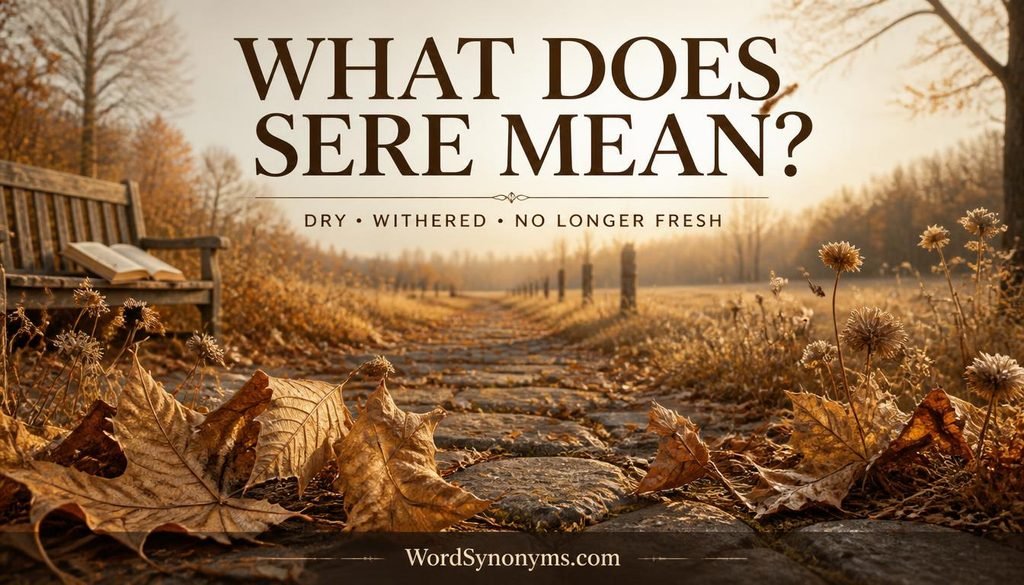
The word sere means dry, withered, or no longer fresh. It often describes leaves, grass, plants, or landscapes that have lost their moisture and vitality.
Unlike sear, which commonly appears in everyday cooking instructions, sere is relatively uncommon in modern conversation. You are more likely to encounter it in poetry, older literature, nature writing, or descriptive prose.
For instance, a writer might describe sere leaves scattered beneath bare trees. The adjective creates a slightly literary tone while conveying the idea of dryness and decay.
Definition of Sere
As an adjective, sere describes something that has become dry, withered, or shriveled.
It often suggests the effects of time, heat, drought, or the changing seasons. A sere landscape may look lifeless, while sere leaves may appear brittle and faded.
Examples include:
- Sere leaves crunched beneath the hikers’ boots.
- The poet described a sere field at the end of summer.
- Dry winds swept across the sere landscape.
- The abandoned garden was filled with sere branches and brittle grass.
- Beneath the relentless sun, the once-green meadow became sere.
In each sentence, sere describes a condition rather than an action or person.
Sere as an Adjective
An adjective describes a noun. In this case, sere tells readers what something looks or feels like after losing moisture or freshness.
Consider the difference between these sentences:
- The dry leaves covered the ground.
- The sere leaves covered the ground.
Both sentences communicate a similar basic idea. However, sere sounds more literary and may suggest an atmosphere of decline, age, or lifelessness.
That makes it useful in poetry and descriptive writing, particularly when a writer wants to create a vivid image without using several explanatory words.
Here are a few ways to use sere naturally in literary contexts:
- The sere grass stretched across the forgotten field.
- Sere branches reached toward the pale winter sky.
- The garden’s sere flowers reflected the passing of summer.
You generally wouldn’t choose sere when writing a casual message about a houseplant that needs water. In that situation, dry or withered would sound more natural.
Sere in Poetry and Descriptive Writing
Although sere is not a common conversational word, it offers a useful option for writers.
Imagine describing a garden in early spring compared with one late in autumn. In spring, green leaves and fresh flowers suggest growth. By late autumn, the plants may appear dry and lifeless.
The adjective sere can capture that second scene with a single word.
For example:
The sere leaves drifted across the silent garden as the last warmth of autumn faded.
This original sentence uses sere to establish both a physical description and a mood. The word suggests dryness while reinforcing the scene’s quiet, fading atmosphere.
You can replace it with dry or withered if you prefer everyday language. However, sere may suit a poem, a historical novel, or a richly descriptive passage.
Sere as a Specialized Noun
In ecology, sere has a separate technical meaning.
A sere can refer to a sequence of ecological communities that develop during succession. As environmental conditions change, one community may replace another over time.
For example, vegetation on newly exposed rock may gradually change as soil develops and different plants establish themselves. Ecologists study these changes to understand how ecosystems develop.
This specialized meaning differs from the familiar adjective meaning dry or withered. In a vocabulary comparison focused on everyday English, the adjective remains the main definition to remember.
What Is the Difference Between Sear, Seer, and Sere?
The main difference between sear, seer, and sere lies in what each word communicates.
Sear usually describes burning, scorching, or cooking a surface with intense heat. Seer refers to a person associated with prophecy or supernatural insight. Sere describes something dry or withered.
Their grammatical roles make the distinction easier to recognize.
| Feature | Sear | Seer | Sere |
| Main meaning | Burn or scorch | Person believed to foresee events | Dry or withered |
| Typical grammatical role | Verb | Noun | Adjective |
| Common context | Cooking, heat, figurative descriptions | Prophecy, mythology, fiction | Poetry, nature writing |
| Example phrase | Sear the steak | Consult a seer | Sere leaves |
| Everyday frequency | Common | Familiar but context-dependent | Uncommon |
Let’s look at the differences more closely.
Sear vs. Seer
The words sear and seer sound alike in most American accents, but their meanings have little in common.
Use sear when describing an action involving heat. Use seer when referring to a person believed to possess prophetic insight.
Correct examples:
- The chef will sear the salmon.
- The villagers visited the seer for advice.
Incorrect usage:
- The chef will seer the salmon.
- The villagers visited the sear for advice.
The incorrect sentences use the wrong spelling for their intended meanings. Remember that sear describes heat, while seer identifies a person.
Seer vs. Sere
The distinction between seer and sere becomes clear when you consider their grammatical roles.
A seer is a person. Sere usually describes something that has dried or withered.
Compare these examples:
- The seer predicted a harsh winter.
- The sere plants struggled in the dry soil.
In the first sentence, seer identifies the person making a prediction. In the second, sere describes the plants’ condition.
If you can replace the word with prophet, seer may fit. If you can replace it with dry or withered, sere may be the intended choice.
Sear vs. Sere
The distinction between sear and sere deserves special attention because both words can relate to drying or withering.
Sear commonly functions as a verb describing the effect of intense heat. Sere is generally an adjective describing something that has already become dry or withered.
For example:
- The hot wind threatened to sear the grass.
- The sere grass crackled underfoot.
The first sentence emphasizes an action or effect. The second describes the grass’s condition.
Although sear has some specialized and older uses, the two words are not interchangeable in most modern sentences.
Are Sear, Seer, and Sere Pronounced the Same?
In standard American English, sear, seer, and sere are generally homophones. They share the same pronunciation despite their different spellings and meanings.
Their common American pronunciation is represented by the International Phonetic Alphabet as /sɪr/.
The pronunciation may vary across English accents. Some speakers pronounce the vowel differently, particularly in varieties that distinguish sounds that merge in American English.
For practical writing, however, the important point is that these words sound alike for many speakers.
Why Homophones Cause Confusion
Homophones can create spelling mistakes because hearing a word doesn’t always tell you which spelling the speaker intends.
Imagine hearing this sentence without seeing it written down:
“The seer watched the sere grass while the sun began to sear the earth.”
The sentence contains all three words, yet each performs a different job:
- Seer: The person observing events.
- Sere: The dry or withered grass.
- Sear: The action of scorching something with heat.
The surrounding words provide enough context to distinguish the meanings.
This is why careful spelling matters in professional writing. Spell-checking tools may miss a mistake when the incorrect word is still a valid English word.
Common Mistakes When Using Sear, Seer, and Sere
Even experienced writers can confuse homophones. The best way to avoid these mistakes is to examine the intended meaning and grammatical role before choosing a spelling.
Using Seer When You Mean Sear
This mistake often occurs in sentences about cooking or heat.
Incorrect: The chef will seer the steak.
Correct: The chef will sear the steak.
The sentence describes cooking a steak at high heat, so sear is correct.
A useful editing trick is to replace the word with scorch or brown. If the sentence still makes sense, you probably need sear.
Using Sear When You Mean Seer
Writers may accidentally choose sear when describing someone who predicts future events.
Incorrect: The ancient sear warned the king.
Correct: The ancient seer warned the king.
The sentence identifies a person associated with prophecy. Therefore, seer is the correct spelling.
To remember it, connect seer with seeing the future.
Using Sere in Everyday Conversation
Although sere is a legitimate English word, it can sound unusual in casual conversation.
For example, you might write:
– The sere leaves fell from the tree.
This sentence is grammatically sound, but many readers would find the following version more familiar:
– The withered leaves fell from the tree.
Choose sere when its literary tone serves a purpose. Otherwise, everyday alternatives such as dry, withered, or parched often communicate the idea more clearly.
Confusing Sear and Sere
Because both words can relate to dryness or withering, writers may mistakenly treat them as interchangeable.
Consider these sentences:
- The intense heat may sear the plants.
- The sere plants stood beside the fence.
The first describes an effect caused by heat. The second describes plants that have become dry or withered.
When editing, check whether you need an action or a description. That simple distinction resolves most cases.

How to Remember the Difference Between Sear, Seer, and Sere
You don’t need to memorize complicated definitions to distinguish these words. A short association for each spelling is usually enough.
Sear Means Heat
Connect sear with a hot skillet or a scorching flame.
When a chef sears a steak, intense heat browns its surface. This cooking technique provides an easy visual reminder of the word’s main meaning.
Memory trick: Sear a steak.
Seer Means Someone Who Sees the Future
The spelling seer resembles see. That connection makes it easier to remember the word’s association with visions and prophecy.
A seer is someone believed to see future events or perceive information beyond ordinary knowledge.
Memory trick: A seer sees what others cannot.
Sere Means Dry or Withered
Think of brown autumn leaves, brittle grass, or a dried-up garden.
The word sere describes the resulting condition. Because it is relatively uncommon, you may find it most often in literary descriptions.
Memory trick: Sere leaves are dry and withered.
A Simple Way to Choose the Correct Word
When you’re unsure which spelling to use, ask yourself three questions:
- Does the sentence describe burning, scorching, or cooking? Choose sear.
- Does it refer to someone believed to foresee events? Choose seer.
- Does it describe something dry or withered? Choose sere.
This approach works in most ordinary contexts and helps you avoid relying on pronunciation alone.
Sear vs. Seer vs. Sere: Practice Quiz
Test your understanding with the following sentences. Choose the word that best fits each blank.
- The chef will ___ the salmon before adding the sauce.
- The village ___ claimed to have predicted the storm.
- The poet described the ___ grass beneath the summer sun.
- The painful memory remained ___ into his mind.
- The hot desert wind threatened to ___ the delicate plants.
- The abandoned garden was filled with ___ leaves and brittle branches.
Answer Key
| Question | Answer | Explanation |
| 1 | Sear | The chef cooks the salmon’s surface with high heat. |
| 2 | Seer | The sentence refers to a person who claims prophetic insight. |
| 3 | Sere | The adjective describes grass that has become dry or withered. |
| 4 | Seared | The figurative expression describes a memory that left a lasting impression. |
| 5 | Sear | The sentence describes the scorching effect of hot wind. |
| 6 | Sere | The adjective describes dry, withered leaves. |
Notice that question four uses seared, the past participle of sear. This is a useful reminder that verb forms change to fit the sentence.
If you answered all six correctly, you understand the central differences between these words.
FAQs
1. What is the main difference between sear, seer, and sere?
Sear means to burn something with intense heat, seer refers to someone believed to predict the future, and sere describes something dry or withered. Their similar sounds can cause confusion, but their meanings and grammatical roles are different.
2. Is sear a verb or a noun?
Sear is primarily a verb. It means to burn or scorch a surface with strong heat. For example, Sear the steak in a hot pan to create a golden crust.
3. What does seer mean in simple English?
A seer is someone believed to have special insight into future events or supernatural matters. The word often appears in stories about prophets, fortune-tellers, and people with unusual powers of vision.
4. How do you use sere in a sentence?
Use sere as an adjective to describe something dry, faded, or withered. For example, The sere leaves scattered across the garden showed the effects of the long, dry summer.
5. Are sear, seer, and sere homophones?
They are similar-sounding words, but they aren’t always exact homophones. Their pronunciation can vary by accent, especially the vowel sounds. Their meanings remain distinct regardless of how closely they sound alike.
6. What is an easy way to remember sear, seer, and sere?
Connect each word with a memorable image: sear means cooking with heat, seer suggests seeing the future, and sere describes dry leaves or withered plants. These simple associations can help you remember the correct spelling and meaning while writing.
Conclusion
Understanding sear vs. seer vs. sere becomes much easier when you connect each word with its meaning. Remember, sear relates to burning with heat, seer describes someone believed to foresee the future, and sere means dry or withered. Although these words sound similar, you can’t use them interchangeably.
The trick is to look at the context before choosing a spelling. Whether you’re writing a school assignment, sharing a story, or polishing a professional email, knowing these small differences helps you avoid mistakes. Keep these meanings in mind, practice with your own sentences, and you’ll feel more confident using all three words correctly.

Muhammad Taqi is a content writer interested in English vocabulary and language. He writes clear and useful articles on synonyms, antonyms, word meanings, and English usage, helping readers expand their vocabulary and improve their communication skills.